Home Blog Page 1630

Cabin-air study now also on Lufthansa short-haul routes

0

Measurements extended to Airbus A321 (Lufthansa short-haul), tests on Airbus A380 show no pollutants

After carrying out an extensive series of cabin-air tests on its Airbus A380 aircraft, Lufthansa is now extending the study to its short-haul model, the Airbus A321. Hanover Medical School (MMH) will remain the scientific partner. The programme was launched on the Frankfurt–Marrakesh route: it runs until March next year and comprises air measurements on a total of 44 flights within Europe. “We have been committed to cabin-air quality for many years – there is no other airline in the world that addresses this topic as thoroughly and consistently as we do. The measuring kit developed jointly by Lufthansa Technik and Hanover Medical School enables us to take a completely new approach,” says Kay Kratky, member of the Lufthansa German Airlines Board and responsible for Operations and the hub in Frankfurt.

The test series in the cockpit of the Airbus A380 included some 800 hours of measurements, and confirmed that there was “no noticeable chemical pollution”. Even when unusual odours were reported, no trace of air pollution could be measured. Neither national nor international limits concerning air quality in enclosed rooms and workplaces were exceeded on board. All the relevant measurements collected in regular flight operations were mostly substantially below these limits. There was no trace of the neurotoxin ortho-tricresyl phosphate (o-TCP). “Altogether the concentration of organophosphates was very low,” sums up Wolfgang Rosenberger from the Institute for Occupational and Environmental Medicine at MMH. “I should emphasise that we carried out a congener-specific analysis for precisely those TCPs contained in jet engine oil. Out of the ten possible TCP isomers, we didn’t see any of the ortho-TCP considered to be neurotoxic, and that was with a detection threshold of less than 1 ng/m³ (1 nanogramme (ng) = 1 billionth of a gramme = 10-12 kilogrammes). Even if that sounds a bit complicated, it’s important to explain, because reports in the media have so far paid very little or no attention to this aspect, which is particularly important from a toxological perspective. People often only talk about TCP, and from a regulatory point of view at least that is not only wrong, but also disconcerting,” explained Rosenberger. Of course, the sensitive measuring equipment was able to identify isolated odours, he added; following the use of disinfectant wipes, for example, or if other aircraft were taxiing up ahead.

Cabin-air study now also on Lufthansa short-haul routes

Generally speaking, the measurement kit identifies and quantifies around 200 substances that may be in the cabin air. A data logger continuously records climate data for a general description of the cabin air, such as temperature, air pressure and humidity, while an aerosolspectrometer measures dust levels. Other components of the measuring kit serve to track carbon dioxide, carbon monoxide, ozone and volatile organic compounds (VOC). Samples are also actively taken and then analysed in a laboratory, using isotope dilution analysis, for instance, in order to examine more than 150 VOC as well as 15 other aldehydes, such as formaldehyde, acetaldehyde and hexanaldehyde and 19 organophosphates such as TCP. Furthermore, a screening analysis was used to identify unknown substances in the cabin air.

The measurement kit is installed in the cockpit during the flight, but the same air is supplied throughout the aircraft cabin, so the measurements are representative of overall air quality in the aircraft.

Lufthansa press release, 20/11/2014, Lufthansa.com

Brussels South Charleroi Airport blocked on 24 November

0

Brussels South Charleroi Airport will be completely closed on Monday, 24 November, due to the general strike in the provinces of Antwerp, Limburg, Hainaut and Luxembourg.

The trade union front FGTB-CSC-CGSLB told the managers of Charleroi Airport (BSCA) it intended to block the site on November 24 on the occasion of the general strike in Hainaut. A significant part of BSCA workers and its subcontractors should be on strike.

The managing director of Charleroi Airport (BSCA) Jean-Jacques Cloquet said Charleroi airport would remain open with adequate staff despite trade unions to take actions on the site the same day. “If the site is blocked, it will be the responsibility of the unions, not ours,” said Jean-Jacques Cloquet.

France announces order for 12 Airbus A330 MRTT air-to-air refuelling aircraft

0

Airbus Defence and Space has been selected by the French Ministry of Defence to supply 12 A330 MRTT new generation air-to-air refuelling aircraft for the French Air Force. The first delivery is foreseen for 2018, followed by the second in 2019, and then at a rate of one or two per year.

The contract agreed between the French procurement agency, la Direction Générale de l’Armement (DGA), and Airbus Defence and Space is now ready for the official award. The contract covers the development and qualification of the specific French configuration as well as the associated support and training systems, such as spares, ground support equipment, training devices and five years of in-service support from first delivery.

France’s choice of the A330 MRTT makes it the sixth nation to order the type following Australia, Saudi Arabia, Singapore, the United Arab Emirates, and the United Kingdom which have ordered a total of 34 aircraft. In addition, India and Qatar have selected the MRTT and are in the final stages of contractual negotiations for six and two aircraft respectively. A total of 22 aircraft are currently in service and the aircraft has been battle-proven in recent coalition actions.

The A330 MRTT has won every major tanker aircraft procurement competition outside the USA since it has entered the market.

Airbus Defence and Space Executive Vice President Military Aircraft, Domingo Ureña Raso said: “The French Air Force has enormous experience in the field of air-to-air refuelling. It knows the factors which are critical to success and its selection of the A330 MRTT is a real honour for us. In addition it is a long-standing operator of our transport aircraft and as always we are particularly proud in gaining the further confidence of an existing customer.”

In French service the A330 MRTT will be powered by Rolls-Royce Trent 700 engines, be equipped with a combination of the Airbus Refuelling Boom System and underwing hose-and-drogue refuelling pods, and can be configured in a variety of layouts carrying up to 271 passengers as well as medevac arrangements including the French MORPHEE intensive care module carrying up to ten patients as well as 88 passengers.

20/11/2014

Delta Air Lines adds A350-900, A330-900neo to its fleet plan

0

ORDER FOR 25 AIRBUS A350-900 AND 25 A330NEO AIRCRAFT CONTINUES DELTA AIR LINES’ FOCUS ON ECONOMICS, CUSTOMER EXPERIENCE, DISCIPLINED CAPITAL DEPLOYMENT

Delta Air Lines has chosen the Airbus A350-900 and A330-900neo to replace older generation Boeing 747 and 767 aircraft starting in 2017 and 2019, respectively.

delta air lines
Delta Air Lines, picture by Airbus

The order for 25 state-of-the-art Airbus A350-900 aircraft and 25 advanced Airbus A330-900neo aircraft fits within Delta’s existing capacity and capital expenditure plan and continues the airline’s focus on making prudent, cost-effective investments in its fleet.

“Delta always approaches fleet decisions with a balance of economic efficiency, customer experience enhancements, network integration and total cost of ownership,” said Nat Pieper, Delta Air Lines’ Vice President – Fleet Strategy and Transactions. “The A350 and A330neo support our long-haul, transoceanic strategy and join a mix of Boeing and Airbus aircraft that provide exceptional flexibility for Delta’s global network as well as strong cash-on-cash returns for our shareholders.”

Airbus A350-900

The long-range Airbus A350-900 will continue Delta’s optimization of its Pacific network, operating primarily on long-range routes between the U.S. and Asia. The jets are expected to generate a 20 percent improvement in operating cost per seat compared to the Boeing 747-400 aircraft they will replace. Delta will take delivery of the A350 beginning in the second quarter of 2017.

The A350-900 will be powered by two fuel-efficient Rolls Royce Trent XWB engines.

Airbus A330neo (A330-900)

The widebody A330-900neo, an enhancement of Airbus’ successful A330 family featuring greater aerodynamic and economic efficiency, will be deployed on medium-haul trans-Atlantic markets as well as select routes connecting the U.S. West Coast and Asia. The aircraft are scheduled to enter the Delta fleet in 2019 and will deliver a 20 percent operating cost savings per seat over the Boeing 767-300ER aircraft it will replace.

The A330neo features the Rolls Royce Trent 7000 engine which is built with similar technology to the Trent XWB on the Airbus A350.

Delta Air Lines began a structured fleet renewal in 2011 with the selection of new Boeing 737-900ER aircraft along with Boeing 717s and two-class Bombardier CRJ-900 regional jets, and continued it with transactions for Airbus A321 and A330 aircraft. Those aircraft are replacing inefficient older technology airplanes, generating substantial cost improvement and increased customer satisfaction. The airline continues to invest in the onboard product and amenities available to customers on its entire domestic and international fleet including installation of transoceanic satellite in-flight Wi-Fi, Delta Studio featuring a library of free streaming programming as well as more than 1,000 on-demand movies, television shows and music on large, high-definition seatback monitors, and other service improvements.

http://www.delta.com/

ATLANTA, Nov. 20, 2014 /PRNewswire/ 

HOP! Air France, The short-haul activity of the Air France group

0

une_hop_02_630x0

The organisation proposal for the Air France Group’s short-haul activity, bringing together Air France’s point-to-point activity and HOP!, was presented this morning during the Air France Works Council meeting.
This proposal is based on the recommendations of a group of experts submitted to Frédéric Gagey on 30th June: for each market need there must be a corresponding and adapted commercial offer and economic model, whether in terms of costs or revenue.
Starting from the summer season 2015, the short-haul activity will be operated by HOP! Air France. Its objective will be to quickly generate value for the Group, and recover profitability on the short-haul market within three years.
A new commercial offer will be introduced to the market during the first quarter of 2015, under the brand name HOP! with the backing of Air France (“trademark block”  ).
This project includes the implementation of a new, simplified structure.
Presented by Lionel Guérin, Chairman and CEO of HOP!, tasked with implementing the new HOP! Air France activity, it will bring together the Air France Point to Point teams from Paray Vieille Poste and the HOP! teams from Rungis at a single centre in Montreuil, close to the French market sales agents. There will be no modification, transfer of employment contracts, or transfer of the teams based at Roissy or elsewhere in France.

This new structure will come into effect at the beginning of 2015, for operational implementation from the summer 2015 season onwards.
Frédéric Gagey, Air France Chairman and CEO, added: “The short-haul activity is in competition with trains, cars, and low-cost airlines. We need to restructure our company to be even more responsive, market-oriented and close to our customers. HOP! Air France provides a response adapted to the specific characteristics of the short-haul carrier activity and the travel needs of our customers. I am counting on the efforts of all staff to achieve the ambitious targets for this business“.
The short-haul carrier business  in figures
-800 flights a day

-1.7 billion euros of revenue (2013 figures)

-15 million customers

-13 stop-overs

Thursday 20 November 2014

Kuwait Airways Intends to Purchase 10 Boeing 777-300ERs

0
Boeing Statement on Kuwait Airways’ Intent to Purchase 10 777-300ERs

Boeing is pleased that Kuwait Airways has announced its intent to purchase 10 777-300ER (Extended Range) airplanes worth $3.3 billion at current list prices.

“We appreciate the start of a new partnership with Kuwait Airways,” said Marty Bentrott, vice president of Sales for Middle East, Russia and Central Asia, Boeing Commercial Airplanes. “Boeing looks forward to an enduring relationship with Kuwait Airways and we are excited to see that the 777-300ER airplane, which is the preferred long-haul carrier for so many airlines around the world, will now play an important role in the airline’s fleet strategy and expansion.”

The order will be posted on Boeing’s Orders & Deliveries website when finalized.

SEATTLE, Nov. 20, 2014


Comment: The new order is worth $3.3 billion at list price, but Kuwait Airways probably negotiated a discount in excess of 50 percent, given both Boeing’s need to move 777s before the 777X comes into production and the price breaks manufacturers typically offer customers.

Qatar Airways to start double daily service to Istanbul Sabiha Gokcen Airport

0

Airline to Launch Second Daily Flight from 29th March 2015

Double-Daily Service Highlights Qatar Airways’ Commitment to Expansion in Turkey

DOHA, Qatar – Qatar Airways, one of the world’s fastest growing airlines, will expand its flights to Istanbul Sabiha Gökçen Airport from 29th March 2015, as it increases its frequency to a double-daily service.

With the launch of the new daily service to Sabiha Gökçen Airport, passengers from the Middle East, Asia Pacific, the Americas and Africa can now take advantage of an additional morning connection to Istanbul via Doha. The new daily flight, operated by a two-class, Airbus A320 aircraft, will depart Doha at 0945 hrs, arriving in Sabiha Gökçen Airport at 1400 hrs, and return from Sabiha Gökçen Airport at 1500 hrs, arriving back in Doha at 1855 hrs.
Qatar Airways recently celebrated its 10 years of successful operations to Turkey. The airline began services to Istanbul Ataturk International Airport in 2004 marking Qatar Airways’ first destination in Turkey, and due to popular passenger demand has been steadily increasing its number of flights to the country.

Qatar Airways to fly double-daily to Istanbul Sabiha Gökçen Airport

Qatar Airways currently operates to three destinations in Turkey – Istanbul Sabiha Gökçen Airport (daily flights), Istanbul Ataturk Airport (10-flights-a-week) and Ankara (four-weekly-flights).

The non-stop four-flights-a-week service from Doha to Istanbul Sabiha Gökçen Airport was launched on May 22nd this year, marking Qatar Airways’ addition of its third route to Turkey. Due to an increase in demand, Qatar Airways added three additional flights from October 26th to Sabiha Gökçen Airport, marking the launch of daily flights to the airport.

“Qatar Airways’ service to Istanbul Sabiha Gökçen Airport has enjoyed exceptional popularity since its launch earlier this year,” said Qatar Airways Group Chief Executive, His Excellency Mr. Akbar Al Baker. “The start of a double daily service from March next year will further strengthen our support for leisure and business travel to Istanbul and we are certain that our passengers will welcome this initiative.”

The Doha – Istanbul Sabiha Gökçen Airport route is operated by an Airbus A320, featuring 12 seats in Business Class and up to 132 seats in Economy. Selected A320s feature seatback TV screens providing all passengers in both cabins with the next generation interactive onboard entertainment system – a choice of more than 900 audio and video on demand options.

Qatar Airways has seen rapid growth in just 17 years of operations, to the point where it today operates a modern fleet of 141 aircraft to 145 key business and leisure destinations across Europe, the Middle East, Africa, Asia Pacific and the Americas.
The Doha (DOH) – Istanbul Sabiha Gökçen Airport (SAW) Additional Daily Flight Schedule Commencing 29 March 2015 (all times local):

Depart Doha QR241 at 0945 hrs, arrive Sabiha airport at 1400 hrs
Depart Sabiha Airport QR242 at 1500 hrs, arrive Doha at 1855 hrs

Lufthansa starts flights to Bydgoszcz

0

Lufthansa to start 4 weekly flights between Frankfurt and the Polish city

Lufthansa is further expanding its capacities to Poland in the 2015 summer flight timetable. The airline will fly to the industrial and trading city of Bydgoszcz for the first time from 29 March. In doing so, the airline will be connecting its hubs in Frankfurt and Munich with nine cities in Poland in future. The route will be flown on Mondays, Wednesdays, Fridays and Sundays with an Embraer 190 by Lufthansa CityLine, which has a total of 100 seats in Business and Economy Class.

LH 1382 leaves the Lufthansa hub at 10.55 a.m. and arrives in Bydgoszcz an hour and 30 minutes later, at 12.25 p.m. The return flight, LH 1383, lands in Frankfurt at 2.45 p.m. These times are ideal for transfer flights within the airline’s German and international network.

“Lufthansa has the most extensive route network in Poland of any European carrier. With Bydgoszcz, we now fly some 240 times a week from our hubs in Frankfurt and Munich to nine cities in Poland. This makes us the clear market leader on connections between Germany and our neighbour to the east”, says Kay Kratky, member of the Lufthansa German Airlines Board, Operations & Hub Frankfurt. “Travellers from the American east coast and Europe in particular benefit from seamless transfer connections and the many destinations in all areas of Poland.”

Bydgoszcz (Bromberg) has around 360,000 inhabitants and is the eighth largest city in Poland. It is situated between Poznan and Gdansk and is home to various branches of industry. The New Opera House and the Philharmonic Orchestra make it one of the country’s main music centres. The nearby city of Torun is a UNESCO World Heritage Site and a popular tourist destination thanks to its Gothic old town and many other attractions.

In addition to flights to Bydgoszcz, Lufthansa will also be offering non-stop connections to Gdansk, Kattowice, Krakow, Lublin, Poznan, Rzeszów, Warsaw and Wroclaw in summer 2015.

The new routes at a glance

Frankfurt – Bydgoszcz (Poland)


Airports/

Three-letter code/

Time zone (summer)

– Frankfurt Airport Terminal 1 (FRA); UTC +2 hours

– Bydgoszcz (BZG); UTC +2 hours


Flight timetable

(all time information in local time; summer time)

NEW from 29 March 2015


LH 1382      Frankfurt 10.55 a.m. – Bydgoszcz 12.25 p.m.

LH 1383      Bydgoszcz 1.15 p.m. – Frankfurt 2.45 p.m.


Flight time
(average)
1:30 hours


Distance732 km (395 miles)


Aircraft type


Embraer 190
(100 seats in Business and Economy Class)


Deutsche Lufthansa AG
Lufthansa Group Media Relations 19.11.14


Volcanic Ash – Getting a Clearer Picture

1
• ZEUS device developed by Met Office and NERC to improve understanding of volcanic ash distribution in the atmosphere

• Device will be fitted to a British Airways 747 aircraft for a year to collect data from around the globe for in-depth analysis

In response to the Icelandic volcanic eruption in 2010 which caused widespread flight disruption to travellers, scientists at the Met Office and Natural Environment Research Council (NERC) have developed a prototype ash detection device, capable of detecting small amounts of ash in the atmosphere.  In time, this research could aid ash forecasting and also help airlines more accurately plan their flight and engineering operations.

The device, aptly named ZEUS after the Greek God of the skies, has been fitted on a British Airways 747 and data has already been successfully downloaded from its first flight to Johannesburg and will be analysed by the Met Office.  It will continue to fly on long-haul routes around the world for a year, collecting data for analysis.

ZEUS was developed after a pilot in a research aircraft noticed that static levels created by low levels of volcanic ash in the atmosphere caused his hair to stand on end.  Met Office and NERC scientists seized on this phenomenon to develop and patent the device which uses measurements of static as a tool to detect ash.

An early prototype of ZEUS has been flying on the NERC/Met Office dedicated research aircraft and a Flybe Dash-8 Q400 passenger aircraft since 2012, gathering background data from around Europe.  This data was used to demonstrate that the ZEUS sensor can distinguish between the levels of electrostatic charge on the aircraft when flying in normal conditions and when volcanic ash is present.

The advanced ZEUS prototype will be on the British Airways aircraft for a year and will build up a picture of background electric field in normal atmospheric conditions around the globe.  When information from ZEUS is downloaded and correlated with flight data – including weather conditions, speed, altitude, location – it can help scientists build a picture of volcanic ash distribution.  Aircraft engineers can also use this data to schedule post-flight inspections of engines and aircraft systems.

British Airways’ Captain Dean Plumb said:  “We were very keen to be involved in this pioneering research which will be of great value to the aviation industry and beyond.  Aircraft regularly encounter small quantities of ash in flights around the world, perfectly safely, and pilots use expert forecasts to plan their routes to avoid more dense ash clouds.  ZEUS has the potential to provide a clearer picture of ash distribution and could be used to inform decision making-processes in the event of future volcanic eruptions.”

Ian Lisk, Met Office Head of Natural Hazards said: “This is a very exciting development and a great result of cross-industry collaboration, including British Airways, Flybe, NERC and the Met Office.  While further development is still required, we are delighted with progress with this prototype volcanic ash sensor to date and the findings we have so far received from the tests are very promising.”

The Met Office is an expert in aviation forecasting, with responsibility for providing international aviation meteorological services and advice.  The London Volcanic Ash Advisory Centre (VAAC), one of nine VAACs worldwide, is hosted and run by the Met Office as part of its aviation forecast operations.  London VAAC provides advice on the likely dispersion of ash clouds emitted from eruptions originating in Iceland and the North East Atlantic, and this information is used by the aviation industry to help make decisions on airspace management.


British Airways – Posted on November 19, 2014

British Airways customers will have access to new destinations and scores more routes when the airline adds its flight code to more than 170 Vueling services

0

British Airways customers will be able to book Vueling flights through all BA sales channels, including ba.com, and collect Avios on these bookings. The codeshare routes are largely centred on Vueling’s operation in Italy with 37 international and 11 domestic routes. These include the destinations, new to BA customers, of Catania, Palermo, Bari, Genoa, Turin, Lamezia, Alicante, Amsterdam, Athens, Munich or Dubrovnik. Other new routes on offer through the codeshare include Heathrow to Bilbao and La Coruña, Cardiff to Malaga and Alicante, and Edinburgh to Barcelona. Tickets for the codeshare routes go on sale from 17 June for travel from 24 June, 2014.

Vueling and Qatar Airways signed an interline agreement that will boost flight options at Barcelona – El Prat

0

El Prat’s leading airline consolidates its position and bolsters trans-European traffic.

This partnership is the first between the two airlines and follows Qatar’s incorporation into oneworld alliance in 2013.

Vueling and Qatar Airways have signed an interline agreement that will enable Qatar’s premier airline to increase the number of passengers to Europe, as well as strengthen Vueling’s Barcelona hub and  boost trans-European traffic thanks to long-haul connections. El Prat airport is Vueling’s main hub where the Spanish company has 38% market share, with direct flights to 130 destinations and up to 11,000 connections across Europe, Africa and the Middle East.

This represents the second major long-haul alliance Vueling has entered into in the last three months, following a codesharing agreement established withBritish Airwaysat the end of June.

“This agreement with Vueling is the first step in offering our clients seamless access in and out of Europe via El Prat-Barcelona”, saysAkbar Al Baker, CEO of Qatar Airways.Álex Cruz, CEO of Vueling, also showed his satisfaction.“Over the last five years Vueling has been the growth engine at El Prat Airport.Thanks to this new agreement, we can boost long-haul traffic, placing Barcelona’s airport in the top tier in Europe.”“The quality of Vueling’s product and service enables the airline to meet,  the high expectations demanded by Qatar Airway’s passengers.”, he added.

Barcelona, September 19th, 2014

Beaujolais nouveau is here… thanks to Air France!

0

The annual Beaujolais Nouveau graces dinner tables worldwide starting on the third Thursday of November.

That means wine connoisseurs can enjoy the 2014 vintage as early as the twentieth of the month. Every year Air France – KLM – Martinair Cargo carries this precious cargo to the four corners of the earth.

Beaujolais Nouveau is here ... thanks to Air France!

Air France, KLM, and Martinair transported 1.9 million bottles of 2014 Beaujolais Nouveau in their holds during the first two weeks of November. Japan is the number-one consumer of Beaujolais: 76% of all bottles were sent to Tokyo, Osaka, and Fukuoka. China, Canada, and the United States are next on the list of biggest importers.

In all, 1,650 tonnes have been delivered. Air France, KLM, and Martinair Cargo apply their expertise year after year to meet the unique conditions this special task requires as well as an international schedule of tastings.

Alcohol abuse is harmful to your health. Please drink responsibly.


Wednesday 19 November 2014

Fiscal optimisation: Ryanair buys its 375 Boeing aircraft in … Luxembourg

0

According to the Belgian newspaper “Echo”, the Irish low-cost airline Ryanair is buying its planes by a Luxembourg subsidiary funded by money from the Isle of Man.

While its planes do not take off Findel, the Irish low-cost airline is indeed very present in Luxembourg. Belgian newspaper L’Echo says that “it is through a company registered in the Grand Duchy that Ryanair ordered in less than two years the fleet which dominates the skies over Europe for years : 175 Boeing 737-800 in March 2013, and last September, all 200 of the new planes Max 200 series provided by the same US manufacturer.” For that bulk purchasing without equivalent, Ryanair negotiates preferential rates and secrets.

In addition to the subsidies paid by “its” European airports close to Luxembourg, Charleroi (Belgium), Frankfurt-Hahn (Germany), Ryanair also pocketed huge help for export from the United States because of its purchases from Boeing, its manufacturer of record. But the already wealthy Michael O’Leary, founder and boss of Ryanair, also knows how to do on tax optimization.

“Until then, its planes were often purchased by companies located in the US state of Delaware, where the tax is zero for firms that do not have actual activity. The planes were quickly leased to Ryanair and the Irish Revenue never saw the color of money, “writes the newspaper” The Echo “.

Ryanair, which also has subsidiaries for tax purposes on the Isle of Man, Cyprus and Lithuania, is now also established in Luxembourg. On 18 January 2013, Ryanair Limited took control of a Luxembourg company, Acapulco Investments, bought from a Panamanian company. Acapulco is then became part of a trust company (Capita Fiduciary) whose parent company is British and managing director resident in Jersey. Five days after its purchase, Acapulco became Aviation Finance and Leasing in Luxembourg, with a branch of the same name in Switzerland. In early activity, the Luxembourg subsidiary of Ryanair worked with one part-time employee. Then two more later.

On September 8, 2014, Michael O’Leary has ordered 200 new Boeing of a type that he will be the first to use. This purchase will be explained to shareholders at an extraordinary general meeting, Friday, Nov. 28, in Dublin. “In the notice announcing the AGM, it is briefly described that a subsidiary 100% owned by Ryanair has agreed to make the purchase of a value of EUR 16.7 billion. The Aviation Finance and Leasing name is mentioned. But not its host country,” said” The Echo “.

This country is Luxembourg. AFL headquarters is located at 16, avenue Pasteur, in Luxembourg City. As in Delaware, the Boeing aircraft are purchased and leased back just as quickly. In the accounts of the Irish firm, leasing aircraft is charged in the form of operating expenses, thereby limiting the profit subject to tax. In Luxembourg, Aviation Finance and Leasing has no real activity. Just the opposite of the Ryanair Boeings crisscrossing the European sky without ever taking off from Findel.

After L’Echo and L’Essentiel

Low-cost easyjet reports strong profit growth

0

 easyJet reported a 21,5 & profit growth to £581m. Helped by +7 & passenger numbers to 64,8 million passengers.

2014
2013Change
Total Revenue (£ million)4,527
4,258+6.3%
Profit before tax (£ million)581
478+21.5%
Pre-tax margin (%)12.8%
11.2%+1.6ppt
Basic earning per share (pence)114.5
101.3+13.0%
Proposed ordinary dividend per share (pence)45.4
33.5+35.5%
Return on capital employed (%) (1)20.5%
17.4%+3.1ppt

Drive demand, conversion and yields across Europe
•    Total revenue per seat increased by 1.2% on a reported basis, and by 1.9% on a constant currency basis to £63.31 in a higher capacity environment.  The growth in revenue per seat was driven in part by a number of digital and revenue management initiatives and a continued focus on capital allocation.  Second half revenue per seat on a constant currency basis grew by 1.9%.
•    Seats flown grew by 5.1% to 71.5 million.
•    Load factors increased by 1.3 percentage points to 90.6% and passenger numbers rose by 6.6% to 64.8 million.

Maintain cost advantage
•    Cost per seat excluding fuel decreased by 1.2% on a reported basis but increased by 0.6% on a constant currency basis to £37.70 driven by increases in charges at regulated airports offset by the continued delivery of easyJet lean initiatives.  Second half cost per seat on a constant currency basis increased by 0.7%.
•    easyJet lean delivered sustainable savings of £32 million in the year of which £18 million were delivered in the second half.
•    CFM selected to supply engines for future deliveries of current and new generation aircraft delivering one-off cost savings.

Build strong number one and two network positions
•    New bases opened at Hamburg and Naples during the year and new bases announced for Amsterdam and Porto.
•    easyJet started flying the former Flybe slots at London Gatwick on 30 March 2014.
•    Options and purchase rights exercised over 35 A320 aircraft to take advantage of profitable growth opportunities.

Disciplined use of capital
•    Return on capital employed grew by 3.1 percentage points to 20.5%.
•    easyJet ended the financial year with £985 million of cash and money market deposits, a decrease of £252 million against the position at 30 September 2013 which reflects the continued cash generation of the business offset by the payment of a £133 million ordinary dividend and a special dividend of £175 million to shareholders in the year, pre-delivery payments for new aircraft and repayment of borrowings.
•    The Board is recommending an increased ordinary dividend to shareholders of £180 million or 45.4 pence a share based on its enhanced ordinary dividend policy of paying out 40% of annual profit after tax.

Commenting on the results, Carolyn McCall easyJet Chief Executive said:
“easyJet has continued to execute its strategy, delivering another strong performance and enabling easyJet to deliver record profits for the fourth year in a row.  We are also proposing to increase the proportion of our profits after tax paid in dividends from one third to 40%, reflecting our confidence in the future of easyJet.

“Our performance demonstrates our continued focus on cost and progress against every strategic revenue priority.  Our people are fully aligned behind our strategy and this gives us strong momentum to continue delivering.

“easyJet has opened up clear blue sky between us and our competitors – both legacy and low cost – with our unique and winning combination of the best route network connecting Europe’s primary airports, with great value fares and friendly service.

“I would like to thank all of our people who have worked so hard to deliver sustainable growth and returns for our shareholders.”

http://www.easyjet.com

Qatar Airways Cargo transports 67 world-class showjumping horses for final grand prix at Al Shaqab

0

Qatar Airways Cargo transports 67 world-class showjumping horses for final grand prix at Al Shaqab.

Since January 2012, Qatar Airways Cargo has transported a total of 2,210 horses around the world

DOHA, Qatar – A total of 67 world-class showjumping horses were transported on Qatar Airways Cargo freighters from Liège, Belgium, to Doha, Qatar, for the final round of the 2014 Longines Global Champions Tour season which concluded on 15 November 2014.

The final Grand Prix of this year’s series took place at AL SHAQAB, one of the most spectacular equestrian venues in the world, providing a fabulous international stage for the crowning of the overall Longines Global Champions Tour Champion.

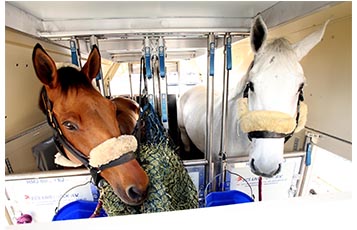
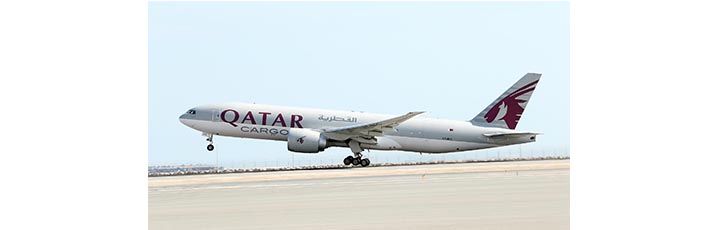
The horses along with approximately 20 tonnes of cargo and equestrian equipment per freighter were transported via two Boeing 777F charter operations, with an accompanying eleven grooms per freighter, to ensure care, and safe and secure carriage from Liège to Doha and back for the horses.

Horse

“We take great pride in our handling capabilities and ensure all appropriate care is taken, providing pets and other transported animals with a five-star service on the ground and in the air. Our focus remains on providing the special attention required, during all phases of transportation, to ensure a smooth comfortable and restful journey for the animals,” said Mr. Ulrich Ogiermann, Chief Officer Cargo for Qatar Airways.

“All Qatar Airways Cargo staff attend a number of training courses in animal handling, and our personalised service, high quality of operation, and excellent record of on-time delivery makes us a prime carrier for the transportation of live animals.”

Jan Tops, President of the Longines Global Champions Tour, said: “The horses had a first-class flight experience and I want to thank Qatar Airways Cargo for its close co-operation on this important matter. The welfare and safety of the horses is our top priority.”

Qatar Airways Cargo transports all kinds of animals in accordance with International Air Transport Association (IATA) Live Animal Regulations. Unlike pets such as cats and dogs, horses cannot be transported in the lower deck of regular passenger planes and must be flown on dedicated freighters. Prior to the flight, the horses are loaded into “air stables” or “horse stalls” which are special containers that can fit up to three horses side by side so that they are safe and secure while on the aircraft. A typical air stable is 294 cm wide and 232 cm high.

From January 2012 through to October 2014, Qatar Airways Cargo has transported 2,210 horses all around the world. In July 2014, Qatar Airways Cargo flew 53 showjumping horses from Calgary, Canada, to Liège in Belgium where they trained to participate in the World Equestrian Games (WEG) that were held in Normandy in August, while in March 2014 79 horses were transported from Liège to Doha and back, via two freighters for the CHI AL SHAQAB event.

B777F

By utilising the fleet of Boeing 777F and Airbus A330F aircraft, Qatar Airways Cargo offers customers worldwide an increasing portfolio of part and full-charter services.
By doing this, Qatar Airways has operated charters carrying cargo ranging from horses to outsized items for the oil and gas industry.

Qatar Airways Cargo completed the transition from a manually handled cargo environment to a fully automated cargo terminal at Hamad International Airport. The brand new terminal contains a 4,200 sq. m live animal facility with dedicated stalls for horses, kennels for pets and separate holding areas for various live animals. The facility is equipped with veterinary laboratory, washing bays, feeding area, hydraulic work stations, sick bays, quarantine area and exercise area. Expert animal health care services are provided on request, 24-hours a day, seven-days-a-week.

The brand new cargo terminal at Hamad International Airport offers state-of-the-art modern technology and five-star services to customers across the globe.

Brussels Airlines launches b.gift voucher

0

For the third consecutive year, Brussels Airlines offers its b.gift voucher for the holiday period. With a b.gift, one can purchase a gift voucher for a flight within Europe for one to four persons.

Brussels Airlines  puts a unique gift under the Christmas tree again this year: until 28 December included, a gift voucher is available for 99 euro, valid for a round trip flight to a European destination of Brussels Airlines in Light&Relax (Brussels Airlines’ recently launched travel option, which includes 23kg of checked luggage and 12kg of hand luggage).

For this year’s b.gift offer, Brussels Airlines has teamed up with taxi app Uber*. Each b.gift voucher earns the recipient a Uber ride for up to 15 euro, so that, after the flight, they can easily move around at their destination.

The b.gift voucher can be purchased via christmas.brusselsairlines.com and the recipient can redeem it against a round trip to one of the 32 selected destinations in Europe. B.gift, which is available for one to four persons, are valid for travel between 15 January and 15 June 2015.

There’s also something in it for the one who purchases and offers the b.gift to a loved one: they receive 500 Miles & More miles per voucher. (so up to 2000 miles, for a b.gift voucher for four persons).

With the b.gift promotion, Brussels Airlines shows again that it offers attractive and competitive fares. Last year, no less than 15,000 people received a b.gift voucher from a loved one under the Christmas tree. These were sold in only three weeks’ time.


*Uber is a ridesharing service based in San Francisco. The company uses a smartphone application to connect passengers with drivers of vehicles for hire. Customers use the app to request rides and track their reserved vehicle’s location. The service is available in over 200 cities worldwide today. www.uber.com


Tuesday 18 November, 2014


AEGEAN flight schedule for 2015: Real support to the Greek economy

0
  • 15 million seats available
  • 100 international destinations in 42 countries, 10 additional countries
  • New program “12 months 12 good news for YOU”  in 2015

AEGEAN confirmed its contribution to the development of both Greek tourism and the Greek economy, through the launch of the new flight schedule for 2015. The new schedule of AEGEAN was presented by the management of the company during a Press Conference held in Crete, attended by the Minister of Tourism, Mrs. Olga Kefalogianni, the Regional Governor of Crete,     Mr. Stavros Arnaoutakis, the representatives of local authorities, as well as by productive and economic bodies of Crete.

The new schedule includes a network of 134 destinations, 34 of which are domestic and 100 international, in Greece and 42 countries respectively, with 15,000,000 available seats, 2 million more than in 2014. The flights will be operated by one of the most modern fleets in Europe, which now consists of 56 aircrafts, following the recent investment in additional Airbus A320ceos. The increase of flights will be stronger in 2015 from the main bases of Athens and Heraklion, but it will also concern the activity of six other bases of the company (Rhodes, Corfu, Chania, Kos, Larnaca & Kalamata).

In particular, 10 new countries (Netherlands, Malta, Kuwait, Finland, Saudi Arabia, Estonia, Norway, Iran, Armenia, Croatia) and 16 international destinations (Helsinki, Toulouse, Deauville, Metz, Naples, Pisa, Malta, Amsterdam, Kuwait, Paphos, Riyadh, Tallinn, Oslo, Tehran, Dubrovnik, Yerevan) were added to the network of AEGEAN for 2015, while the number of destinations and frequencies in tourist countries such as France, Italy, Switzerland, England and German is significantly increased.

Special emphasis is given to the further development of the network of Athens, aiming to open new markets in new countries and new cities in traditional destinations, as well as the expansion of both the tourist season of Athens and the Aegean islands, which require the enhancement of the Athens hub to optimally boost their development. The effective extension of the tourism development in smaller areas, which is still lacking, is a special target for 2015. In this context, 15 new destinations and nine new countries were added to Athens network, while AEGEAN connects the Greek capital with 91 (61 external & 30 domestic) destinations in total, for which 11.5 million seats will be available. At the same time, the frequencies, the capacity and the connections to islands such as Naxos, Milos and Paros are significantly increased.

It is highlighted that the network of the Middle East and the wider North Africa and East, which includes a total of 8 countries (Egypt, Lebanon, Jordan, Israel, United Arab Emirates, Kuwait, Saudi Arabia, Iran) will be enhanced even more through the new program.

Overall, 15 million seats for 2015 concerns 7.7 million abroad seats in 100 destinations and 7.3 million domestic seats in 34 domestic destinations. In this way, the full coverage within Greece is more assured than ever before, as well as the dynamic support of the incoming tourism in all regions of the country. Moreover, as reflected in the results of 2014, by supporting the enhanced network and the lower fares, the company presents a balanced development both abroad and in Greece, since the overall traffic overcomes the number of 10 million passengers for the first time in Greek companies’ history.

From Heraklion, where the press conference took place, the company will operate direct routes to 44 international destinations in 21 countries in 2015, thus continuing the consistent policy of developing and strengthening the region. Actually, over the next year, the scheduled flights will be increased, while 1.95 million seats -21% more than in 2014- will be available.

Finally, AEGEAN announced the program «12 months 12 good news for you,” according to which the company will present each month of 2015 a new product, a new service. In this way, the strategic commitment of the company to bring even closer families, and connect professionals, young people, and its loyal passengers is enhanced.

In the context of the press conference, the Vice-President of AEGEAN, Eftychios Vassilakis, stated: “2015 is a milestone-year for AEGEAN. We invest in new fleet, in a network of 134 destinations and we offer 15 million seats. We proceed with the powerful enhancement of the hub of Athens, but we also support the regional development through increased flights from our regional bases. We continue and we enhance our policy of supporting small islands, a policy that brought impressive results in 2014 targeting to highlight the multiplicity of the Greek tourism product. However, above all, we renew our commitment to the further development and diversification of our services in favor of our passengers. The new program “12 months, 12 good news for you,” signals the quality of our commitment to innovation, special offers and services in 2015. The combination of growth and competitiveness, but also the further development of our services is a common challenge for our company and our country.”

Heraklion, November 18, 2014

easyJet customer retention and loyalty reach record levels

0

Aicraft%20lgw

The airline trials frequent flyer loyalty scheme to reward most regular passengers

easyJet, the UK’s largest airline, has today reported that it has increased the proportion of bookings made by existing customers to 57%, up from 50% in 2010. This means that over 37m passengers are rebooking each year compared to 25m four years ago – a 50% increase. The figure for returning business customers is even higher at 62%.

Loyalty supports both revenue growth and cost control because it is much more cost effective to retain existing customers than to find new customers.

To drive this trend still further the airline has launched a trial of a frequent flyer loyalty scheme to reward most regular passengers. The trial, which has been running for the past three months and involves more than 15,000 passengers in the UK, France and Switzerland, has been well received by the trial group with 91% telling us it is appealing to them.

Benefits to participants of the trial scheme include increased flexibility on bookings, a price guarantee and a dedicated phone number.

Carolyn McCall, Chief Executive Officer of easyJet, commented:

“More customers are trying us, liking us and coming back to us.

“This is testament to our winning formula of low prices and warm, friendly service, as well as our unrivalled network.   Popular new initiatives like allocated seating meant many people tried us for the first time and we are absolutely focused on driving loyalty so they choose us flight after flight.
 
“In setting up our trial we listened to our passengers to understand what they most value and tailored the scheme to reflect this.  Unlike traditional airlines difficult to use mileage schemes our loyalty scheme gives passengers benefits they really value and is simpler to run.”

The increase in loyalty over the last few years has been driven by a number of initiatives.

easyJet has the popular easyJet Plus scheme which offers customers unlimited allocated seat choice, dedicated Bag Drop and Speedy Boarding, as well as upcoming enhancements like the addition of Fast Track security at major airports in early 2015.  All of this enables our customers to travel stress-free through the airport and on-board.

Across Europe, easyJet Plus membership has risen by 14% in the last 12 months to an all-time high, with retention rates having increased by over 30% in the same period, as customer recognition of the value of membership has grown strongly, particularly in Spain and Portugal.

easyJet also participates in three leading loyalty schemes – Nectar, RBS Your Points and Emirates Skywards – which enables members of these schemes to acquire easyJet flights when they redeem points.

18 Nov 2014

British Airways: “Miami Twice” daily by A380

0
There will be ‘More seats to South Beach’ as British Airways adds Miami to its Airbus A380 network next October with two daily flights to the Florida sunshine on board the superjumbo.

The new A380 route to Miami is part of British Airways’ plans to enhance the usage of facilities in Terminal 3 and Terminal 5 by combining its operations in two terminals and moving out of Terminal 1.

In the coming 12 months, flights to 20 British Airways destinations, including Miami, will change terminals at Heathrow and by the middle of October 2015 all of the airline’s services will depart from either its flagship home of Terminal 5 or the main oneworld alliance Heathrow base in Terminal 3.

Lynne Embleton, director of strategy for British Airways, said: “The acquisition and integration of bmi into British Airways has been a great success but one of its challenges was having to split our flights between three terminals for more than three years while the new Heathrow Terminal 2 was being built.

“It is great news that we can now look forward to having flights from just two Heathrow terminals. This means that we can offer our customers and those from our oneworld partners smoother journeys, especially if they are connecting between flights.

“British Airways’ A380 services have proved to be really popular with our customers and we are confident that Miami will be equally successful as part of our Atlantic Joint Business with American Airlines, US Airways, Iberia and Finnair.

“To help prepare for greater numbers of long-haul customers in Terminal 3 and the introduction of our A380 services for the first time, we will be renovating and extending our check-in areas in Terminal 3 as well as working with Heathrow Airport to enhance its baggage systems.

“Being based in two terminals rather than three also means we can now use our short-haul aircraft in a more efficient way and improve the short-haul schedules we can offer our customers.”

British Airways currently operates between 650 and 700 flights each day at Heathrow, carrying an average of 95,000 customers to or from the airport.

Once the moves are complete Terminal 5 will be home to just under 120 destinations and Terminal 3 will serve 21 British Airways destinations.


Tuesday November 11, 2014

Bombardier to Deliver New Train Fleet for Gatwick Express Services

0
  • UK train operator Govia Thameslink orders 108 additional BOMBARDIER ELECTROSTAR cars


Rail technology leader Bombardier Transportation has signed a contract to deliver 27 new four-car trains for Govia Thameslink Railway (GTR), for operation on the Gatwick Express. The contract for 108 cars has a total value of approximately £145 million GBP (182 million euro, $227 million US).

Under the contract, Bombardier will supply GTR with the latest version of the BOMBARDIER ELECTROSTAR family of electrical multiple units, with additional features for the rail-air route. These features include easier access for passengers with luggage, improved storage space, two by two seating and WiFi. The new Class 387/2 trains will be designed and manufactured at Bombardier’s Derby facility.

Charles Horton, CEO of GTR and Managing Director of Southern, said, “This is great news for our Gatwick passengers, but also for those travelling from Brighton as in the off-peak season, some of these trains will be extended to there, while still maintaining the fast connection between Victoria and Gatwick.”

The new order comes as GTR celebrates the arrival of another fleet of Bombardier’s latest technology trains, the Class 387/1. In July 2013, Bombardier won a contract to deliver 116 new air-conditioned carriages for GTR, which are scheduled to enter service early in the next year. The new trains will improve services on the Bedford to Brighton line as they replace the 27-year old Class 319 vehicles currently in operation on that route. This latest order for 108 additional cars formed an option within the original 2013 contract.

Mr Horton added, “We took over the operation of the Thameslink route in September and we are already introducing new trains that will transform our passengers’ journeys on services between Bedford and Brighton.”

Rail minister Claire Perry welcomed today’s announcement that Bombardier would be providing the new Gatwick Express trains, which will be built as a run on to the existing 116 carriage order, saying, “These new British built trains are great news for passengers and a boost for the economy. They will transform journeys on the Gatwick Express and Thameslink routes and safeguard jobs at Bombardier’s Derby factory.

“As part of our long term economic plan over £38 billion is being invested in improving our railways over the next five years and it’s great to see companies like GTR investing in the service it provides for its customers.”

The ELECTROSTAR has a proven track record for reliability and environmental performance and is already in daily passenger service with other UK train operators including c2c, Southeastern, London Overground, and Stansted Express. The Gautrain railway in Johannesburg, South Africa, also operates ELECTROSTAR trains. Over 800 Bombardier trains serve London every day, supported by 700 employees on 12 sites.

This is the latest in a series of contract wins and successful projects for Bombardier in London. On the Underground, Bombardier delivered the Victoria Line upgrade project on time and under budget, and is in the process of delivering new trains for the sub-surface lines, the Underground’s first to feature air-conditioning and walk through gangways. In addition, Bombardier has also delivered all the new rolling stock for the London Overground service. This service is currently being extended from four to five-car trains and provides a maintenance service for those trains at Transport for London’s New Cross Gate depot.

Earlier this year, in the 175th year of train manufacture in the city of Derby, Bombardier received the prestigious contract to deliver a flagship fleet of 65 new trains for the London Crossrail project. These new high performance trains, derived from the latest BOMBARDIER AVENTRA product platform and customised for Crossrail, will be introduced in 2017. Bombardier will also maintain the vehicles from a new purpose-built depot at Old Oak Common.


November 18, 2014 Berlin – Transportation,  Press Release

Aviation24.be latest

Aviation24.be trending