Home Blog Page 1629

Air France seeks to attract business travellers to its medium-haul network

1

With quick and easy access through the airport, new leather seats on board the aircraft, new gourmet attentions and a more flexible option for business customers, Air France aims to win the medium-haul battle on flights to and from Paris-Charles de Gaulle, by offering the best product on the market.

Air France seeks to attract business travelers to its medium-haul network

Since unveiling its new long-haul offer, the Company is pursuing its move upmarket on its medium-haul network with an investment of 50 million euros. Air France has listened to its customers, questioned travel managers and collected feedback from close to 10,000 people in building its new offer.
“Winning the preference of each of our customers on departure from Europe by repositioning Air France among the world’s leading airlines in terms of products and services is a strategic priority of the Perform 2020 plan”, stated Frédéric Gagey, Chairman and CEO of Air France.

A NEW MORE COMFORTABLE SEAT

Starting in April 2015, Air France will gradually introduce a completely redesigned seat on board its medium-haul fleet. The seats, upholstered in high-quality leather in all the cabin classes, will offer optimum travel comfort, ideal for working, resting or enjoying a meal before arriving at destination.
The new seat will be fitted out on 24 Airbus A319s in the first half of 2015. It will subsequently equip 25 Airbus A320s during the first half of 2016. In total, 7,800 seats will be installed.

A MORE GOURMET DINING OFFER

In Business class, even on the shortest flights, passengers will be offered a full breakfast in the morning (coffee, tea, fruit juice, bread and pastries), a snack or cold meal at other times of the day. Service on longer flights will be modeled on that of long-haul flights. A welcome drink, hot meals, wine service, gourmet coffee and liqueur will be offered. On all flights, warm pastries and crusty bread will be served directly from the oven.
In Economy, on short flights, all customers will be offered larger croissants, a choice of sweet or savoury items or more gourmet sandwiches depending on the time of day. On longer flights, passengers will be able to enjoy a hot meal. Throughout the flight, a wide selection of beverages (with or without alcohol) will be available in all cabins.

STAY CONNECTED ON BOARD!

Air France, in partnership with Orange, will shortly be offering customers the possibility to surf the internet, read emails, watch live TV or a series, with an inflight WiFi service. As from summer 2015 and during a three-month trial phase, Orange and Air France will offer fee-paying Wi-Fi access on board two Airbus A320s on the short and medium-haul networks.

BUSINESS TRAVELERS AT THE HEART OF AIR FRANCE’S SPECIAL ATTENTIONS

In terms of fares, Air France has designed a new tailored offer dubbed “Economy Flex” for business customers. Tickets will go on sale in January 2015 for flights starting in April 2015. Efficiency, rapidity and total flexibility guaranteed.
– Tickets are modifiable and refundable at no extra charge*;

– Customers can take a flight earlier than initially scheduled**, the same day, at no extra charge;

– Access to the Skypriority services for a quick and easy airport experience;

– On board, passengers are systematically allocated seats at the front of the Economy cabin, allowing them to board and disembark in priority;

– A new offer that can be fully combined with the other available fares. For example, a customer can reserve an “Economy Flex” fare on the outward flight, and make the return flight with a “Mini” fare.

– An item of hold baggage weighing no more than 23 kilos is authorized free of charge. One bag and an accessory (handbag, laptop, camera) not exceeding 12 kilos can be carried in the cabin;

– Possibility to earn Miles as part of the Flying Blue frequent flyer program.
With its vast network, a wide choice of flight times and innovative services, Air France intends to now more than ever, make the best use of its strengths to become the privileged partner of business travelers.
*tickets can be modified at no extra charge in the same booking class


** depending on seat availability.


Thursday 27 November 2014

Austrian Airlines becomes Official Airline of Eurovision 2015

0

Today, Austrian Airlines became the Official Airline of the 2015 Eurovision Song Contest to be held in Vienna, the capital of the country next May.

“We are pleased to announce Austrian Airlines as a partner of the Eurovision Song Contest and are sure with their help the event will fly even higher in 2015,” says Jon Ola Sand, Executive Supervisor of the contest on behalf of the EBU.

As the Official Airline of the Eurovision Song Contest, Austrian Airlines has been granted pan-European media, association, event and new media rights for the upcoming events in Austria.

“As the official airline for the Eurovision Song Contest 2015 we are proud to fly people from all over Europe to this unique music show hosted in Vienna,” says Andreas Otto, CCO of Austrian Airlines.

Austrian Airlines is Austria’s largest carrier and operates a global route network of round 130 destinations. That route network is particularly dense in Central and Eastern Europe with 39 destinations. Thanks to its favourable geographical location at the heart of Europe, the company’s hub at Vienna International Airport is the ideal gateway between East and West. Austrian Airlines is part of the Lufthansa Group, Europe’s largest airline group, and a member of the Star Alliance, the first global alliance of international airlines.

The 2015 Eurovision Song Contest is set to take place on the 19th, 21st and 23rd of May next year at the Wiener Stadthalle in Vienna, Austria.

Geneva, Switzerland


Air France and Orange test Wi-Fi on board short- and medium-haul flights

0

As from summer 2015 and during a three-month trial phase, Air France and Orange will offer Wi-Fi access on board two Airbus A320s on the short and medium-haul networks.

Air France and Orange test Wi-Fi on board short and medium-haul flights

Stay connected with internet in the sky 

Customers travelling on two Air France short and medium-haul Airbus A320s will be able to surf the internet, read their emails, watch live TV or enjoy their favourite series with a fee-paying* Wi-Fi ac-cess offered by Orange.

Passengers will be able to use their laptops, tablets or smartphones to connect via Wi-Fi to the internet or a portal offering a wide choice of entertainment (live TV, movies, series and music) as well as practical information aimed at making their journey even more enjoyable (connecting flight times, services available at the destination, etc.).


“Being permanently connected has become an integral part of many of our customer’s daily lives, notably for business travelers on our short and medium-haul flights. This innovative project conducted in partnership with Orange intends to meet this high expectation as closely as possible. With this Wi-Fi offer on board our aircraft, we also wish to remain on the cutting edge of developments in digital technology” stated Frédéric Gagey, Chairman and CEO of Air France.

“In-flight Wi-Fi is something that everyone is eager to experience and we are very happy to be able to meet their expectations thanks to this project conducted with Air France, a partner of reference.  This is a new demonstration of the Orange group’s capacity to innovate, which is mobilizing all its expertise in the area of networks, content and business”, added Delphine Ernotte Cunci, Deputy Senior Executive Orange France.


As part of this joint project, Air France Industries is in charge of installing the equipment required for operating and maintaining the WiFi service on the two aircraft. Orange Business Services oversees the technological solution – from the supply of the satellite network, which allows to offer a Wi-Fi connection on board, to the portal accessible by passengers.

Air France and Orange respond to their customers’ needs 

To consolidate Air France and Orange’s innovative project, a BVA study revealed that passengers are looking for a simple in-flight Wi-Fi access, free of engagement. 78% of Air France customers say that they are interested in having access to the internet via Wi-Fi on board. 28% of passengers say that they are willing to pay for this service if the price is suitable.

Source: study by BVA, a market and opinion research agency, carried out among over 2,000 Air France customers.

*Offer subscription terms and conditions available from Orange in 2015.

Thursday 27 November 2014

Fraport Consortium Wins Tender for 14 Greek Regional Airports

0

Fraport–Copelouzos to Manage Concession for 40 Years – 14 Airports Including Thessaloniki, Chania (Crete), Kerkyra (Corfu), Kos, Rhodes and Others – Some 19 Million Passengers Annually

Fraport AG Frankfurt Airport Services Worldwide and its partner Copelouzos Group have been selected as preferred investor for a 40-year operating concession by the Hellenic Republic Assets Development Fund (HRADF) for 14 regional airports in Greece:  including Aktio, Chania (Crete), Kavala, Kefalonia, Kerkyra (Corfu), Kos, Mitilini, Mykonos, Rhodes, Samos, Santorini, Skiathos, Thessaloniki – Greece’s second largest city – and Zakynthos.  Combined, these airports served a total of about 19.1 million passengers in 2013.  The total purchase price of 1,234 million euros will be paid by the time of closing, expected in the autumn of 2015.  Fraport AG will hold a majority share in the consortium.

Against strong international competition, Fraport and Copelouzos delivered a convincing bid to win the privatization tender for these Greek airports. Fraport AG’s executive board chairman Dr. Stefan Schulte expressed satisfaction with this latest new expansion of the company’s international portfolio:  “The Greek regional airports add another airport investment with dynamic development potential. The choice for Fraport underscores our position as a leading global airport manager. Our extensive know-how gained over many decades will contribute to expanding and strengthening the competitive position of the Greek regional airports.”

As new owner, the Fraport/Copelouzos consortium will be responsible for maintaining, operating, managing, upgrading and developing the 14 gateways of international tourism until 2055.  The mainland airports include Aktio (PVK), Kavala (KVA) and Thessaloniki (SKG).  The remaining eleven are located on the Greek islands of Corfu/Kerkyra (CFU), Crete/Chania (CHQ), Kefalonia (EFL), Kos (KGS), Mitilini (MJT), Mykonos (JMK), Rhodes (RHO), Samos (KGS), Santorini (JTR), Skiathos (JSI) and Zakynthos (ZTH).

The founder and chairman of Copelouzos Group, Dimitris Copelouzos, stressed the project’s importance at the local, national and international level:  “Modernization of the airports will allow us, via reliable and safer transportation services, to further enhance Greek tourism continuously – thus empowering competitiveness of the local and national economies and generating new jobs. Our goal is to create airport gateways that meet the growing needs and expectations of the Greek people as well as visitors from around the globe.”

Greece ranks among the world’s top 10 countries in terms of the number of UNESCO World Heritage Sites. Tourism is a key sector of the Greek economy, accounting for about 18 percent of the country’s GDP.  According to the UN World Tourism Organization (UNWTO), the number of international tourists visiting Greece grew by 17 percent in the first half of 2014.  This continues the strong performance of last year when Greece welcomed some 18 million international tourists (up 16 percent) who generated 16 billion U.S. dollars for the economy (up13 percent).  The country is striving to exceed 20 million tourists per year – double Greece’s population. For more information, visit Greece’s official tourism and business investment websites.

25.11.2014

Wizz Air operated 100,000 flights in 12 months

0

Wizz Air, the largest low-cost airline in Central and Eastern Europe*, today announced that, for the first time in its 10 year history, it has operated 100,000 flights over a 12 month period. This represents almost 30 billion flown seat kilometers and over 1.3 million crew hours worked**. With a completion rate of 99.9% WIZZ’s 15.5m passengers enjoyed an excellent service delivery in this period.

Car Rentals

Diederik Pen, Chief Operations Officer of Wizz Air, said: “We are thrilled to have operated 100,000 flights in the past 12 months. This milestone in WIZZ’s history confirms our staff’s dedication to satisfy customer demand for affordable air travel in 36 countries. We have already announced more than 30 new routes that will commence in the following months as we look forward to performing even more flights and offering a personalized travel experience with our wide range of additional services and products.”

*Source: Innovata, on the basis of scheduled departing seat capacity for the year ended 30 June 2014 (“H1 2014”) Central and Eastern Europe (CEE) is a region comprised of Albania, Belarus, Bosnia and Herzegovina, Bulgaria, Croatia, the Czech Republic, Estonia, Hungary, Kosovo, Latvia, Lithuania, Macedonia, Moldova, Montenegro, Poland, Romania, Russia, Serbia, Slovakia, Slovenia and Ukraine.

**Source: Internal Company information Measured period 23 Nov 2013-22 Nov 2014

25/11/2014

Regional and national strikes in December: impact on Brussels Airport

6

Brussels Airport expects severe disruption due to strikes on 8 and 15 December

Brussels Airport wishes to attract passengers’ attention to the severe impact the strikes announced for 8 and 15 December in Belgium may have on them. It is not possible at the moment to assess the exact impact of the strikes. Passengers are invited to contact their airline or their travel agent.

8 and 15 December, regional and national industrial actions
With Brussels Airport located in Flemish Brabant, the regional strikes planned on 8 December in that province and in the neighbouring Brussels Capital Region and province of Walloon Brabant may impact airport operations and therefore the passengers.
On 15 December a general 24-hour national strike is announced.
Both strikes are expected to have a severe impact both on public and private transport as well as on the airport operations. This may lead to delays and cancellations. The airport operator urges passengers to avoid taking a plane on either of these dates. Passengers who are scheduled to fly on 8 or 15 December are requested to contact their airline or travel agent for more details on the status of their flight and for advice on how best to proceed.

Other industrial actions
Other industrial actions may also have an impact on Brussels Airport and its passengers. The strike announced by a train drivers’ union on 11 December may impact rail transport to the airport and the work-to-rule actions by the Federal Police on 12 December may cause delays at border control for non-Schengen passengers.

Permanent information
Brussels Airport is closely monitoring the situation and will keep its passengers informed through its communication channels of any developments.

Updated December 4, 2014

VietJet Air celebrates delivery of first aircraft ordered from Airbus

0

Carrier embarks on major expansion with best-selling A320 Family

Vietnam’s VietJetAir has celebrated the delivery of its first A320 ordered directly from Airbus at a special ceremony in Toulouse today. The event was attended by top management from the airline, including Vice Chairwoman Nguyen Thi Phuong Thao and Managing Director Luu Duc Khanhm, and witnessed by Vietnam’s Deputy Minister of Transport Pham Quy Tieu.

The delivery marks the start of a major expansion at the airline which will see it acquire up to 100 A320 Family aircraft, including 63 on firm order with Airbus. In addition, the airline has purchase rights with Airbus for another 30 aircraft and will lease seven more from third party lessors.

“The A320 has proven to be extremely efficient in service with VietJetAir and is a favourite with our passengers,” said Luu Duc Khanh, Managing Director, VietJetAir. “Based on this experience, we look forward to developing our business across the Asia-Pacific region, with the most economic and comfortable aircraft. We are delighted to celebrate this delivery as we embark on a new phase in our expansion.”

“This ceremony marks a new exciting milestone in our relationship with VietJetAir and with Vietnam, one of the fastest-growing markets in the world,” said John Leahy, Airbus Chief Operating Officer Customers. “We are confident that the reliable and proven A320 Family, combining the lowest operating costs with the highest levels of passenger comfort, will play a key role in enabling VietJetAir to fly to even greater heights.”

VietJetAir first took to the skies in 2011 and is the first private airline in Vietnam to operate domestic and international flights. Today, the carrier operates a fleet of 17 leased A320s on a network covering Vietnam and a growing number of destinations across Asia.  The 63 aircraft already on firm order with Airbus comprise 14 A320ceo, seven A321ceo and 42 A320neo.

Offering the lowest operating costs in its class, the A320 Family is the world’s best-selling single-aisle product line. To date, nearly 11,000 aircraft have been ordered and more than 6,200 delivered to over 400 customers and operators worldwide. The A320ceo and A320neo share over 95 percent airframe commonality, enabling seamless operation of the various models in a single fleet. The A320neo (new engine option) incorporates cabin innovations, new generation engines and Sharklets (large wing tip devices) which together will deliver 20 percent in fuel savings per seat by 2020.

26 NOVEMBER 2014 PRESS RELEASE

Flybe signs white label agreement with SAS

0

Flybe today announces that it has signed a white-label agreement to fly services for SAS, Scandinavia’s largest carrier.


Flybe will operate four ATR72-600 aircraft on behalf of SAS with initial operations due to start in October 2015.

The aircraft, which will operate under Flybe’s Airline Operating Certificate (AOC), will be used on short-haul SAS services in Europe and are being provided with full flight and cabin crew as well as maintenance.

The agreement is for a period of six years with scope for it to be extended and also for a further four aircraft to be brought into service as required.

SAS carries around 30 million passengers per year to destinations in Europe, USA and Asia.

Saad Hammad, Flybe’s Chief Executive Officer, said: “We are delighted to announce this agreement with SAS which provides a turn-key regional capacity solution. This white label agreement with Scandinavia’s largest carrier confirms Flybe’s twin-engine growth strategy and we are excited about its long-term potential. We look forward to starting operations in Scandinavia next year.”

Chief Operating Officer Flemming Jensen, SAS, said: “It’s always a great pleasure to take in brand new aircraft in our traffic. We already have very good experiences with the ATR turboprop, and our customers can look forward to high quality and a pleasant and joyful journey with Flybe for SAS. This agreement means that SAS’ production can become even more effective and we also streamline our fleet with respect to the type of aircraft external carriers fly for us.“

Flybe Group plc 26 November 2014

Brussels Airport is the first airport community in the world where stakeholders are CEIV Pharma certified

0

Brussels Airport is the first airport community in the world where stakeholders are CEIV Pharma certified (CEIV = Centre of Excellence in Pharmaceutical Handling)

Brussels Airport stands out internationally for its dedicated infrastructure for the transport and handling of products that require an unbroken cold chain, in particular pharmaceutical and biotech products. Brussels Airport is the first airport in the world where stakeholders of the cargo community in a joint approach will receive the CEIV Pharma certification. Currently 11 companies active at BRUcargo, the cargo site of the airport, are participating in the program.

“This acknowledgement allows Brussels Airport and its cargo community stakeholders to consolidate its prominent position in the world and to confirm its level of competence as leading transport hub in Europe”, says Arnaud Feist, CEO Brussels Airport Company.

Pharmaceuticals and biotech: essential industry for Belgium
The pharmaceutical and biotech industry is in full expansion around the globe (+8% between 2007 and 2013). Belgium is ranking at the top with 150 companies active in the industry in the three regions, which can also boast the presence of universities that are recognised for their competence in these sectors. The industry provides an employment of over 30,000 jobs. Export figures of the pharmaceutical and biotech products manufactured in Belgium amount to 36.53 billion euros*. Its share in the economic development of Belgium is considerable.

Air Transport: preferred means of transport
One of the principal stakes in the pursuit of this development is the transportation of these products to their final destination. The manufacturers have high expectations and specific requirements with regard to maintaining the quality of the products and the properties of the active ingredients throughout the logistics chain. They call on transportation services that, on the one hand, ensure the shortest route to the final customer and, on the other hand, maintain the quality of the product through an unbroken cold chain. For these companies, transport by air remains the best possible solution.

International certification for the largest cargo airport in Belgium
On an international level, air transport until now was not subject to any certification acknowledging the reliability and transparency of the transport chain in order to respect European regulations for the transport of pharmaceutical products. Besides being a hub that connects Belgium to the rest of the world (200 nonstop destinations), Brussels Airport also provides a state-of-the-art infrastructure and has all competences allowing it to maintain the cold chain for all perishables but also and foremost for biotech and pharmaceutical products.

The International Air Transport Association (IATA), together with Brussels Airport and in collaboration with the competent agencies and the members of the industry concerned, has put into place a certification project for all parties involved in the handling and transportation of pharmaceutical products that require an unbroken cold chain.

The Belgian regulator, the federal agency for medicines and health products (famhp) is endorsing the IATA CEIV program. It has been involved in the BRUcargo community certification from the start of the program. famhp Inspectors have also participated in the training sessions and workshops.

Josiane Van der Elst, Director General DG Inspection famhp says “Although this type of IATA certification is not an authority-issued regulatory document, initiatives of structured control on transport are important and welcomed by famhp DG INSPECTION. The IATA certification gives more confidence that pharmaceutical air freight shipments are handled in accordance with EU GDP guidelines”.

Source : Brussels Airport

Strikes on 8 and 15 December in Brussels may affect Brussels Airlines flights

3
Social actions in Belgium on 8 and 15 December 2014 may cause flight disruptions.

At this stage Brussels Airlines has no clear indication what will be the exact impact of the social actions announced for 8 and 15 December in various Belgian industries. We monitor the situation closely and we do everything we can to limit the inconvenience for our passengers.

Although we cannot predict the impact on our scheduled flights yet, we offer our guests, booked on a flight on 8 or 15 December, the possibility to rebook to an earlier or later date at no charge.
Conditions for rebooking:
a) Only valid for reservations made on/before 24 November 2014
b) The new date of travel must be on/before 19 March 2015.
b) Route changes are not permitted
Rebooking your flight can be done at the Brussels Airlines ticketing desk at the airport, our Customer Contact Centre (tel. +32 (0)2 723 23 62) or via your travel agency.
Your reservation cannot be changed online.
We monitor the situation closely and we will provide updates as soon as more information becomes available. Please keep an eye on this page, as well as our Facebook and Twitter page.
We apologize for the inconvenience and thank you for your understanding.

ATR obtains EASA certification for the new developments in the ATR -600 avionics suite

0

The propeller-bladed regional aircraft manufacturer ATR is pleased to announce that it has obtained certification for the very latest innovations developed for the avionics of the ATR 42-600s and ATR 72-600s from the European Aviation Safety Agency.

The new certification concerns the LPV (Localizer Performance with Vertical guidance), RNP-AR 0.3 (Required Navigation Performance with Authorization Required) and V-NAV (Vertical Navigation) approach functionalities coupled to the autopilot. These new improvements will allow the latest generation ATRs to follow more accurate and even more secure approach trajectories thanks to satellite navigation, without requiring ground-based navigation facilities. These new features, which significantly reduce the pilot’s workload, are integrated into a new version of the ATR -600 avionics, the “Standard 2” version.

“LPV” is a feature allowing approach procedures based on GPS information augmented by geostationary satellites, which allows the aircraft to be guided on vertical and horizontal axes, without the need of support from a ground station. This new feature is particularly useful for airports not equipped with an ILS (Instrumental Landing System), notably certain regional airports which are small or which have little infrastructure. High precision LPV approaches can achieve minimums of up to 200 feet, thus permitting landings with greatly reduced visibility.”RNP-AR 0.3″ allows aircraft to follow trajectories with greater accuracy, thus with better anticipation of potential obstacles when approaching difficult to access airfields. The fundamental contribution of RNP-AR compared to conventional RNAV (GPS) approaches is that they are subject to increased monitoring of aircraft performance combined with onboard navigation alerts. By taking into account these safety constraints, these approaches also permit reduced minimums compared to conventional RNAV approaches. In addition to these advantages, this new feature is also used in the management of traffic at heavily congested airports or for anti-noise procedures.

“VNAV”, coupled to the autopilot, provides vertical guidance managed by the aircraft’s navigation calculator (FMS). Based on the calculations of the FMS, the autopilot controls the aircraft to follow a specified vertical profile. This more accurately defines descent and approach trajectories, providing better safety in relation to the possible presence of obstacles. VNAV significantly reduces the workload of pilots approaching airports; this functionality is essential for RNP-AR operations.

Carmine Orsi, ATR’s Senior Vice-President Engineering, welcomed the obtaining of this certification, “which will allow ATR -600s to be even more efficient, more economic and more versatile. We are pleased to offer our operators the very latest innovations in terms of navigational aids and thus facilitate their day-to-day operations, while further increasing aviation safety and helping reduce congestion at certain airports“.

Monday 24 November 2014

Current News: Berlin Brandenburg Opening Schedule Tables in December

1

Current news related to BER does not reflect the present status of the work at FBB. What is correct is that we will (as has been noted publicly on many occasions) be discussing the schedule tables for the opening of BER during the Supervisory Board meeting on 12 December of this year. Preparations are under way. Jörg Marks, Head of Operations: “A number of completely different subjects are being indiscriminately confused in the reports now circulating. The agreed scheduling will be followed. We are evaluating the various topics individually and will incorporate them into schedule tables which will be discussed in December. The fact that some voices are calling for a ‘fundamental overhaul’ of the airport can, in my opinion, be explained only by a lack of knowledge about the concrete situation.”

The reports now being circulated completely misrepresent the actual status quo especially with respect to the planning which is still required. Jörg Marks, Head of Operations: “As of the missed opening date in June 2012, the terminal building had been expanded and revised a number of times without the necessary basis of adequate planning. We will not repeat this mistake. We know what we are doing. We are currently preparing valid overall plans and will use them as a basis to install and document functioning technical systems. Without this strict procedure, the authorities will never accept the terminal.”

The current status in brief: The safety systems (such as the smoke removal systems) and the building must be approved in accordance with construction law for the completion of BER and its acceptance by the authorities. FBB is at this time preparing two addenda to the construction permit for the smoke removal systems as well as the required conversions. The one addendum (submission scheduled for spring 2015) describes the mechanical smoke removal systems. This includes, for instance, the breakdown of the large Smoke Removal System 14 into smaller units. The other addendum (submission scheduled for summer 2015) is required to depict the conversions required during the terminal repair work in correct planning terms. The changes include corrections in the room numbers, changes in the room assignments, reoutfitting necessary for safety reasons and similar measures. This addendum is also required to describe to the assessors and inspecting authorities the final inspection requirements. The building and technical systems can be inspected solely on this basis.

24.11.2014

Airlines announce new customer protection agreement: No passenger left behind after airline bankruptcy

0

The International Air Transport Association (IATA) announced a new arrangement to help passengers impacted by airline bankruptcy. A voluntary agreement on behalf of its members flying to, from and within Europe will cover the repatriation of passengers unable to return home due to an airline ceasing operations as a result of financial failure.

“I am delighted to say that passengers left stranded in the rare and unfortunate event of an airline bankruptcy will be offered ‘rescue fares’ from airlines to ensure they can get home, “ said Tony Tyler, IATA’s Director General and CEO, speaking at a round-table meeting with journalists in Brussels on Tuesday. The agreement formalizes a long-standing custom that many airlines have traditionally offered in these rare instances.

Under the agreement, in the event of an airline bankruptcy, IATA member airlines flying to and from the EU will make their best efforts to offer repatriation to passengers stranded away from home. These passengers will be provided access to discounted transport to return home, subject to available capacity.   The ‘rescue fares’ of a nominal amount will be available for purchase up to a maximum of two weeks after the event to anyone flying  to and from or within Europe who does not already possess insurance covering this eventuality.  States responsible for the licensing of the insolvent airline should also play their role in communicating to stranded passengers the possibility of this rescue service.

“This agreement on rescue fares shows that the airline industry is more determined than ever to ensure reliable and consistently excellent customer service. Airlines have formalized a unique cooperation agreement that puts passenger needs first,” said Tyler.

The European Commission has estimated that between 2011 and 2020, only 0.07% of all passengers could be affected by airline bankruptcy, and of them, only 12% would require assistance in getting home.  A permanent statutory fund to aid passengers in such situations has been a topic of considerable discussion. The airline industry has opposed such a fund as financially prudent airlines would be subsidizing riskier airlines. More importantly, estimates of the bureaucracy needed to run the fund suggest that up to 85% of the money would be eaten up in administration.

“A compulsory levy on airlines to deal with repatriation would not serve anybody’s interest. We commend the European Commission for resisting this and for encouraging airlines to adopt this coordinated and customer-focused approach,” said Tyler.

Press Release No. 63, Brussels – 25 November 2014

?SkyWest, Inc. Confirms Firm Order for Seven E175 jets

0

Embraer S.A. and SkyWest, Inc. (SkyWest), have confirmed a firm order for seven E175 jets. The aircraft will be flown by SkyWest Airlines under a Capacity Purchase Agreement (CPA) with Alaska Airlines. The value of the firm order, which will be included in Embraer’s 2014 fourth-quarter backlog, is estimated at USD 301 million, based on 2014 list prices.

These aircraft are part of SkyWest’s previous order for 100 (40 firm and 60 reconfirmable), E175 current generation E-Jets – with an additional 100 options – placed in May 2013, taking the firm order number to a total of 47. The E175s for Alaska Airlines will be configured with 76 seats including 12 First Class seats. Deliveries are schedule to begin in the second semester of 2015.

“This order confirmation reinforces the superior economics, performance and passenger appeal of the E175 in the U.S. market,” said Paulo Cesar Silva, President & CEO, Embraer Commercial Aviation. “SkyWest’s agreement with Alaska Airlines is a wonderful endorsement of the aircraft and adds a prestigious new operator to our list. In addition, the Embraer E-Jet will be introduced to passengers in a new region of the country.”

“We’re pleased to expand our relationship with Embraer,” said SkyWest, Inc. President Russell “Chip” Childs. “With 15 E175s already flying in the SkyWest network, we couldn’t be more pleased with the design and performance of these state-of-the-art E-Jets.”

SkyWest is the largest regional airline group in the world and is the parent company of SkyWest Airlines and ExpressJet Airlines. Both companies have long histories with Embraer and were early customers for the Embraer EMB 120 Brasilia turboprop aircraft. SkyWest Airlines operates a fleet of approximately 15 E175 and 39 EMB 120 Brasilia aircraft. ExpressJet Airlines operates 226 aircraft of the ERJ 145 family and is the largest ERJ operator in the world.

In a separate deal with Embraer, announced in June of 2013, SkyWest became the launch customer of the E175-E2, ordering 100 aircraft with 100 additional options, for deliveries beginning in 2020. As the leader in the 70 to 130-seat segment, Embraer continues to invest in the E-Jets family, which is flown by some 65 airlines from 45 countries.


São José dos Campos, Brazil, November 25, 2014

Boeing Delivers First Direct Purchase 737-700 to Ruili Airlines

0

Efficiency of Boeing 737 supports the new start-up carrier’s growth

Boeing and Ruili Airlines today celebrated the arrival of the airline’s first direct purchase Next-Generation 737-700. Ruili is a newly established private airline based at Changshui International Airport in Kunming, the capital city of  China’s Yunnan province.

“This is a momentous step forward for Ruili Airlines as we continue to enhance our fleet,” said Ma Zhanwei, president, Ruili Airlines. “We hope that the competitive advantages offered by the 737 will enable us to grow from a start-up airline to a driving force in China’s aviation industry.”

The new airplane is the first of 14 737 orders and commitments from Ruili Airlines, including eight 737-700s and six 737 MAXs. The carrier currently operates two 737-700s and one 737-800 serving seven domestic routes in China.

“We are honored to celebrate this milestone delivery with Ruili Airlines,” said Ihssane Mounir, vice president of Sales for Northeast Asia, Boeing Commercial Airplanes. “Our Next-Generation 737 delivers market-leading efficiency, reliability, and operating costs, which will all contribute significantly to the successful growth of Ruili Airlines.”

Known for its reliability, fuel efficiency and economical performance, the 737-700 has been selected by leading carriers throughout the world, and has contributed more than 1,200 orders to the strong success of Next-Generation 737 family orders.

Ruili Airlines obtained its public air transport enterprise business license from the Civil Aviation Administration of China (CAAC) in February 2014, marking the formal establishment of the carrier. The start-up airline is the first private carrier approved by CAAC after the regulator relaxed restrictions on new carriers in 2013. According to its development plan, Ruili Airlines plans to increase its fleet to 30 Boeing airplanes by 2020, with around 120 daily flights on 60 to 70 routes.

KUNMING, China, Nov. 25, 2014 /PRNewswire/

Boeing South Carolina Begins Final Assembly of its First 787-9 Dreamliner

0

North Charleston site joins Everett, Wash., team in building newest Boeing 787

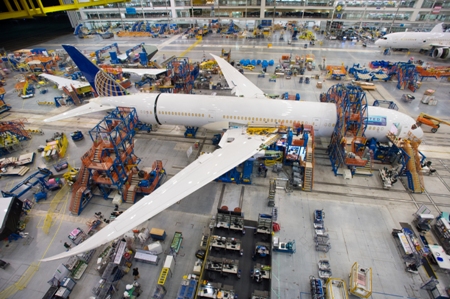
Boeing has started final assembly of the 787-9 Dreamliner at its South Carolina facility. The team began joining large fuselage sections of the newest 787 Nov. 22 on schedule, a proud milestone for the South Carolina team and another sign of stability for the program.

The North Charleston, S.C., site joins Boeing’s Everett, Wash., final assembly, which began 787-9 production in May 2013. United Airlines will take delivery of the first South Carolina-built 787-9.

K66234_med

“Our team is well prepared and eager to assemble the 787-9 Dreamliner,” said Jack Jones, vice president and general manager of Boeing South Carolina. “Achieving this significant milestone in our final assembly operations demonstrates that we’re performing well here at Boeing South Carolina. We’re looking forward to delivering our first South Carolina-built 787-9 to United Airlines, and delivering 787-9s as well as 787-8s to all our customers.”

The 787-9 complements and extends the 787 family, offering airlines the ability to grow routes opened with the 787-8. With the fuselage stretched by 20 feet (6 meters), the 787-9 can fly up to 40 more passengers an additional 450 nautical miles (830 kilometers) with the same exceptional environmental performance – 20 percent less fuel use and 20 percent fewer emissions than the airplanes it replaces. The 787-9 leverages the visionary design of the 787-8, offering passenger-pleasing features such as large, dimmable windows, large stow bins, modern LED lighting, higher humidity, a lower cabin altitude, cleaner air and a smoother ride.

NORTH CHARLESTON, S.C., Nov. 24, 2014 /PRNewswire/

New colours and new cabin for A320 fleet of Thomas Cook Airlines Belgium

2

More comfort for passengers’ stay aboard the leisure carrier

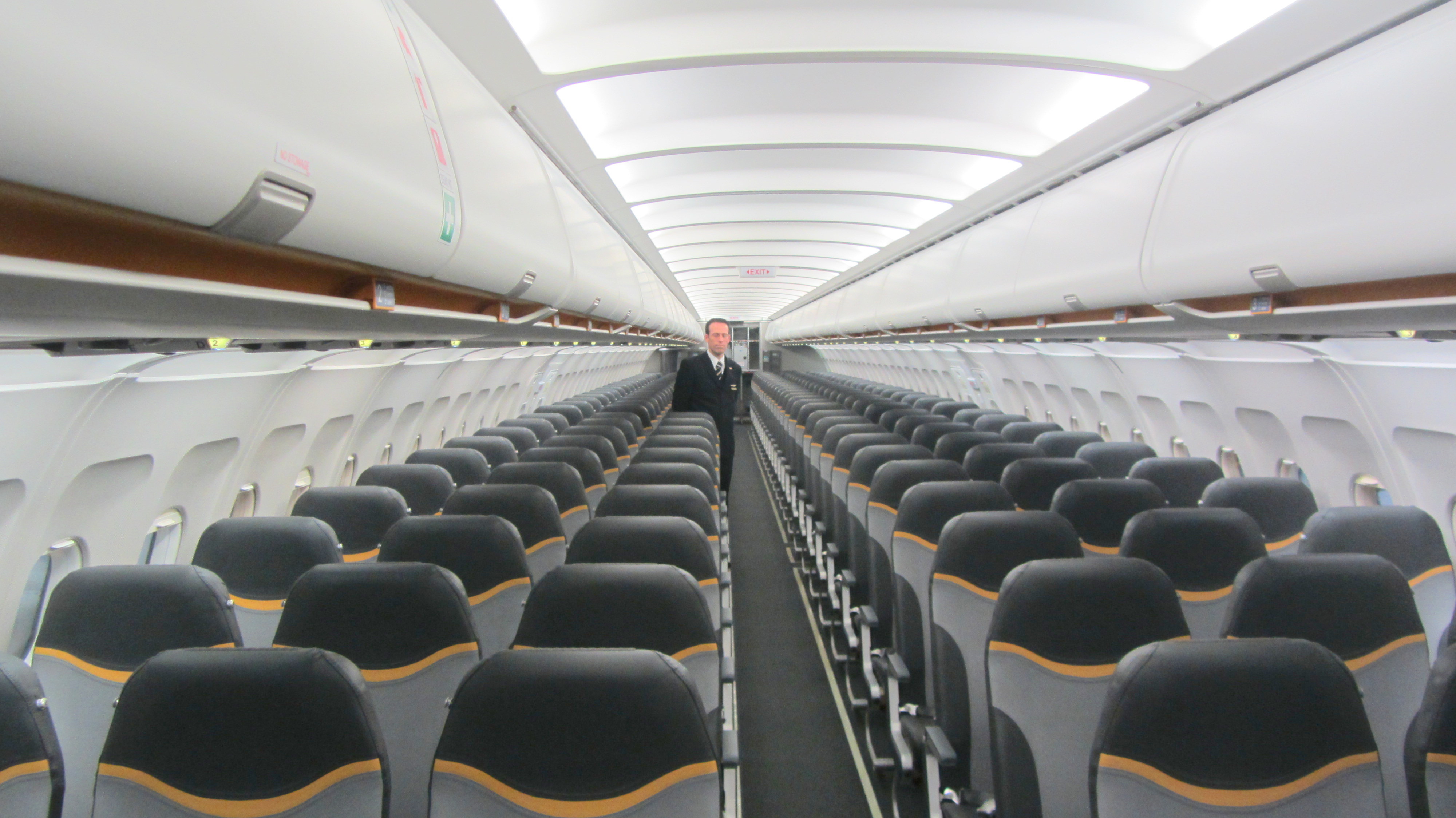
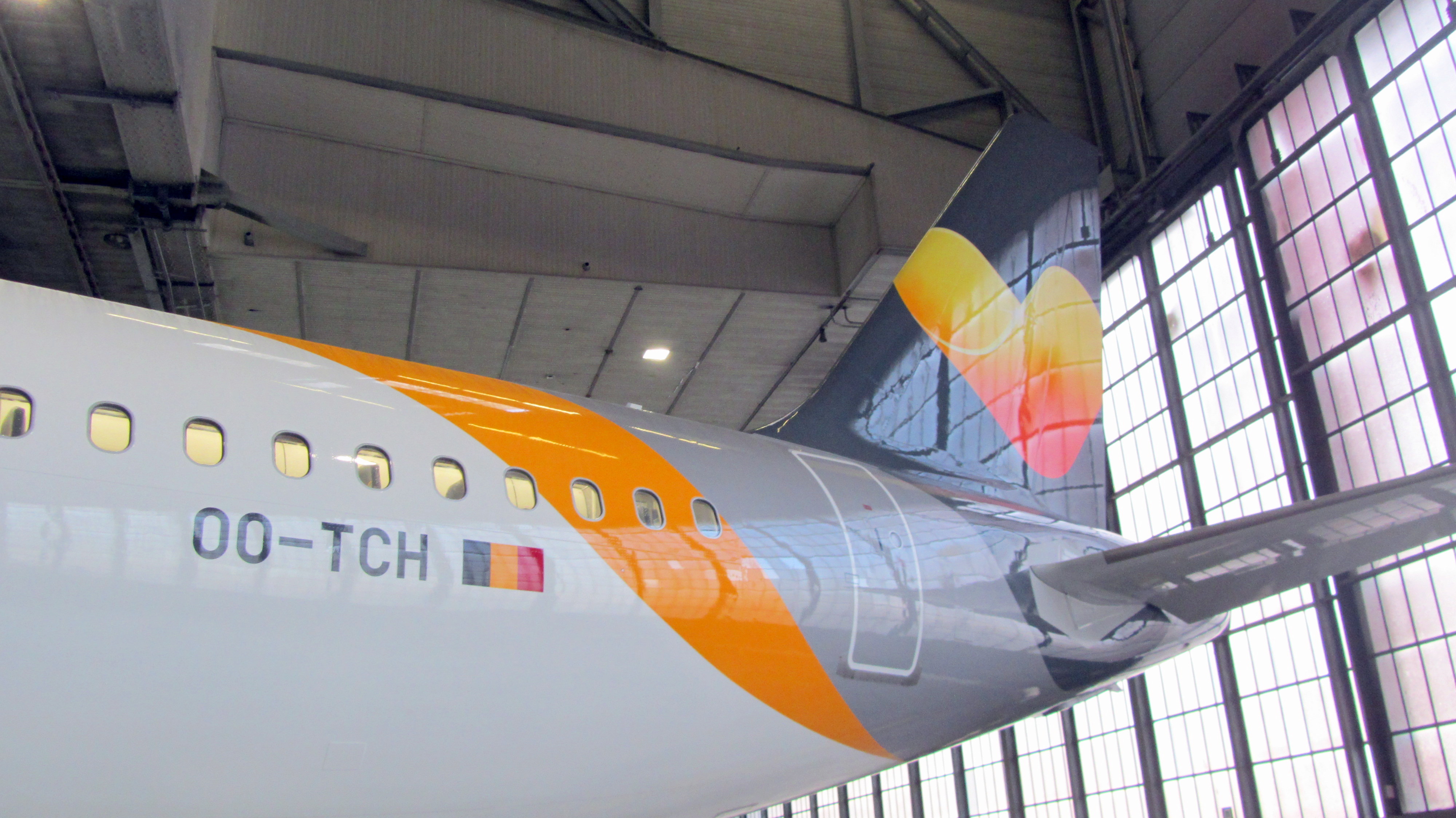
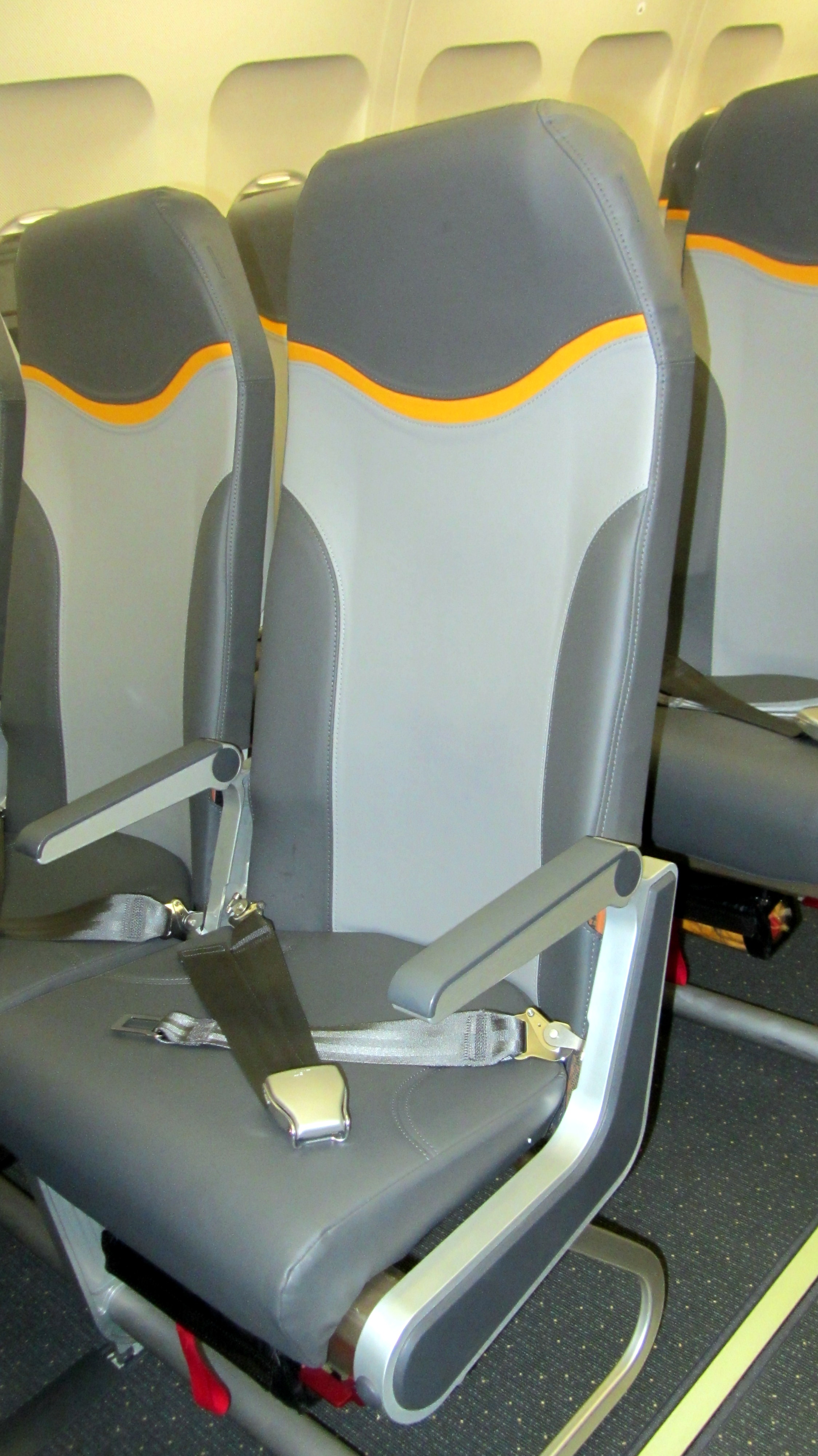
Thomas Cook Airlines is to equip its whole Airbus A320 fleet with new cabins: The aircraft seats across are fully being replaced with modern ergonomic ones by Acro. Further, a brand new in-flight entertainment program will be available. The first refurbished aircraft, tail sign OO-TCH, was released in the beginning of November and is not only operating a brand new cabin, but also carrying the new Thomas Cook Airlines livery in grey and yellow. The new onboard experience is therefore available on one third of all flights of Thomas Cook Airlines. Flights to breathtaking holiday destinations like Agadir and Marrakech in Morocco, Antalya in Turkey and many more can be booked online at www.thomascookairlines.be.

IMG_7826

‘With its cabin refurbishment, Thomas Cook Airlines creates a modern product and offers a high-class product as well as best service to vacationers“, says Uwe Klenovsky, Commercial Director of Thomas Cook Airlines Belgium. “By embracing improvements of our product, our service and our flight schedule, we show that we put the customer at our hearts which is expressed by the Sunny Heart at the tail sign of our aircraft.“

IMG_7819

The Sunny Heart is the new logo of Thomas Cook and expresses the value of the company. Successively, all aircraft of the Thomas Cook Airlines fleet will be designed with the new grey yellow livery. According to this new design, the new Acro seats aboard the aircraft are leather covered and in the new corporate colours grey and yellow. This super light and slim seat type greatly increases the so-called “living space”, the perceived space, and thus also the feeling of space on board. The refurbished A320s operate with 180 seats in total.

IMG_7828

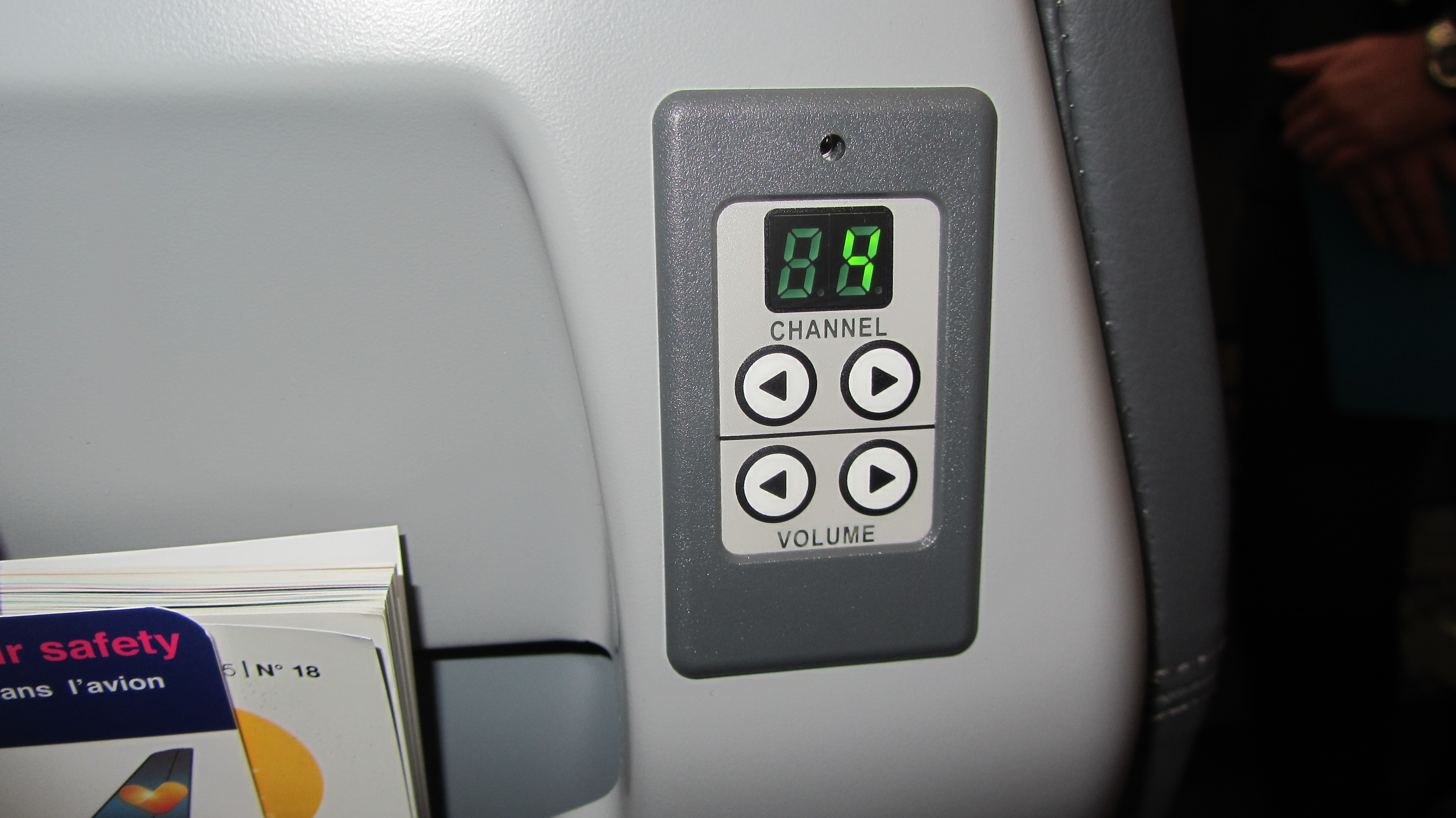
ln the context of the cabin refurbishment, a brand new in-flight entertainment system by Rockwell Collins is being installed aboard. For this, all former hardware and cabling has been removed in order to install an even more customer friendly lFE, in which the control element for the entertainment program is housed in the head part of the front seat. The entertainment system aboard of Thomas Cook Airlines offers passengers a manifold range of audio playlists, as well as a film and a TV series. The refurbishment work is to commence in stages during scheduled layover periods in winter 2014-15 and is expected to be completed in summer 2015.

IMG_7833

Thomas Cook Airlines Belgium has been flying customers to the most beautiful holiday destinations around the Mediterranean Sea, Canary Islands and Egypt since 2002. Each year, around one million guests fly with Thomas Cook Airlines Belgium to over 40 destinations in Europe and Africa. Since 2013, the Belgian Airline of the Thomas Cook Group is part of the Thomas Cook Group Airlines to which Thomas Cook Airlines UK, Thomas Cook Airlines Scandinavia and the German carrier Condor also belong. The fleet of the airlines in the Thomas Cook Group comprises 89 modern and environmentally friendly aircraft, of which six aircraft make up the fleet of Thomas Cook Airlines Belgium: five Airbus A320s and one Airbus A319. All airlines within the Thomas Cook Group comply with the strictest standards in terms of safety and guarantee reliability and professionalism. The experienced team of Belgian pilots and flight attendants guarantees a high level of on-board service, putting the customer at their heart and ensuring their holiday starts aboard the aircraft.


Brussels, 25 November 2014

(Pictures André Orban)

Frontier Airlines orders nine Airbus A321ceo aircraft

0


Frontier Airlines’ deal marks customer’s first order for largest A320 Family member

Frontier Airlines has placed a firm order for nine Airbus A321ceo (current engine option) aircraft. This is the first time Frontier has ordered the largest member of the Airbus A320 Family. The airline currently flies a fleet of 35 A319ceo, and 20 A320ceo aircraft. In addition, Frontier has on its order backlog 80 A320neo (new engine option) family aircraft.

Including the order announced today, Frontier has a backlog of 89 Airbus single-aisle aircraft. The airline has not yet announced its engine selection or the seating configuration for its A321s.

Frontier began its transition to an all-Airbus fleet when it took delivery of its first Airbus aircraft in 2001. Since that time, the Airbus single-aisle family has allowed the airline to expand its route network while minimizing operating costs.

“We continue to come back for more A320 Family aircraft because they fulfill our mission of providing low fares through low operating costs,” said David Siegel, Frontier Airlines CEO. The A321 is a natural fit with our unique brand of Low Fares, Done Right and will continue to help meet our customers’ expectations for a safe and reliable travel experience while allowing us to provide low fare service to more of the country.”

“Frontier has made its mark in this business by recognizing the dual importance of cost and service to a low fare airline,” said John Leahy, Airbus Chief Operating Officer Customers. “Minimizing expenditure while maximizing customer satisfaction can be a challenge, but the A320 Family has proven time and time again that it is the optimal solution.”

While passengers benefit from the A321’s state-of-the-art cabin design, wider seats and enhanced comfort, airlines profit from the unique operational flexibility of Airbus’ single-aisle aircraft. The A320 Family is the world’s best-selling single aisle product line with nearly 11,000 orders to date and more than 6,200 aircraft delivered to 400 customers and operators worldwide. Thanks to its widest cabin, all members of the A320 Family offer the industry’s best level of comfort in all classes and Airbus’ 18” wide seats in economy as standard. An A320 Family aircraft takes off or lands somewhere in the world every two seconds.

24 November 2014 Press Release

Brussels South Charleroi Airport advice to passengers departing on 24 November

1

The Management of Brussels South Charleroi Airport would like to inform passengers that blockading actions and rotational strikes may paralyze airport activities as well as the nearby road system on Monday 24 November 2014. They advise passengers to take all necessary steps in order to be at the airport at least 3 hours prior to their departure. Passengers should also visit airline websites regularly in order to stay informed. Management are doing their best to ensure that all flights can operate at Brussels South Charleroi Airport.

Due to industrial action on Monday 24/11, rail transport to Brussels Airport will be difficult

1

Unions have called for a 24-hour general strike starting on Sunday 23 November at 10 pm in the provinces of Hainaut, Luxembourg, Antwerp and Limburg.

As a result, transport to Brussels Airport may prove difficult on Monday 24 November with rail traffic expected to be severely disrupted in the whole country.

This is the first of a series of 4 days of industrial action. The other days are:

– 1 December: industrial action in the provinces of Namur, Liège, East-Flanders and West-Flanders
– 8 December: industrial action in Brussels and the provinces of Walloon Brabant and Flemish Brabant
– 15 December: national strike

Aviation24.be latest

Aviation24.be trending