Home Blog

Twenty-five years ago, Sabena was declared bankrupt

13

That was twenty-five years ago, on 7 November 2001. Sabena was declared bankrupt. Flight SN690, an Airbus A340-311 registered OO-SCZ coming from Cotonou and Abidjan, was the last Sabena aircraft to land at Brussels on 7 November, with 266 passengers and 11 crew. End of history, completely unimaginable at the time for an airline that appeared as one of the flagships of the national economy and a legendary company in the world. Ten thousand workers then found themselves on the floor.

Sabena (Société Anonyme Belge d’Exploitation de la Navigation Aérienne) was a venerable old lady of 78 years. An internationally renowned company, the largest employer with 10,000 workers, 11 million passengers in 2000, 107 destinations in 48 countries. That’s the positive business card.

But Sabena was also known for its losses almost every year. The lack of vision of the state, which regained control before the evil marriage with Swissair in 1995. A lack of capital, a hectic social life, a growing debt of two billion euros at the end. Especially after Swissair has undertaken to take the best, pumping subsidiaries and passengers, with a certain folly sometimes, as with the massive purchase of 34 Airbus aircraft, which put the balance sheet definitively in the red.

The restructuring plans did not change anything. The Swiss, highly indebted, were the first to plunge.

Bloodless, abandoned by the Belgian State which was tired to invest at loss, Sabena filed for bankruptcy on 6 November 2001. Judge Anne Spiritus d’Assesse, President of the Brussels Commercial Court, declared Sabena’s bankruptcy on 6 November at 18:30 and the Official State Gazette later published the judgment as dated 7 November.

2016-11-07-sabena-sn690-01
An emotional moment on Wednesday 7 November 2001, as the very last Sabena flight, SN690 from Cotonou and Abidjan in Africa, is about to land on RWY 25L at Brussels Airport. © Ivan Coninx

The government then organised a social plan, a conversion cell with the Regions asked to “manage” what remains as the worst failure of all times.

A private company is reborn from the ashes, SN Brussels Airlines. Curatorship led by Christian Van Buggenhout still manages today the final remnants of the company: aircraft engines, hotels, real estate in Brussels and Congo (Hotel Memling in Kinshasa).

At the judicial level, on the Swiss side, all the managers were acquitted. On the Belgian side, under criminal law, the story is not over yet.

The name Sabena survives in the Sabena Flight Academy, the French maintenance company Sabena Technics and the Belgian one, Sabena Aerospace.

Brussels Airlines introduces Diane von Furstenberg amenity kits

0

Brussels Airlines is introducing amenity kits designed by Diane von Furstenberg for long-haul Business Class passengers from mid-November 2026, combining the Belgian-American designer’s signature prints with toiletries from a Belgian family-owned business.

The pouches come in two shapes and feature two DVF patterns: Vintage Weave, originally created in 1973, and Ikat, dating from the early 1980s. Each kit also includes a DVF sleep mask and toiletries supplied by Antwerp-based Waterl’eau.

Thibaut Dewilde, Brussels Airlines’ Head of Inflight Management, said the collaboration brings together an internationally recognised designer and a smaller Belgian business to showcase Belgian products on board.

The kits will be available exclusively in Business Class on the airline’s long-haul services.

Iberia adds 208 Andalusia flights and extends fare caps to 30 November

0

Iberia will add 208 flights between Madrid and Andalusia from 9 to 30 November 2026, providing 39,164 additional seats as demand remains elevated following the rail accident in Urda, Toledo. The reinforcement represents a 44% increase over capacity originally planned for the period.

The additional services cover all five Andalusian airports served by Iberia:

DestinationAdditional flightsAdditional seats
Seville8416,142
Málaga6211,862
Jerez366,480
Granada142,520
Almería122,160

The programme also includes larger aircraft on 18 previously scheduled Seville flights and ten Málaga flights. Iberia says its total additional capacity between 28 October and 30 November will reach 61,402 seats.

The Iberia Group has also extended its fare caps on flights between Madrid and Andalusia until 30 November. Maximum one-way fares remain €99 in Economy and €149 in Business.

TUI Airline grows capacity and adds four Brussels routes in summer 2027

0
TUI fly Netherlands Boeing 787-8 PH-TFL at Schiphol © Laurens van Heerde on Wikimedia Commons

TUI fly Belgium plans to increase seat capacity by 3% for summer 2027, adding four destinations from Brussels as the wider TUI Airline business strengthens flight-only sales and seeks to make more efficient use of its aircraft.

The programme presented at a press briefing in Brussels on 6 November envisages around 1.9 million one-way seats and approximately 11,000 one-way flights, with flight numbers increasing by 4% compared with summer 2026. The Belgian network will comprise 54 routes serving 49 destinations, supported by a fleet of 19 aircraft.

Four new destinations from Brussels

The additions are Billund in Denmark, Ljubljana in Slovenia, and the Moroccan cities of Essaouira and Fez. All four routes will depart from Brussels Airport. The presentation highlighted Billund’s association with LEGOLAND, alongside the expansion of the airline’s city and leisure offering in Europe and Morocco.

TUI also plans more flights to established holiday markets, including the Canary Islands, Palma de Mallorca, Alicante, Reus, Crete, Kos, Rhodes, Madeira, Marrakech and Agadir. Launch dates and frequencies for the new routes were not specified in the slides.

The presentation by TUI Airline Chief Commercial Officer Peter Glade and TUI BeNe Region Managing Director Arjan Kers underlined a commitment to Brussels and Ostend as the airline’s Belgian bases. Its wider network comparison lists Antwerp as a base closure relative to summer 2026. Capacity changes—including increases, reductions and withdrawals—will affect 36% of the Belgian operation’s summer 2026 routes.

TUI Airline Chief Commercial Officer Peter Glade and TUI BeNe Region Managing Director Arjan Kers © André Orban

Flight-only sales take a larger role

The Belgian programme forms part of a broader transformation of TUI Airline from a transport provider for the group’s holiday business into an airline with greater commercial responsibility of its own. The slides describe 2025–2027 as a three-year commercialisation programme, leading towards a unified profit-and-loss framework from 2028.

As early bookings tend to disappear, flight-only sales are central to that strategy. TUI is bringing together distribution, network planning and revenue management, while harmonising products and fare families across its airline operations. The presentation highlights a cross-airline distribution engine on TUIfly.com, dedicated management of flight-only inventory and greater coordination between independently sold seats and those allocated to package holidays.

TUI says it has established a commercial team and introduced a new network-planning approach for summer 2027. Its objective is to develop an airline that is profitable in its own right while continuing to support and differentiate the group’s holiday products.

More productive aircraft and a reshaped network

Across TUI Airline (the 10th-largest European airline with 133 aircraft, among which 18 Boeing 787 Dreamliners), the May–October 2027 programme provides for 17 million outbound seats, up 4.6% against the planned summer 2026 programme, and approximately 42,000 flights, up 4.1%. It includes 25 new routes and 11 new destinations.

The group intends to expand proven profitable routes, withdraw from weaker markets where it has a limited presence and reduce triangular routings. Better aircraft utilisation, particularly outside the peak summer period, is another priority. Capacity changes will affect 32% of the existing network overall.

Wider network highlights include a twice-weekly Boeing 787 service between Düsseldorf and Curaçao, alongside new Amsterdam links to Praia and Kilimanjaro. Those Amsterdam services are planned in combination with Sal and Zanzibar, respectively.

In the Netherlands, TUI’s fleet plan envisages replacing six Boeing 737-8s with seven 737-10s, with Amsterdam identified as the type’s launch base from the second quarter of 2027. The Dutch programme targets around 15% more seats per aircraft. In the UK, Gatwick is identified as the largest growth base.

For Belgium, the strategy translates into measured capacity growth and a broader Brussels offering, within a group-wide effort to improve aircraft productivity and strengthen commercial performance.

Finnair carries 10.9% more passengers in October

0

Finnair carried 1,147,800 passengers in October 2026, up 10.9% year-on-year, as demand increased across its international network. Domestic services were the only segment to record fewer passengers.

Capacity, measured in available seat kilometres, rose by 11.6%, led by an 83.3% increase on North Atlantic routes. Asian and European capacity also grew, while domestic capacity declined by 1.0%. Including aircraft wet-leased to other airlines, overall capacity increased by 4.5%.

Passenger traffic, measured in revenue passenger kilometres, grew by 11.7%, broadly matching capacity growth. The overall passenger load factor reached 80.9%, with improvements on Asian and European services but declines on North Atlantic and domestic routes. Revenue per available seat kilometre increased by 10.9%, supported by higher yields and the load factor.

Cargo tonnage rose by 11.6%, while revenue cargo tonne kilometres increased by 12.2%. Punctuality weakened, with 81.0% of flights arriving on schedule, compared with 85.1% in October 2025.

Finnair’s Middle East services remained suspended following their withdrawal on 28 February because of the regional security situation.

KM Malta Airlines adds Bordeaux to its Summer 2027 network

1

KM Malta Airlines will launch a twice-weekly service between Malta and Bordeaux on 1 April 2027, expanding its summer connections with France.

Flights will operate on Mondays and Thursdays using Airbus A320neo aircraft, providing a direct link with southwestern France’s Nouvelle-Aquitaine region.

DayFlightRouteDepartureArrival
MondayKM440Malta–Bordeaux18:3521:15
MondayKM441Bordeaux–Malta22:0500:35 the following day
ThursdayKM440Malta–Bordeaux06:4509:25
ThursdayKM441Bordeaux–Malta10:1512:45

All times are local and subject to change.

KM Malta Airlines chairman David Curmi said the route would strengthen connectivity with France and offer more choice for passengers travelling in both directions. Bordeaux Airport management board chairman Simon Dreschel welcomed the new airline, highlighting opportunities for business travel and cultural tourism.

Tickets will be available through the airline’s website and mobile app, travel agents and authorised sales channels.

Florida Learjet crash: flight data and recovered elevator offer clues

0
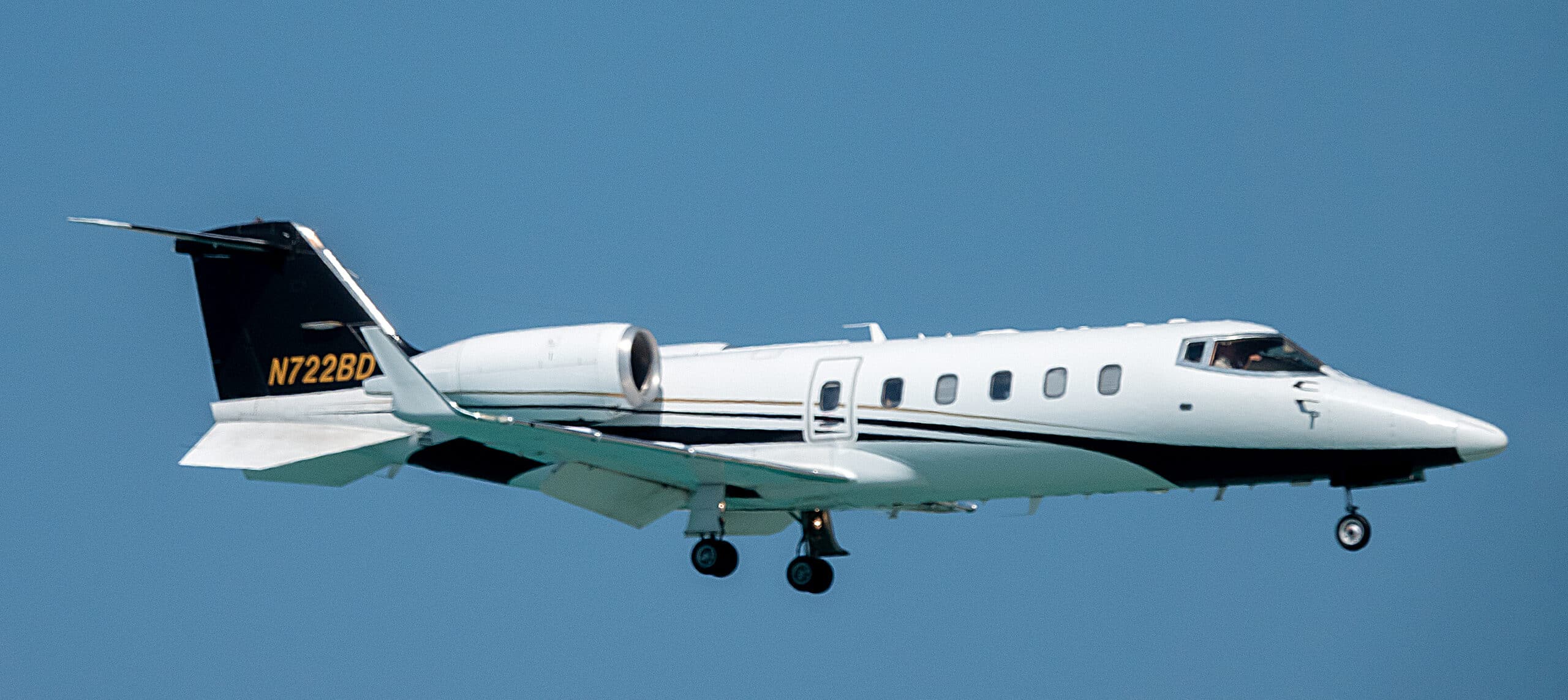
Learjet 60 N722BD, photographed at Princess Juliana Airport before the fatal accident of 1 November 2026.
Credit: Mike Illien / Wikimedia Commons / CC BY-SA 4.0.

Investigators have confirmed that part of Learjet 60 N722BD’s tail separated before it struck the ground near West Palm Beach on 1 November, killing all nine people aboard. However, whether that separation caused the loss of control or resulted from the aircraft’s rapid descent remains unresolved.

The aircraft was flying from Austin-Bergstrom, Texas, to North Eleuthera in the Bahamas. The NTSB identifies its operator as Aurora Aviation, trading as Upper Jet. Its latest published update, dated 5 November, confirms that wreckage recovery remains under way; no probable cause has been established.

From a requested climb to a rapid descent

Flightradar24’s tracking shows that the 2004-built business jet departed Austin at approximately 15:37 UTC. After cruising at higher altitude, it descended towards 35,000 feet over southern Florida, before briefly climbing and entering a steep right-hand descent at around 17:48 UTC.

The crew’s radio calls provide important context. According to NTSB briefing details reported by Aviation Week, the pilots described light clear icing, considered manageable, and moderate turbulence causing altitude deviations of approximately 700 feet. They subsequently reported precipitation and requested a climb to 37,000 feet. Shortly after receiving clearance, they declared an emergency, reporting a rapid descent and an overspeed condition. These are observations made by the crew, not findings that icing caused the accident.

The downloadable Flightradar24 data illustrates the descent’s severity: recorded altitude falls from 31,350 feet at 17:48:39 UTC to 8,750 feet at 17:49:23 — approximately 22,600 feet in 44 seconds. That represents an average recorded descent rate of about 30,800 feet per minute over that interval.

Crucially, these are tracking measurements, not a complete flight-recorder reconstruction. The final entries repeat 8,750 feet while position continues changing: they do not demonstrate that the aircraft levelled off. Nor should the reported groundspeed be confused with airspeed or used alone to establish an overspeed. The latter was reported separately by the crew. Source: Flightradar24’s published data.

The elevator discovery — evidence, but not yet an explanation

At the 3 November briefing, NTSB member Thomas Chapman said investigators had recovered most of the left elevator in three pieces, between approximately 2.1 and 6.1 kilometres from the impact site. The elevator is a movable tail surface used to control the aircraft’s nose-up and nose-down movement. Its recovery away from the main wreckage establishes separation before impact.

The unresolved question is the sequence. Did a control-surface failure initiate the loss of control, or did aerodynamic loads during the dive tear the elevator away? Investigators have not determined when it detached. Weather is also a key investigative focus, but neither the crew’s icing reports nor the debris distribution establishes the initiating cause.

Recovery continues

On 5 November, the NTSB reported that excavation had begun the previous evening and that part of an engine had been found. Wreckage has also been recovered from nearby roofs and will be transferred to a secure location for examination.

Maintenance records indicated that a cockpit voice recorder had been installed, but investigators initially could not confirm whether it remained aboard. The latest official update does not announce its recovery. For now, the evidence documents an exceptionally rapid descent and an in-flight separation — not why the emergency began.

Bomb threats target European flights for third consecutive day

0

A third consecutive day of bomb threats against commercial aircraft has put European aviation security services on alert, with fresh incidents reported in Denmark, the Czech Republic, France, Italy and Portugal on Friday. Danish police confirmed they were investigating threats directed at air traffic at Copenhagen Airport.

The airport continued operating normally, with authorities saying their initial assessment indicated no immediate danger to passengers.

In Prague, police received threats involving four arriving and five departing flights. Airport authorities confirmed that no explosives were found and that there were no cancellations or diversions directly resulting from the alerts. However, a Wizz Air flight from Prague to Rome was subsequently diverted to Venice, where it landed safely.

France’s Prime Minister’s office also confirmed four new threats involving aircraft flying over French territory. All affected aircraft landed safely. Meanwhile, a Ryanair flight from Rome to Lisbon triggered a security operation after a bomb alert was reported.

The latest incidents follow a particularly disruptive Thursday, when dozens of flights across Europe were affected. Several aircraft were diverted, while fighter jets were scrambled to escort commercial airliners. On Tuesday, an earlier wave had already affected at least seven aircraft.

No explosives have been discovered in the aircraft inspected so far, and no injuries have been reported.

Spanish Foreign Minister José Manuel Albares described the repeated incidents as potentially representing hybrid aggression and psychological warfare. However, investigators have not established who is behind the threats or whether all incidents are connected.

European authorities continue to investigate the series of threats.

Image disclaimer The featured image is AI-generated for illustrative purposes only. It does not depict a real aircraft, an actual bomb threat or a specific incident.

Stockholm Arlanda and Gothenburg Landvetter set October international passenger records

0

Swedavia’s ten Swedish airports handled 3.11 million passengers in October 2026, up 2% year-on-year, as stronger international demand offset declining domestic traffic. International passenger numbers rose 3% to 2.40 million, while domestic traffic fell 4% to around 710,000. Overall traffic remained 12% below October 2019.

Stockholm Arlanda recorded its busiest October for international travel, handling 1.86 million international passengers, up 2%. Its total traffic remained broadly unchanged at 2.23 million as domestic numbers declined 8%. Göteborg Landvetter also achieved an October international record, with 482,501 passengers, up 6%, helping total traffic grow 4% to 529,190.

Regional results were mixed. Malmö’s passenger numbers increased 12%, driven by international growth, while Visby and Kiruna grew 9% and 8% respectively. Luleå matched its pre-pandemic traffic level.

Swedavia’s winter 2026/27 programme includes new connections from Arlanda to Shanghai with China Eastern and from Landvetter to Abu Dhabi with Etihad Airways. Malmö’s additions include Ryanair services to London Stansted and Wizz Air flights to Podgorica and Pristina.

EU court restores approval of Dutch Covid support for KLM

0

The judgment, delivered on 5 November 2026, overturns the General Court’s ruling of 7 February 2024 concerning the Commission’s July 2020 approval. Air France-KLM and KLM welcomed the decision, which reinstates the full effect of that approval.

However, the legal proceedings are not over. The Court of Justice has referred the case back to the General Court to examine Ryanair’s remaining grounds of challenge, which were not addressed in the original judgment.

Air France-KLM said all Covid-era support received by the group, Air France and KLM had already been repaid with interest by 2023.

Royal Schiphol Group seeks 80% stake in Maastricht Aachen Airport

1

Royal Schiphol Group has offered to increase its stake in Maastricht Aachen Airport from 40% to 80%, taking majority ownership while leaving the Province of Limburg with 20%. The proposal remains subject to approval by Limburg’s Provincial Council and final agreements between the shareholders.

Schiphol Group, a shareholder since 2023, says a larger holding would allow it to take greater responsibility for the airport’s development. Maastricht handled approximately 41,600 tonnes of cargo and 159,000 passengers in 2025, with cargo operations specialising in sensitive and time-critical shipments such as flowers and pharmaceuticals.

The airport will also accommodate some flights displaced by Eindhoven Airport’s temporary closure in 2027. European holiday destinations served from Maastricht during that period will include Alicante, Málaga, Faro, Crete, Rhodes and Tenerife.

Limburg would remain involved in regional and public-interest matters as a minority shareholder. The parties will now develop the proposal and negotiate further agreements, with Schiphol Group aiming to strengthen Maastricht’s financial position and role within the Dutch airport network.

Eindhoven Airport handles more summer passengers with fewer flights

0

Eindhoven Airport handled 4,675,648 passengers during its summer season, from 29 March to 25 October 2026, exceeding the nearly 4.6 million recorded a year earlier. Aircraft movements fell by 2.9% to 25,946, compared with 26,719 in summer 2025. The airport reported minimal operational delays and cancellations.

A new daily passenger record was set on 25 May, when 25,487 travellers passed through the airport, surpassing the previous high of 24,935 on 5 May 2025. May and August also exceeded 700,000 passengers for the first time, recording 718,689 and 704,208 respectively. The airport reported an average seat occupancy of 91%, with Málaga, London and Alicante its most popular destinations.

Passenger satisfaction remained unchanged, with a Net Promoter Score of 41 between April and October. Eindhoven said smooth passenger flows supported the result, although terminal construction and temporary facilities affected the experience. The airport expects improvements following the opening of its terminal extension, scheduled for 19 July 2027.

Around 20 flights affected as hoax bomb threats spread across Europe

0

Around 20 commercial flights were targeted by bomb threats across Europe on Thursday, 5 November, prompting diversions, military escorts and security inspections. It was the third day of such incidents this week. All affected aircraft landed safely, and no explosives were found, according to AFP’s latest reporting. 

Aer Lingus flight EI402 from Dublin to Rome, operated by an Airbus A320, diverted to Évreux-Fauville military airbase in France under fighter escort. The 151 passengers and six crew members were taken to safety while specialists examined the aircraft. Aer Lingus said it was arranging onward travel.

French prosecutors also opened an investigation after the pilot allegedly initially declined instructions to land at the military base, preferring a civilian airport. Prosecutor Rémi Coutin said the pilot would be interviewed without being placed in custody at that stage. The circumstances remain under investigation.

Three Ryanair flights to Sofia from Madrid, Copenhagen and London Stansted received military escorts. The London service diverted to Plovdiv, while the other two landed in Sofia. Wizz Air’s Milan–Warsaw flight diverted to Vienna, and Finnair services from Helsinki to Rome and Vienna were also targeted. Four Prague-bound aircraft operated by Ryanair, easyJet and SKY express received threats.

Belgium was also affected. LOT Polish Airlines flight LO235 continued from Warsaw to Brussels after a security warning. LOT said an onboard inspection and a subsequent check by security services found no dangerous or suspicious items. The flight was not diverted.

Further affected services included flights to Bucharest and Copenhagen. Thursday’s incidents followed ten threatened flights on Tuesday, 3 November, and a Wizz Air Luton–Sofia diversion to Budapest on Monday.

The European Commission activated its aviation-security information-sharing mechanism and contacted affected member states and EASA. Transport Commissioner Apostolos Tzitzikostas cautioned that it remained too early to establish whether the incidents were linked. Their origin and any coordination remain unconfirmed.

Sources: AFP.com, rte.ie, rtl.fr, The National, AFP.com, aa.com.tr

Image disclaimer: The featured image is AI-generated for illustrative purposes only. It does not depict a real aircraft, an actual bomb threat or a specific incident.

Emirates Group reports 66% drop in half-year profit amid regional conflict and higher fuel costs

0

The Emirates Group reported a profit before tax of AED 4.1 billion (US$ 1.1 billion) for the first half of its 2026-27 financial year, representing a 66% decrease compared with the same period last year.

Revenue fell 12% to AED 66.2 billion (US$ 18 billion), as the group faced disruption from the regional conflict and significantly higher fuel costs.

Emirates Airline recorded a profit before tax of AED 3.7 billion (US$ 1 billion), down 68%, while revenue declined 13% to AED 56.9 billion (US$ 15.5 billion). Strong cargo performance helped support revenue, although higher fuel prices weighed heavily on profitability. Ground services provider dnata reported a profit before tax of AED 410 million (US$ 112 million), down 51%, with revenue decreasing 7% to AED 11 billion (US$ 3 billion).

The Group’s EBITDA reached AED 12.5 billion (US$ 3.4 billion), while its cash position stood at AED 54.1 billion (US$ 14.7 billion) at the end of September. The workforce decreased by 2% to 128,237 employees.

Chairman and Chief Executive Sheikh Ahmed bin Saeed Al Maktoum said customer demand remained firm and praised the UAE government’s response in restoring air transport operations following military activity across the Gulf region. He added that Emirates and dnata would continue investing in fleet expansion, products and services despite the challenging operating environment.

The Group said it remains cautiously optimistic about the second half of the financial year, while keeping a close watch on fuel prices and geopolitical developments.

Norwegian Group carries 2.8 million passengers in October

0

Norwegian Group carried 2.8 million passengers in October 2026, including 2.4 million with Norwegian and 395,000 with regional subsidiary Widerøe. Both airlines recorded their highest-ever October load factors, reaching 89.2% and 75.3%, respectively.

Norwegian’s passenger traffic increased by 7% year-on-year, while capacity grew by 5%. The airline recorded 99.5% regularity and 83.7% punctuality. Widerøe achieved 93.3% punctuality and 96.8% regularity, maintaining its strong operational performance.

Norwegian CEO Geir Karlsen said demand remained strong during the autumn holiday period, with winter bookings, particularly for Christmas, showing encouraging momentum.

KLM announces major restructuring with 1,000 fewer jobs and changes to European fleet

2

KLM is launching a major restructuring programme aimed at improving its competitiveness and restoring profitability, including around 1,000 additional job reductions, extensive outsourcing and changes to its European fleet. The Dutch airline says it needs to achieve an additional €1 billion in annual earnings improvement to secure its future and finance investments in aircraft, customer service and employees.

The measures, announced on Thursday, November 5th are part of a broader strategy to make KLM a smaller, simpler and more flexible organisation. The airline has already achieved more than €750 million in structural financial improvements in recent years, but management says further action is necessary amid high fuel prices, global instability and increasing competitive pressure on the aviation industry.

According to KLM, approximately 5,000 positions will be affected by the reorganisation, although not all of these represent job losses. Around 1,250 positions at KLM Catering Services have already been reorganised through cooperation with gategroup. Another 800 positions in Ground Services will involve activities transferred to external providers, while approximately 2,000 positions, including 1,500 at customer contact centre Cygnific, will be transferred to Air France-KLM. In addition, productivity improvements are expected to result in approximately 1,000 fewer positions at KLM itself, representing a further reduction of almost 15%.

KLM expects to limit compulsory redundancies through natural attrition, voluntary departure arrangements and transfers to other positions. However, CEO Marjan Rintel warned that further changes to the organisation, employment conditions, productivity and staffing levels could still be necessary.

Changes to European fleet

A significant part of the restructuring concerns KLM’s European operations. The airline intends to change the balance between larger and smaller aircraft to better match capacity with passenger demand.

The Airbus A321neo will remain an important part of the fleet, while smaller Embraer E195-E2 aircraft will replace the previously planned Airbus A320s. This will give KLM Cityhopper a greater role in operating the European network. Meanwhile, the Boeing 737 and Embraer E190 fleets will be phased out over the coming years.

KLM currently operates a fleet of approximately 185 Airbus, Boeing and Embraer aircraft. The airline says the simplified fleet will help reduce maintenance and operational costs while improving flexibility and reliability. Available capacity will increasingly be allocated to routes that contribute most to passenger connectivity and KLM’s nonstop network from Schiphol, which currently serves 160 destinations.

Ground handling and maintenance activities to be reorganised

The restructuring will also have a considerable impact on ground operations at Amsterdam Schiphol.

Passenger Services will increasingly rely on digitalisation and new technology, allowing passengers to manage check-in, boarding and rebooking themselves. Airport employees will focus more on hospitality and direct customer assistance.

For apron services on European flights and baggage handling, KLM plans to work with external partners. These providers will take over below-the-wing activities at KLM Cityhopper and baggage handling in Schiphol’s East Hall. The airline believes specialist ground-handling companies can invest more efficiently and deliver services at lower costs.

KLM Cargo will consolidate its cargo-handling activities in its own warehouse at Schiphol, handling freight carried on both passenger and dedicated cargo aircraft. The initiative is also intended to prepare the division for a new cargo terminal scheduled for completion in 2035.

Engineering & Maintenance will increasingly concentrate on the future fleet, accelerating the phase-out of maintenance activities for aircraft types being withdrawn from service. KLM also intends to bring the management of its Engine Services and Component Services operations closer to the Air France-KLM Group.

Air France-KLM reports stronger third-quarter operating profit

The announcement comes as parent company Air France-KLM also published its third-quarter financial results on Thursday. The group reported an operating profit of €1.34 billion, exceeding the €1.1 billion expected by analysts.

Strong demand for nonstop flights to India and Asia, together with growth in premium travel, contributed to the better-than-expected performance. However, the group lowered its full-year 2026 capacity growth forecast to approximately 2%, compared with its previous guidance of 2% to 3%. Its expected fuel expenditure was also increased from $8.9 billion to $9.2 billion.

The group is also looking to strengthen cooperation between its airlines, with the proposed expansion involving Scandinavian airline SAS expected to create further opportunities for synergies and economies of scale, subject to European Commission approval.

KLM CEO Marjan Rintel acknowledged that the changes would be painful for employees, particularly those whose activities have traditionally been performed within the airline.

She said the objective was to ensure that KLM remains a major international airline, maintains the Netherlands’ connections with the rest of the world and remains an attractive employer.

The airline will now enter discussions with trade unions and employee representatives on the proposed changes, including new collective labour agreements. KLM is targeting a structural productivity improvement of at least 8% by 2028, alongside very moderate wage increases.

Condor launches daily Frankfurt–Bangkok service via Abu Dhabi

0

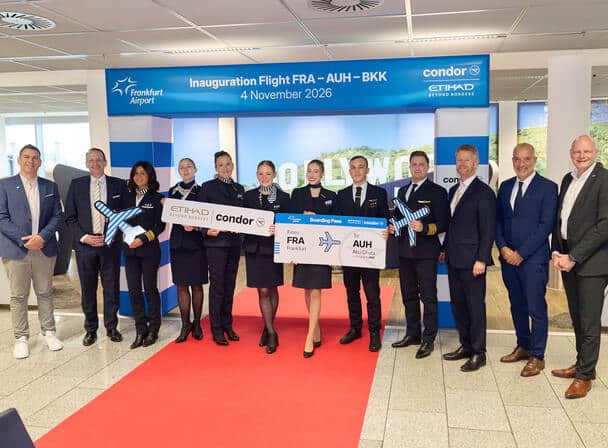
Condor has inaugurated a daily service from Frankfurt to Bangkok via Abu Dhabi, operated in codeshare with Etihad Airways. The new route complements its existing daily non-stop Frankfurt–Bangkok service, giving passengers two daily travel options between the cities.

The service uses Airbus A330neo aircraft and expands Condor’s winter offering to Thailand while strengthening its partnership with Etihad. The inaugural departure received a ceremonial send-off in Frankfurt, with an arrival ceremony also planned in Abu Dhabi.

Beyond Bangkok, the codeshare partnership provides connections through Abu Dhabi to destinations across Etihad’s network in Asia, Africa and Australia. Passengers can book connecting journeys on a single ticket and have their baggage checked through to their final destination.

Qatar Airways launches Bogotá and Caracas service with Boeing 777-200LR

0

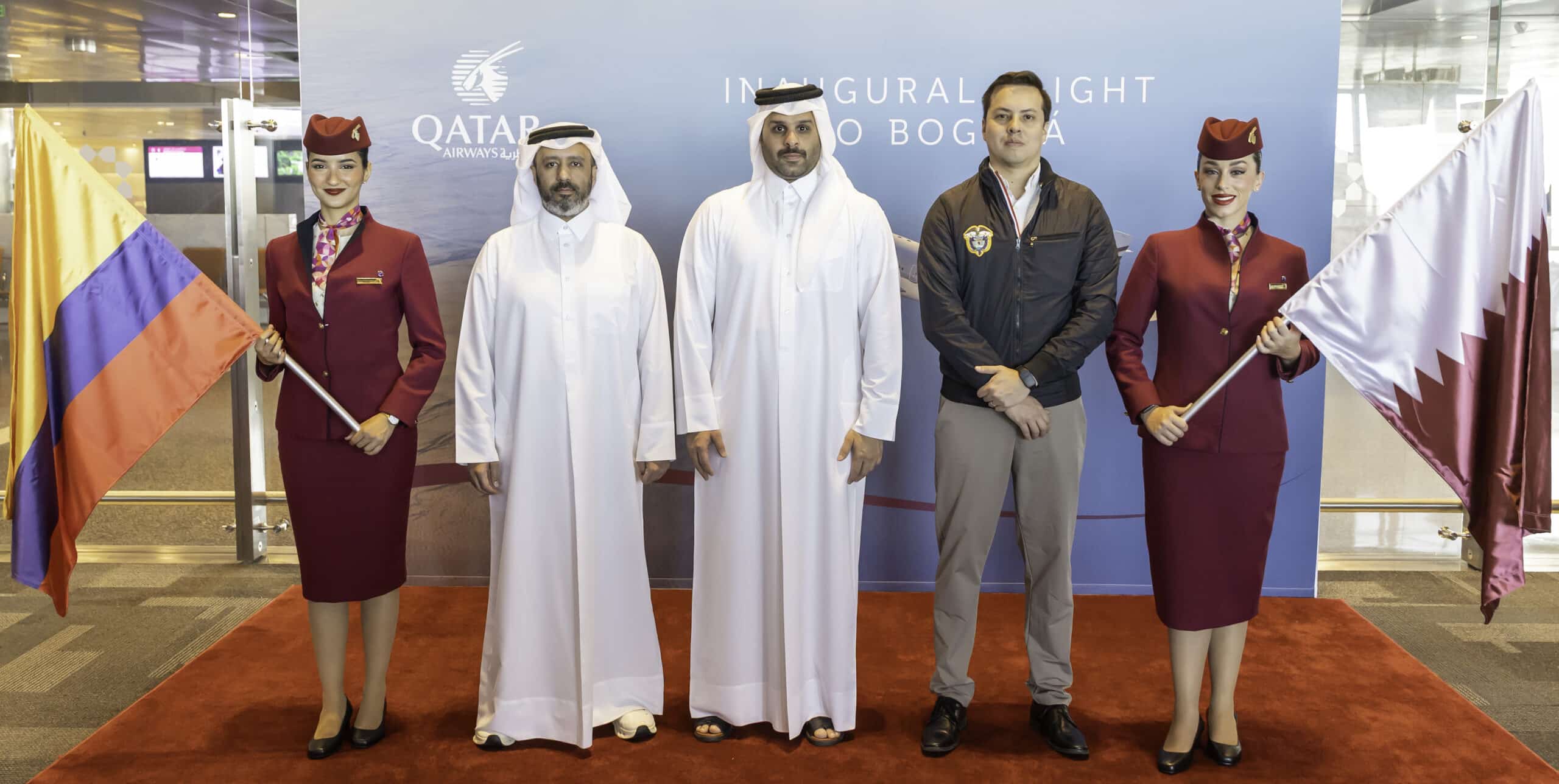
Qatar Airways has inaugurated a twice-weekly service linking Doha with Bogotá and Caracas, adding Colombia and Venezuela to its network. Operated by Boeing 777-200LR aircraft, the triangular route brings the airline’s presence in the Americas to 17 destinations.

Flights operate on Wednesdays and Sundays under flight number QR783, travelling from Doha to Bogotá, continuing to Caracas and then returning to Doha. The routing provides a non-stop outbound connection from Doha to Bogotá and a non-stop return from Caracas to Doha; passengers travelling from Doha to Caracas stop in Bogotá.

The airline says the schedule offers connections through Hamad International Airport to destinations including Australia, China, Japan and South Korea. Its winter network covers more than 170 destinations worldwide.

The launch also follows an expansion of Qatar Airways’ partnership with LATAM to include LATAM Airlines Colombia. Qatar Airways plans to place its code on LATAM-operated services connecting Bogotá with 17 Colombian destinations, including Medellín, Cartagena, Cali and San Andrés, extending onward travel options beyond the capital.

Swedish Gripens patrol Polish skies with multinational NATO tanker support

0
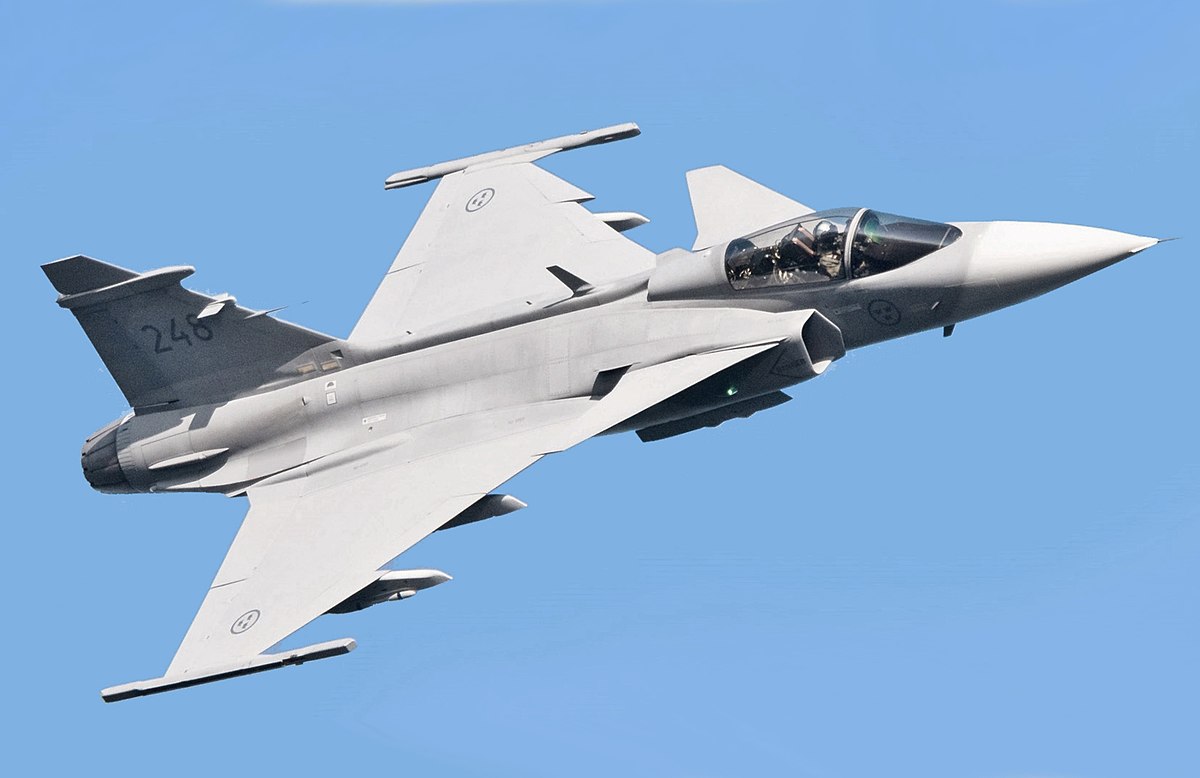
Saab Gripen at the Kaivopuisto air show in June 2017 © Tuomo Salonen on Wikipedia

Swedish Saab JAS 39 Gripen fighters supported the protection of Polish airspace for more than four hours during an operation reported by Poland’s General Staff on 3 November. The aircraft conducted patrol and protective duties, supported by an Airbus A330 MRTT tanker identified as MMF19, according to Polish defence publication Defence24, which reproduced the military’s statement. The number of fighters involved was not disclosed. 

The deployment forms part of a two-month Swedish mission that began on 1 October. Aircraft from Blekinge Air Wing, F 17, operate principally from Sweden, with a smaller forward operating presence in Poland, under NATO’s Combined Air Operations Centre in Uedem, Germany. Their responsibilities include protecting the logistics hub supporting Ukraine and contributing to NATO’s integrated air and missile defence. The “fourth mission” refers to Sweden’s fourth NATO fighter deployment, not necessarily its fourth operational scramble.

The tanker adds a multinational dimension, including a Belgian connection: NATO’s shared MRTT programme comprises Belgium, Czechia, Denmark, Finland, Germany, Luxembourg, the Netherlands, Norway and Sweden. Programme membership does not, however, establish which nationalities crewed this particular flight.

Other allied contributions extend beyond fighter patrols. Dutch Patriot systems and approximately 150 personnel are deployed in Poland until early December. Sweden plans to deploy its own Patriot unit with around 100 personnel from December to protect the Rzeszów logistics hub, with preparations for a possible extension into the first half of 2027.

While the supplied report quotes Colonel Carl Bergqvist describing protection against Russian cruise missiles, the official statements reviewed do not confirm a missile interception, weapons firing or an airspace violation during this particular sortie. The confirmed activity is a defensive patrol with aerial-refuelling support—not a reported combat engagement.

Sources: Swedish Armed Forces · Defence24’s report quoting Poland’s General Staff · Swedish Patriot deployment

Avolon finalizes record order for 140 Boeing 737-10 aircraft

1

Aircraft leasing company Avolon has finalized an order for 140 Boeing 737-10 aircraft, marking the largest-ever 737 MAX purchase by a lessor. The agreement increases Avolon’s total 737 MAX backlog to more than 240 aircraft. The order reflects growing demand among leasing companies for larger single-aisle aircraft. Lessors have placed firm orders for more than 230 Boeing 737-10s in 2026, five times their combined backlog for the variant at the end of 2025.

The Boeing 737-10, the largest member of the 737 MAX family, can accommodate up to 230 passengers and has a range of 3,100 nautical miles (5,740 kilometres). Boeing says the aircraft offers the lowest per-seat operating costs of any single-aisle aircraft.

According to Boeing, lessors have now ordered more than 1,450 737 MAX aircraft, representing approximately 20% of the manufacturer’s total backlog.

Aviation24.be latest

Aviation24.be trending