Home Blog Page 1627

Handover of the first Airbus A350 XWB jetliner to Qatar Airways is scheduled for 13 December

0

Airbus and Qatar Airways are set to open a new chapter in commercial aviation together with the official delivery of the world’s first customer A350-900 aircraft, which is planned for 13 December 2014 in Toulouse, France. Qatar Airways – the global launch customer for this highly efficient next-generation widebody jetliner type – has 80 total A350 XWB Family aircraft on order, including 43 A350-900s and 37 of the longer-fuselage A350-1000 versions. The carrier plans to commence commercial service with the A350 XWB between its Hamad International Airport hub in Doha, Qatar and Frankfurt, Germany in January.

Airbus’ all-new A350 XWB incorporates the latest in aerodynamic design and advanced materials – including an airframe comprised of 53 percent composites – along with new fuel-efficient Rolls-Royce Trent XWB engines to deliver a significant reduction in fuel burn and emissions, as well as lower maintenance costs.
4 December 2014

New Ryanair base (No.72) at Ponta Delgada in the Azores

0

1 Aircraft ($100m Investment) At Ponta Delgada Airport

3 New Routes To London, Lisbon & Porto, 350,000 Customers P.A.

B4FkfSACYAEDeMdRyanair today (5 Dec) announced it will open its 4th Portuguese base (No.72 in total) in the Azores from April 2015 with 1 based aircraft and 3 new routes to London Stansted, Lisbon and Porto, which will deliver 350,000 customers p.a. and support 350 “on-site” jobs*, as it invests $100m in the Azores following the removal by INAC of the PSO restrictions.

Ryanair’s base in the Azores will deliver:

  • 1 based Boeing 737-800 aircraft
  • 3 new routes to London Stansted (1 x weekly), Lisbon (2 x daily) and Porto (1 x daily)
  • 20 weekly flights with morning and evening schedules
  • 350,000 customers p.a.
  • 350* “on site” jobs p.a.

Ryanair is also in discussions with the Government of the Azores about possible services to Terceira and additional international flights to the Islands.

Customers can fly on Ryanair’s twice-daily service to Lisbon and daily service to Porto while enjoying allocated seating, a free 2nd carry-on bag, reduced fees, a new website, a brand new app with mobile boarding passes, and our new Family Extra and Business Plus services, making Ryanair the ideal choice for families, business and leisure travellers.

Ryanair’s 3 new Azores routes go on sale on the Ryanair.com website today at fares from €29.99 one-way for travel in April, May and June and are available for booking until midnight Monday (8 Dec).

3 NEW AZORES ROUTES

RouteStart DateRyanairTAP/SATASavings
Ponta Delgada – LisbonFrom Apr ‘15€29.99€250.62€220.63
Ponta Delgada – PortoFrom Apr ‘15€29.99€250.62€220.63
Ponta Delgada – LondonFrom Apr ‘15€49.99N/AN/A

*prices as of 03 Dec 14 for travel on 01Apr 15, one-way

Secretary for Tourism and Transport, Vitor Manuel Angelo Fraga said:

“On behalf of the Azorean Government, I want to welcome Ryanair to the Azores. I hope and expect that Ryanair will achieve great success with its operations here in the Azores, and we look forward to working together to promote the development of tourism on our islands.”

Ryanair’s Chief Commercial Officer, David O’Brien said:

“Ryanair is pleased to announce our new base in the Azores from April 2015, with 3 new low fare routes to London (1 x weekly), Lisbon (2 x daily) and Porto (1 x daily), which will deliver 350,000 customers annually and support 350* “on-site” jobs, as Ryanair invests $100m in the Azores.

Ryanair welcomes the Government’s decision to open the Azorean market to competition to the benefit of Island residents, tourists and consumers. Our 3 new Azores routes with daily frequencies and great timings are ideal for business passengers, Island residents and families booking their low fare summer holiday getaways, with fares starting from just €29.99 one-wayfor travel in April, May and June which are available for booking until Monday (8 Dec).”

05 Dec 2014

LAN Airlines takes delivery of first Airbus A321

0

LAN Airlines, part of LATAM Airlines Group celebrated the arrival of its first A321 today at Santiago’s Comodoro Arturo Merino Benítez International Airport. This marks a significant milestone as LATAM Airlines affirms its regional and global presence as the largest A320 operator in Latin America. The aircraft, the first of 48 of its kind ordered by the airline, will be operated on domestic routes within Chile and joins LATAM Group’s existing fleet of nearly 230 A320 Family aircraft in operation.

The A321 aircraft ordered by LAN have a one-class configuration with 220 seats and feature a new LATAM Airlines Group’s cabin, which is a blend of LAN and TAM cabin designs.

The A320 family’s largest member offers the lowest fuel burn, emissions and noise footprint in its class, and allows for an extended operating range of up to 3,200 nautical miles while carrying a maximum passenger payload; all of which will enhance the efficiency of LAN’s operations within Chile.

The A320 Family is Latin America’s and the world’s best-selling single aisle product line with nearly 11,000 orders to date and more than 6,200 aircraft delivered to 400 customers and operators worldwide. Today more than 500 A320 Family aircraft are operated by airlines in Latin America.

5 December 2014 Press Release

Swedish King and Queen tour Airbus in Toulouse during State visit in France

0

Royals given guided tour of A350 XWB final Assembly Line

His Majesty King Carl XVI Gustaf and Her Majesty Queen Silvia of Sweden, were given a guided tour of the A350 XWB Final Assembly Line (FAL) in Toulouse as part of their official three day State visit of France. The King and Queen were accompanied by the Swedish Minister for Employment, Ylva Johansson, the Swedish Minister for Energy, Ibrahim Bayla, the French Secretary of State Carole Delga, in charge of Trade and in presence of Swedish and French ambassadors. The Royals were welcomed at the entrance of the A350 Final Assembly Line by the Chief HR Officer Airbus Group & Airbus, Thierry Baril, and Didier Evrard, Executive Vice President, Head of A350XWB Programme.

During the visit guided by Mr Didier Evrard, the King and Queen met with some of Airbus’ Swedish employees. The royal party also visited the A350 Flight Test aircraft MSN 5. Scandinavian Airline Services (SAS) has signed a firm order for eight A350-900 aircraft to be delivered from 2018.

4 December 2014 Press Release

Ribbon-cutting ceremony at Munich for the launch of Lufthansa service to Miami

0

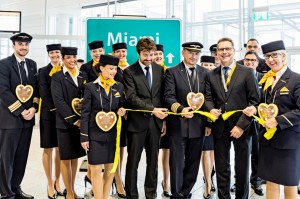
New Miami ServiceRibbon-cutting ceremony at Munich Airport’s Terminal 2 to mark the launch of Lufthansa’s service to Miami: Flanked by the crew, Thomas Kube, the head of marketing with Munich Airport (r. front), Ulrich Neumann, the captain of the inaugural flight, and Michael Händel, Lufthansa’s head of network planning for the Munich hub, joined in the traditional celebration of the first departure for the Sunshine State.

For the current winter timetable period, Lufthansa is offering five weekly departures on the new route.

Date of photo: December 02, 2014New Miami Service2


Flughafen München Press release 83/2014

First Bombardier CS300 Readies to Fly in Early 2015!

0

Bombardier announced today that the first CS300 aircraft will make its inaugural flight in early 2015 following the completion of functional test procedures (FTPs) and required engine and taxi runs in Mirabel, Québec.

CSeries-CS300-201412-675x435

“The excitement is building as we get ready to fly the first CS300 aircraft! Over the next few weeks, theCS300 aircraft will be outfitted with the latest software rolls, taking it to the most current production standards – therefore making it the most optimized and productive first flight of any test vehicle seen to date,” said Rob Dewar, Vice President, CSeries Program. “We elected to target early 2015 for the CS300 aircraft’s first flight to take advantage of the knowledge we acquired from the accumulation of data from the four flight test vehicles currently flying, thus allowing us to build maturity and reliability upfront.”

The CS300 aircraft’s entry-into-service (EIS) is expected to occur approximately six months after the CS100aircraft’s EIS, currently slated for second half of 2015.


Norwegian is yet again voted Europe’s best low-cost airline

0

Norwegian has once again been voted “Europe’s best low-cost airline” – this time by AirlineRatings.com. The jury praises Norwegian’s ability to offer its passengers an innovative quality product and new routes at low fares. This is the second year running that Norwegian is awarded this international title by AirlineRatings.com.

AirlineRatings.com recently announced the winners of its “Airline Excellence Awards”. For the second year running, Norwegian is named “Europe’s best low-cost airline” by the jury. Winners from the other continents are: JetBlue (The Americas), Scoot (Asia / Pacific) and Kulula (Middle East / Africa). Norwegian is the only Nordic airline to receive a title. Last summer, Norwegian was also voted “Europe’s best low-cost airline” by the renowned Skytrax World Airline Awards for the second year running.

Norwegian voted best low-cost airline“The four airlines are standouts in their respective markets with very clever innovations and they consistently delivery an excellent value proposition. These airlines may not always offer the lowest fare but what they always do is deliver the best value. And these airlines open new routes and make travel fun for millions who could previously not afford to fly,” said AirlineRatings.com Editor-in-Chief Geoffrey Thomas.

“This recognition means a lot and yet again confirms that customers appreciate Norwegian. We have new aircraft, free WiFi, low fares and many direct flights, but most importantly; we have skilled employees who every day ensure that our passengers enjoy their experience on board. Norwegian has won numerous international awards where the customers themselves have voted for us to become the best low-cost carrier. We will do our utmost and continue to work hard so that everyone has a good journey with us,” says Norwegian’s CEO Bjørn Kjos.

Press Release  •  Dec 04, 2014 17:20 GMT

Take Air, a new very exclusive Belgian airline

1

Take Air to be first all-you-can-fly membership airline in Europe

Antwerp, 4 December 2014 – Belgium’s newest airline is Take Air, the first all-you-can-fly membership airline in Europe. Its innovative concept offers unlimited flights for a fixed monthly fee. Take Air only uses business aircraft from General Aviation Terminals that are also used for private and business flights. This allows passengers to check in up to 15 minutes before departure without any stress, luggage hassle or long queues. Take Air will start with two scheduled flights: Antwerp-Zurich and Paris-London. Its first flight is scheduled in March 2015. You can now register for the Take Air waiting list on www.flytakeair.com

Beechcraft King Air 250 - Take AirTake Air is the first new airline to be established in Belgium since 2003. In 2014, the world of aviation
has become so different that new business models are being introduced. “Take Air is not just another
airline,” Take Air founder and General Manager Matthieu Dardenne says. “It is the first all-you-can-fly
membership airline launched in Europe. As a Take Air member, you enjoy unlimited Take Air flights
and the best of what aviation currently has to offer: hassle-free air travel that saves time and avoids
any unpleasant surprises. It is the ideal solution for anyone who flies a lot for business or personal reasons. Memberships start at 1,650€ per month without any hidden extras.”

Flexible, comfortable and time-saving

Take Air only flies business aircraft – such as the Beechcraft King Air 200 and 350 – from and to the business terminals (General Aviation Terminals). This provides members a high level of comfort with a lounge, meeting rooms, sufficient in-flight legroom and no long security or boarding queues. They will no longer have to look for a parking space as they can park right by the terminal. “If you travel to a certain destination more than twice a month, Take Air can already offer you better value, save you time and give you more travel comfort,” Matthieu Dardenne adds. “Flying with us will easily save you 90 minutes on each leg of your trip, as you can check in up to 15 minutes before departure. This
should not be underestimated. As a Take Air member, you also receive the personal assistance of an Airport Angel, who will be there to help you organise your travel. Our web app allows you to book and cancel your flights in less than 30 seconds.”

150 possible connections in Europe

Take Air focuses on routes under 90 minutes of flight that provide a strategic or economic link. It is no coincidence that Take Air’s first scheduled flights are between Antwerp and Zurich and Paris and London. These connections were chosen following a comprehensive study of the entire Take Air concept performed by Vlerick Business School. According to the study, no less than 150 European destinations are suitable for Take Air’s concept. It is therefore Take Air’s ambition to add a number of new connections to its range every 6 months. The Take Air website always allows users to request routes for the future.

Frequent daily flights

Take Air will start its operations in March 2015 with several daily flights between Antwerp and Zurich and Paris and London. The objective is to offer up to 5 flights a day in each direction. In Antwerp, flights will depart from the new General Aviation Terminal (GAT) that will open in 2015.

More information and memberships: www.flytakeair.com

IATA: Passenger Traffic Maintains Strong Growth in October

0

The International Air Transport Association (IATA) announced global passenger traffic results for October showing a strengthening in demand growth compared to September 2014 and to the year-ago period. Total revenue passenger kilometers (RPKs) rose 5.7% over October 2013, slightly ahead of the 5.2% year-on-year rise recorded in September 2014. October capacity (available seat kilometers or ASKs) increased by 5.5%, causing load factor to rise 0.1 percentage points to 79.1%.

“Against a backdrop of economic weakness in some regions, October traffic results show demand for connectivity remains strong on a global basis,” said Tony Tyler, IATA’s Director General and CEO.

“With 2014 drawing to a close, the outlook for air travel remains largely positive. Improvements in economies in Asia-Pacific and the US are offsetting weakness in the Eurozone and China. The fall in oil prices, if sustained, could provide a much-needed operating cushion. But there are risks which must also be accounted for—including the proliferation of political instability,” said Tyler.

Oct 2014 vs. Oct 2013RPK GrowthASK GrowthPLF
International5.5%6.4%78.0
Domestic5.8%4.0%81.1
Total Market5.7%5.5%79.1
YTD 2014 vs. YTD 2013RPK GrowthASK GrowthPLF
International6.2%6.4%79.7
Domestic5.2%4.2%81.0
Total Market5.8%5.6%80.2

International Passenger Markets

October international passenger demand rose 5.5% compared to the same month last year, with airlines in all regions except Africa recording growth. Capacity climbed 6.4% and load factor dipped 0.6 percentage points to 78.0%.

  • European airlines saw demand increase by 5.8% in October versus October 2013, the strongest growth among the three largest regions. Although there has been some slowdown in the Eurozone economy, travel on low cost carriers has remained robust and is helping sustain current results. Capacity rose 5.0% and load factor climbed 0.6 percentage points to 81.9%, highest among regions.
  • Asia-Pacific carriers’ traffic rose 5.5% compared to the year-ago period, reflecting stronger regional trade activity which encourages business travel. The economic slowdown in China has yet to have any impact on regional trade activity and related business travel. Capacity rose 7.4% and load factor dropped 1.4 percentage points to 74.9%.
  • North American airlines experienced a 1.8% rise in traffic compared to October a year ago. While a slowdown compared to September year-over-year growth, underlying trends in business activity are positive and growth in trade volumes has accelerated. Capacity rose 3.2%, which caused load factor to dip 1.1 percentage points to 80.3%.
  • Middle East carriers’ demand climbed 10.3% in October, the largest increase for any region, reflecting strong regional economies with rising export activity that supports regional trade and related international business travel. Capacity climbed 13.5%, causing load factor to fall 2.1 percentage points to 73.5%.
  • Latin American airlines saw traffic climb 6.5% compared to October 2013, second best among regions. Capacity rose 6.0% and load factor rose 0.5 percentage points to 80.5%. The weak growth in the Brazilian economy may be deteriorating further but regional trade volumes have been improving.
  • African airlines’ traffic contracted 1.6% in October, while ASKs slipped 0.1%, resulting in a 1.0 percentage point drop in load factor to 66.8%, the lowest for any region. The weakness reflects adverse economic developments in some parts of the continent. However, the improving outlook for South Africa could ease some of the downward pressure on the continent’s carriers. Additionally, the effect of any Ebola-related traffic downturn is mostly restricted to Guinea, Liberia and Sierra Leone, markets that comprise a very small proportion of overall African traffic.

Domestic Passenger Markets

Domestic travel demand rose 5.8% in October compared to October 2013, with the strongest growth occurring in China and India. Total domestic capacity climbed 4.0%, and load factor rose 1.4 percentage points to 81.1%.

Oct 2014 vs. Oct 2013RPK GrowthASK GrowthPLF
Australia3.4%-1.2%82.7
Brazil8.0%3.9%81.1
China P.R.10.0%10.1%80.8
India16.3%3.4%77.4
Japan1.3%-2.5%70.0
Russian Federation6.1%2.4%75.0
US3.8%2.0%84.3
Domestic5.8%4.0%81.1
  • China’s domestic demand rose 10% in October compared to a year ago, a solid result in view of indicators suggesting that the economy is starting to slow.
  • Indian domestic traffic climbed 16.3%. Although this was a considerable slowdown compared to September year-over-year growth of 26.4%, it was still a strong result and reflects market stimulation by local carriers.

The Bottom Line:

“This weekend marks International Civil Aviation Day. And next month will begin the second century of commercial aviation. These are fitting moments to pause and reflect upon the reliance of the global economy on connectivity. Even more important is the challenge to prepare for the future by ensuring that the industry has a smart regulatory environment, cost-efficient infrastructure and a reasonable tax obligation,” said Tyler.

View October traffic results (pdf)

Press Release No.: 65, Geneva –  4 December 2014

VLM Airlines starts daily scheduled flights Antwerp-Geneva

0

As from January 26th 2015, VLM Airlines will offer on weekdays two daily return flights from Antwerp International Airport to Geneva. An early morning and early evening light will be ideal for both business travellers and tourists.

“We are pleased that VLM as an independent airline will offer again scheduled flights to its clients. We are also proud that our first destination is Geneva. Antwerp and Geneva are both major business enters with a solid international reputation,” said Arthur White, CEO of VLM Airlines. “In addition, they are also touristic top destinations.” Antwerp is the diamond capital of the world, one of the largest ports, the main chemical cluster in Europe, the beating heart of fashion and the city of P.P. Rubens, Sir Anthony van Dyck and many other great artists. Geneva is one of the most important financial and economic centers around the world and home to European and global headquarters of many leading companies.

vlm_ourfleet_header_02With these new scheduled flights VLM Airlines returns back to its roots of honoured tradition. Until now VLM Airlines only offered charter and ACMI services, tickets for Antwerp-Geneva-Antwerp will be available from December 19th through www.vlmairlines.com or through tour operators and travel agents.

VLM Airlines – which started in 1993 with its inaugural Antwerp-London City Airport route – over the years has become one of the most successful airlines in the charter business based at Antwerp International Airport. With its Fokker 50 fleet VLM Airlines focuses on meeting the needs of the European charter market including ACMI / Wet Lease contracts and charter operations for tour operators, travel agents, music & film, special events, incentives, sports teams, government & military, NGO’s and emergency support.

Antwerp (Belgium), December 4, 2014

IATA: Air Freight Strong Performance Continues in October

0

The International Air Transport Association (IATA) released October data for global air freight markets showing that the strong performance of air cargo in recent months is continuing. Demand, measured in freight tonne kilometers (FTK), rose 5.4% in October compared to October 2013. This out-stripped capacity which grew by 4.4%. Compared to September demand grew by 0.7% bringing freight volumes to a new record monthly high.

The good results reflect the improvements in world trade and business activity which have been evident since the summer. World trade is growing steadily, supporting increased air cargo shipments. Regional differentiation in performance, however, is very apparent. Carriers in the Middle East, Africa and Asia-Pacific saw demand grow faster than the global trend, while North America, Europe and Latin America grew more slowly. More significantly, however, carriers in all regions except for Europe improved on their year-to-date performance. Cargo demand for European carriers grew by a weak 1.4% compared to the previous October, reflecting economic uncertainty and the impact of sanctions as a result of the Russia-Ukraine crisis.

“We are now back to levels of demand not seen since the 2010 post-recession bounce-back. But the industry is still in the hot seat and under pressure to improve its value offering. Customer expectations have evolved dramatically. Other modes of cargo have improved their competitiveness. Shippers expect the efficiency of electronic processes that they experience in almost every other sector. And when shipping specialty products—such as those requiring cold chain control—they expect quality from end-to-end. The industry is investing to build its future by meeting these expectations,” said Tony Tyler, IATA’s Director General and CEO.

Oct 2014 vs. Oct 2013FTK GrowthAFTK GrowthFLF
International5.6%5.1%50.4
Domestic3.9%1.8%32.7
Total Market5.4%4.4%47.0
YTD 2014 vs. YTD 2013FTK GrowthAFTK GrowthFLF
International4.7%4.0%48.7
Domestic3.0%2.1%30.7
Total Market4.5%3.6%45.2

Regional analysis in detail

Asia-Pacific carriers reported a 6.7% increase in FTKs, boosted by the release of the iPhone 6, and solid increases in trade and exports from emerging Asian economies. Looking forward, the rate of growth in the Chinese economy continues to slow down which may impact on air cargo. Capacity grew 5.7%.

European airlines improved cargo volumes by 1.4%. The Eurozone economy only just avoided recession in the third quarter. Poor business confidence and the ongoing sanctions against Russia will continue to weigh on European cargo in the months ahead. Capacity expanded 4.4%.

North American carriers recorded an increase of 3.1% in October. Growth was slower than the September figure of 5.4%, but the overall trend is showing an acceleration on growth for the year-to-date (2.7%). Underlying indicators are positive, which bodes well for increased cargo growth in the future. Capacity contracted 1.2%.

Middle Eastern carriers once again recorded double-digit increases, expanding 13.0%. Carriers in the region have diversified, expanding their services in perishables and linking growing markets in Asia and Africa. Capacity expanded 15.8%.

Latin American airlines’ grew FTKs by 4.1% year-on-year. This solid growth reverses the trend from September, when volumes fell 0.7%. Stronger export growth across Latin America is supporting better air cargo performance. Capacity grew 2.3%.

African airlines’ reported strong growth of 9.6% year-on-year. Regional trade volumes are still volatile, but the improvement in key economies such as South Africa is supporting this improvement. Capacity fell 2.4%.
View October Air Freight results (pdf)

Press Release No.: 64, Geneva, 3 December 2014

Boeing Conducts World’s First Flight with ‘Green Diesel’ as Aviation Biofuel

0

ecoDemonstrator Boeing 787 flies on sustainable fuel made from vegetable oil, waste animal fat

Testing supports industry efforts to approve widely available biofuel for aviation

Boeing has completed the world’s first flight using “green diesel,” a sustainable biofuel that is widely available and used in ground transportation. The company powered its ecoDemonstrator 787 flight test airplane yesterday with a blend of 15 percent green diesel and 85 percent petroleum jet fuel in the left engine.

First test flight with 'green diesel' as aviation biofuel

“Green diesel offers a tremendous opportunity to make sustainable aviation biofuel more available and more affordable for our customers,” said Julie Felgar, managing director of Environmental Strategy and Integration, Boeing Commercial Airplanes. “We will provide data from several ecoDemonstrator flights to support efforts to approve this fuel for commercial aviation and help meet our industry’s environmental goals.”

Sustainable green diesel is made from vegetable oils, waste cooking oil and waste animal fats. Boeing previously found that this fuel is chemically similar to HEFA (hydro-processed esters and fatty acids) aviation biofuel approved in 2011. Green diesel is chemically distinct and a different fuel product than “biodiesel,” which also is used in ground transportation.

With production capacity of 800 million gallons (3 billion liters) in the U.S., Europe and Asia, green diesel could rapidly supply as much as 1 percent of global jet fuel demand. With a wholesale cost of about $3 per gallon, inclusive of U.S. government incentives, green diesel approaches price parity with petroleum jet fuel.

“The airplane performed as designed with the green diesel blend, just as it does with conventional jet fuel,” said Capt. Mike Carriker, Chief Pilot for New Airplane Product Development, Boeing Test & Evaluation. “This is exactly what we want to see in flight tests with a new type of fuel.”

Green diesel is among more than 25 new technologies being tested by Boeing’s ecoDemonstrator Program aboard 787 Dreamliner ZA004. The program accelerates the testing, refinement, and use of new technologies and methods that can improve aviation’s environmental performance.

On a lifecycle basis, sustainably produced green diesel reduces carbon emissions by 50 to 90 percent compared to fossil fuel, according to Finland-based Neste Oil, which supplied green diesel for the ecoDemonstrator 787. The flight test was coordinated with the U.S. Federal Aviation Administration, Rolls-Royce and Pratt & Whitney, and EPIC Aviation blended the fuel.

For more information about ecoDemonstrator 787 technologies and a complete list of supplier partners, visit www.newairplane.com/environment/#/ecoDemonstrator/

SEATTLE, Dec. 3, 2014 /PRNewswire/

Airbus celebrates 200th aircraft assembled in Tianjin

0
A ceremony was held today at the Airbus (Tianjin) site to celebrate the 200th A320 Family aircraft assembled by the Airbus Tianjin Final Assembly Line (FALC). Daniel Baubil, Airbus Executive Vice President and Head of Single Aisle Family Programme handed over the A319, a member of the A320 Family, to China Eastern Airlines.


Officials from China and Europe, representatives of China Eastern Airlines, Airbus and its Chinese partners, Tianjin Free Trade Zone (TJFTZ) and Aviation Industry Corporation of China (AVIC), as well as employees of the FALC and Airbus Tianjin Delivery Centre (ATDC), were in attendance.

200th Airbus in Tianjin
Airbus celebrates 200th aircraft assembled in Tianjin

“The 200th Airbus A320 Family aircraft assembled in Tianjin marks an important milestone of the Airbus partnership with China,” said Airbus China President and CEO, Eric Chen. “We are happy to deliver this aircraft to China Eastern Airlines, and to celebrate this achievement together with the Tianjin Free Trade Zone and AVIC, our partners. We are committed to providing the world’s best aircraft to our customers and keen to continue our win-win cooperation with China.”

China Eastern is one of the largest airlines in China and was the first Chinese airline to operate Airbus aircraft (A310) in 1985. Today, China Eastern Airlines operates a fleet of more than 270 Airbus Single Aisle and Wide-Body aircraft.

In March 2014, Airbus, TJFTZ and AVIC agreed to extend the successful Joint Venture for another 10 years, from 2016 to 2025. The extension, called “Phase II”, will include the final assembly of the A320neo Family from 2017 onwards for delivery to the Asian region.

FALC, inaugurated in 2008, is a joint venture between Airbus, the TJFTZ and AVIC. It is the third A320 Family final assembly line in the world after the FALs in Toulouse, France and Hamburg, Germany and the first outside Europe. The ATDC delivered the first aircraft assembled in FALC to Sichuan Airlines in June 2009.

Airbus is the leading aircraft manufacturer with the most modern and comprehensive family of airliners on the market, ranging in capacity from 100 to more than 500 seats. Over 14,600 Airbus aircraft have been sold to more than 470 customers and operators worldwide, and more than 8,700 of these have been delivered since the company first entered the market in the early seventies.

Shortly after the delivery of the first aircraft to the country, Airbus started industrial cooperation with China. Today, some 1,100 Airbus aircraft are being operated by Chinese airlines, accounting for some 50% of the total fleet of aircraft over 100 seats in China.

Chinese aviation industry companies have been fully involved in the design and assembly of Airbus aircraft. There are components produced in China on all Airbus commercial aircraft types. Airbus now has four joint ventures with Chinese partners covering training and support, engineering, final assembly and composite manufacturing, in addition to a number of cooperation projects.

The A320 Family is the world’s best-selling single aisle product line with more than 11,000 orders to date and over 6,200 aircraft delivered. Thanks to its wide cabin, all members of the A320 Family offer the industry’s best level of comfort in all classes and Airbus’ 18” wide seats in economy as standard.  To date, more than 900 Airbus A320 Family aircraft are in service in China with 16 operators.

3 December 2014 Press Release

CIT firms up order for 15 A330neo and five A321ceo aircraft

0

Strong momentum growing for Airbus’ new A330neo Widebody

CIT Group Inc. (NYSE: CIT), a global leader in transportation finance has firmed up its order for 15 A330-900neo aircraft and five A321ceo aircraft. CIT became one of the launch customers of the A330neo after signing its initial agreement in July 2014, at the Farnborough International Airshow.

“Given our long-term leadership on the A330 program, we are proud to be one of the first customers to sign a purchase agreement for the all-new A330neo aircraft,” said Jeff Knittel, President of CIT Transportation & International Finance.  “These agreements will enable us to provide fuel efficient solutions to our customers as CIT continues to be a leader in providing early access to the most sought after aircraft for our customers.”

“When a leading lessor, CIT, adds the A330neo to its already extensive Airbus widebody portfolio of A330ceo’s and A350-900s, we take that as clear confirmation of our widebody family strategy fully meeting the requirements and expectations of the market,” said John Leahy, Airbus Chief Operating Officer, Customers. “CIT’s repeat order for A321ceo’s, is further evidence of the continuing high value placed by the market on this largest member of our popular A320 Family, which offers the best seat-mile costs of any single-aisle aircraft and the lowest fuel burn, emissions and noise footprint in its class.”

The A330-800neo and the A330-900neo are two new members of the Airbus Widebody Family launched in July 2014 with first deliveries scheduled to start in Q4 2017. The A330neo incorporates latest generation Rolls-Royce Trent 7000 engines, aerodynamic enhancements and new cabin features. Benefitting from the unbeatable economics, versatility and high reliability of the A330, the A330neo reduces fuel consumption by 14% per seat, making it the most cost efficient, medium range Widebody aircraft on the market. In addition to greater fuel savings, A330neo operators will also benefit from a range increase of up to 400 nautical miles and of course all the operational commonality advantages of the Airbus Family.

The A320 Family is the world’s best-selling single aisle product line with almost 11,000 orders to date and over 6,200 aircraft delivered to 400 customers and operators worldwide. Thanks to its widest cabin, all members of the A320 Family offer the industry’s best level of comfort in all classes and Airbus’ 18” wide seats in economy as standard.

3 December 2014 Press Release

Strike by Lufthansa long-haul pilots from 3:00 to 23:59 CET on Thursday, December 4

0

The pilots’ union “Vereinigung Cockpit” has announced a strike across Germany for Lufthansa intercontinental flights departing between 03:00 CET and 23.59 CET on Thursday, December 4. During the strike period disruptions of Lufthansa long-haul flights are expected also at Frankfurt Airport. All Lufthansa short and medium-haul flights as well as flights operated by the Lufthansa Group airlines Austrian Airlines, Brussels Airlines, Germanwings, SWISS and Air Dolomiti (operated by OS, SN, 4U, LX, EN) will not be affected.

Passengers are advised to check the status of their flight prior to departure via the Internet at https://www.lufthansa.com and to take advantage of available rebooking options. Current flight information and a list of cancelled flights will also be available at www.lufthansa.com.
Flights of other airlines will operate as scheduled; we do not expect further operational disruptions. Further information is available by calling 01806-FRAINFO (01806-3724636 – flat landline rate of €0.20 euro cents per call within Germany) as well as at www.frankfurt-airport.com or via the Frankfurt Airport App.”

Ryanair November traffic jumps 22% to 6.35M customers

0

FULL YEAR TRAFFIC & PROFIT GUIDANCE RAISED AS THE “ALWAYS GETTING BETTER” PROGRAMME DELIVERS STRONGER THAN EXPECTED GROWTH IN FIRST MONTH OF EXPANDED WINTER 14/15 SCHEDULE 

Ryanair today (4 Dec) released November traffic growth highlighting that the airline’s “Always Getting Better” customer programme delivered a stronger than expected performance in the first month of Ryanair’s significantly expanded winter schedule. Despite increasing November seat capacity by 13% (over Nov 13) and opening a large number of new city pair routes designed to appeal to business traffic, Ryanair’s November load factor rose by 7% points from 81% in 2013 to 88% in 2014.


Ryanair noted that it had materially exceeded its first month load factor targets across a significant number of city pair markets where it is offering business type frequencies in direct competition to longer established, higher fare airlines as the following examples illustrate:


  • From Dublin on 3 new routes to Brussels (3 daily), Glasgow (3) and Cologne (1) in competition with Aer Lingus, the first month load factor was 80%.
  • From Warsaw (Modlin) to Gdansk (2 daily) and Wroclaw (2) in competition with LOT, the first month load factor was 82%.
  • From London Stansted to Glasgow (3 daily), Edinburgh (3), Lisbon (3), Cologne (2) and Athens in competition with easyJet, the first month load factor was 88%.
  • From Lisbon to London (3 daily), Hamburg (1), Rome (1) and Milan (1) in competition with TAP and others, the first month load factor was 90%.


Ryanair attributes this stronger than expected initial winter performance to the continuing success of its “Always Getting Better” customer programme, our stronger forward booking strategy and the airline’s substantial fare and unit cost advantage over all other European airlines.


As a result of this better than expected performance in month one, of its substantially expanded winter schedule, Ryanair has now revised its full year traffic guidance up from 89m to just over 90m customers, and raised its full year profit after-tax forecast from its previous range of €750m to €770m, to a new range of €810m to €830m.  Ryanair noted that the final full year profit will still be heavily reliant on close in bookings and yields in Q4 (Jan – Mar 15) over which it presently has very little visibility.


Jetairfly: The introduction of the revolutionary Boeing 787 Dreamliner is a success across the board

0

The arrival of the Dreamliner in Belgium one year ago has boosted Caribbean vacations

In 2014 Jetair and Jetairfly recorded more than one third of additional vacationers in the Caribbean. One of the main reasons for this remarkable growth is the Boeing 787 “Dreamliner”, on which the experts agree that it embodies the most advanced aircraft of this time. Tomorrow, there will be one year since the first and only Belgian Dreamliner landed at Zaventem. After a year of intensive use, Jetairfly summarises for the record.

JAF_B787_Dreamliner_b

This year, exotic vacations experienced the strongest growth, said the ABTO, the professional association of tour operators, during its last press conference. With the Dominican Republic in the headlines, for which Belgium recorded this summer 27.1% more trips.

Jetair and Jetairfly, the market leader in Belgium for the Caribbean, have identified more than a third of additional travellers to the Caribbean, more than half of them opted for the Dominican Republic.

With the commissioning of the Dreamliner, Jetair and Jetairfly could further reduce the already tight price for airline tickets and stay in the Caribbean. The Dreamliner effect is thus explained not only by curiosity and passenger comfort but also by the very real advantage in terms of price.

Last year, Jetairfly performed 809 flight legs with its Dreamliner, travelling a total of 4.2 million kilometres. More concretely, this is 105 times around the earth, or 5.5 times the distance to the moon and return. The aircraft has been 5,294 hours in the air and welcomed 203,000 passengers. Jetairfly trained 38 pilots and 247 crew members on this new aircraft type.

B38bGViCAAAvFPz

The plane is composed of 50% of composite materials (carbon), is equipped with more efficient engines and has improved aerodynamics. The measured consumption last year amounted to 2.74 litres per passenger per 100 kilometres. Per passenger on board, kerosene consumption and emissions decreased by 17% in comparison with the Boeing 767, which Jetairfly used in the past for its flights to the Dominican Republic, Mexico, Jamaica and Cuba.

The technical reliability of the Dreamliner was clearly demonstrated during the first year of operation. Jetairfly is also the first airline in the world to have been awarded the “Reliability” award from Boeing. Last year, passengers were very enthusiastic about on-board comfort and awarded the aircraft a 8.1 NPS (Net Promoter Score). And for good reasons: the air on board the Dreamliner is less dry, the traveller has the feeling of having more space, there is less noise and a full entertainment system with individual screens entertains each passenger.

Press release, Zaventem, December 3, 2014

New Lufthansa strategy, with low-cost long-haul Eurowings flights operated by SunExpress A330s

0

Lufthansa Supervisory Board approves key focuses and actions for the Lufthansa Group’s continued success

• Focus on 2015 as the year of ‘New Lufthansa Premium Quality’

• New European and intercontinental flight products under the “Eurowings” brand, and lease-in of up to seven Airbus A330-200s

• Letter of Intent with SunExpress for Eurowings long-haul routes

• Further structural development of Group airlines’ worldwide distribution

• Key financial indicator of “earnings after cost of capital” to replace “cash value added”

2015 should bring increasingly good news for customers and passengers of the Lufthansa Group, according to the plans of the Deutsche Lufthansa AG Executive Board. For the Group’s member airlines, fleet renewals and the completion of a number of major refurbishment projects should provide state-of-the-art aircraft cabins and five-star inflight travel comfort. The first quarter of 2015 will see Lufthansa German Airlines conclude the installation of its new First Class throughout its long-haul fleet; the second quarter will witness the completion of the new Business Class installation program; and the third quarter will see the new Premium Economy available on all of Lufthansa’s intercontinental aircraft. All the new long-haul aircraft of which Lufthansa will take delivery next year will have all the new cabins already installed. And the modernization of the long-haul fleet will be further pursued in 2015 with the arrival of two more Airbus A380s and four new Boeing 747-8s. Also slated for delivery next year are a further Boeing 777F for Lufthansa Cargo and ten short- and medium-haul aircraft of the Airbus A320 family.

“2015 will be the year of ‘Lufthansa Premium Quality’,” said Carsten Spohr, Chairman & CEO of the Deutsche Lufthansa AG Executive Board, on the occasion of the meeting of the company’s Supervisory Board today. “Whichever cabin they travel in, our inflight guests will be able to see and feel that Lufthansa is a premium-service airline which is one of the leaders in its field by any global benchmark. We will also be moving the entire Lufthansa Group further forward with our ‘7 to 1’ program,” Carsten Spohr continued. “And we presented the progress we have made in our various action areas here to our Supervisory Board today. As well as promoting innovation, it’s enhancing our quality and our efficiency that are particular focuses for us in all our concepts for new and further growth. And these enhancements will open up new opportunities for us in growth markets.”

‘New Growth Concepts’ action area

The Supervisory Board gave the formal go-ahead to the ‘Wings’ concept presented by the Executive Board at its meeting today, and approved the lease of up to seven Airbus A330-200 aircraft for the new low-cost operation’s intercontinental routes.

The Supervisory Board further approved the development of the ‘Eurowings’ concept, under which – within an umbrella framework – the Lufthansa Group’s Eurowings and Germanwings airlines, along with further flight operations in Europe, should acquire new customers by offering quality products at attractive prices in the form of low-cost short- and long-haul air travel services from the end of 2015 onwards.

The new products, which will be primarily aimed at the private travel sector, will help the airlines of the Lufthansa Group secure their strong positions in their home markets of Germany, Austria, Switzerland and Belgium in the point-to-point travel segment, too, in the longer term.

“The ‘New Eurowings’ is our response to one of the major challenges confronting Europe’s airline industry,” Carsten Spohr explains. “For several years now we’ve been facing fierce competition from the rapidly-growing low-cost carriers in the point-to-point travel segment, not only in Germany but throughout Europe, too. And we are sure to see this competition extend more and more to the long-haul travel segment in the years ahead. Our ‘New Eurowings’ is our innovative response, which will enable us to fashion our own markets here.”

“Innovative concepts with substantially lower costs combined with the strengths, skills and expertise of the Lufthansa Group: that’s our recipe for success,” Spohr continues. “And our new ‘New Eurowings’ product will offer both outstanding value for money and the strongest quality, reliability and safety credentials.”

The ‘New Eurowings’ concept follows the successful transfer of Lufthansa’s non-hub routes to Lufthansa Group subsidiary Germanwings. The program of transferring all Lufthansa routes not serving its Frankfurt and Munich hubs should be completed in early January 2015.

In an initial step, the two already-existing airlines Germanwings and Eurowings will continue to perform their flight operations with their current networks and crews, under the umbrella of the new concept. For the new European operations the present Eurowings fleet, which consists of 23 Bombardier CRJ900 jets, will be replaced with up to 23 Airbus A320s between February 2015 and March 2017. Ten new A320s have been ordered to this end, while up to 13 further A320s will be reassigned to Eurowings from existing orders held by the Lufthansa Group. This will give the ‘New Eurowings’ a standardized fleet of Airbus A320 aircraft by the end of 2017, along with the further cost benefits that will derive from these advanced aircraft’s fuel-efficient credentials. Further routes will also be added to the Eurowings network, operated from a new Eurowings base outside Germany, in the course of 2015.

In addition to its European network, the ‘New Eurowings’ will also begin to add long-haul services to its low-fare product range from the end of 2015 onwards, in collaboration with German-Turkish airline SunExpress. To this end, a Letter of Intent has been signed with SunExpress, a joint-venture company of Lufthansa and Turkish Airlines, under which the intercontinental services to be offered under the Eurowings brand will be flown under the air operator certificate (AOC) of SunExpress Deutschland and with SunExpress Deutschland cockpit and cabin crews. The first intercontinental destinations to be served will include points in Florida, Southern Africa and the Indian Ocean. The new flights will initially be operated by a fleet of three Airbus A330-200 aircraft each offering 310 seats. The Eurowings long-haul fleet should then be gradually expanded to up to seven A330-200s over the next few years.
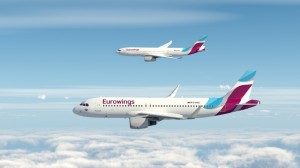
Eurowings_A320_A330

As with the already-successful Germanwings concept, the new Eurowings long-haul products will offer customers a choice of ‘Best’, ‘Basic’ and ‘Smart’ fares. Home base for the new long-haul fleet will initially be Cologne/Bonn Airport; and Cologne will also be the home of the Wings carriers’ commercial management operations.

‘Efficient and Effective Organization’ action area: Lufthansa Group to reshape member airlines’ field sales structures

The Lufthansa Group will be realigning the field sales structures of its member airlines with effect from 1 March 2015, in response to the new demands of the world’s sales markets. In future, all the Group’s global field sales will be the responsibility of a single Group wide entity. The new arrangement should provide greater field sales harmony within the Lufthansa Group, in both product and distribution-technology terms.

‘Value-Based Management’ action area: “earnings after cost of capital” to replace “cash value added” as key financial indicator for corporate decisions

The Deutsche Lufthansa AG Executive Board also presented the Supervisory Board with a new value-based management concept at the latter’s meeting today which should be adopted at Deutsche Lufthansa AG in the course of the coming year. The new concept will see two new key financial indicators – earnings after cost of capital (EACC) and return on capital employed (ROCE) – replace the key financial indicator of cash value added (CVA) which is currently used in all decision-making processes and for the remuneration of executive staff from 2015 onwards.

The new key financial indicators are easier to calculate, which should help anchor value-based management even more firmly within the Lufthansa Group. The new figures show whether the capital employed is achieving sufficiently high results to increase the company’s value, and should thus ensure that all corporate decisions are as sustainably-minded as possible.


Deutsche Lufthansa AG
Lufthansa Group Media Relations 3.12.2014

Air France pilots respond positively to the consultation on the development project for Transavia France

0

Air France welcomes the positive outcome of the consultation with all its pilots on the draft development agreement for Transavia France.

une_siege_AF_630x0
With a very high participation rate, 53% of Air France pilots approved the agreement, reaching 60% for members of the majority union SNPL.

This result will be approved by the Union Council of the SNPL (National Union of Airline Pilots), which will meet tomorrow Thursday, December 4.

To date, more than 200 Air France pilots have volunteered to fill the 72 positions available at Transavia France.

“We welcome the positive outcome of this consultation which puts an end to a period of uncertainty. The majority of pilots have chosen to accompany us in our growth strategy on the low-cost market with Transavia” declared Frédéric Gagey, Chairman and CEO of Air France.

Thanks to this agreement, Transavia’s rapid development plan in France will continue:

• Strong growth in summer 2015: 21 aircraft operated compared with 16 in summer 2014, making Transavia the leading low-cost airline at Paris-Orly from summer 2015.
• A target of 37 Boeing 737 by 2019.

Integrated career management for pilots at Air France and Transavia will be introduced, including a joint seniority list.

This development meets the pilots’ high expectations and enables overstaffing at Air France to be more easily managed by organizing secondments to Transavia France.

Wednesday 3 December 2014

TNT Airways to replace all paper flight documents by iPads

0

TNT Airways, TNT’s subsidiary airline, is to roll out paperless cockpits across its worldwide fleet of 50 aircraft, following approval from the Belgian Civil Aviation Authority to use iPad Air tablets as electronic flight bags.

Each iPad will replace the 50 kilos of paper books and manuals carried by crews on each flight. Going paperless will also simplify the updating of flight documents, as updates are managed centrally and electronically, regardless of the crews’ location.

All TNT Airways’ 274 pilots have received an iPad. The aircraft cockpits have been modified to house the devices and permit their use in all phases of a flight, including take off and landing.

TAY-pilots-at-work_1

The approval was granted following a successful 6-month validation period. The Belgian Civil Aviation Authority investigated whether all safety requirements and conditions were met. MDM (Mobile Device Management) software provides TNT remote management and control of the tablets to ensure strict compliance with the company’s policies on security, content and data.

TNT will remove paper documentation from its aircraft and flights by the end of 2014. From 1 January 2015, TNT pilots will solely rely on iPads to access information such as operating manuals, maps and navigation charts.

“TNT Airways is one of the first commercial airlines in Europe to receive the authorisation to deploy paperless cockpits. This testifies to TNT’s commitment to innovation and safety,” said Martin Sodergard, Managing Director Network Operations, TNT.

Publish Date : Amsterdam, The Netherlands, 03 December 2014 08:00 CET

Aviation24.be latest

Aviation24.be trending