Home Blog Page 21

Aer Lingus deploys Airbus A330 widebody to Brussels

0

Brussels Airport welcomed an unusual Aer Lingus widebody on Wednesday, 9 September, when the Irish carrier deployed an Airbus A330-300 on its morning service between Dublin and the Belgian capital.

The long-haul aircraft operated the Dublin–Brussels rotation and returned to Ireland as flight EI631. It left Brussels at 11:39 and arrived in Dublin at 11:50 local time, around ten minutes behind schedule.

Aer Lingus normally serves the 784-kilometre route with a single-aisle Airbus A320, configured with approximately 174 seats. The A330-300 used on Wednesday offered around 315 seats, including 30 business-class seats, providing substantially more capacity than usual.

The reason for the one-off substitution has not been officially confirmed. It may have reflected operational requirements, aircraft positioning or stronger passenger demand rather than a permanent capacity increase. Published schedules show the route returning to A320 operation on 10 September, although another A330-300 rotation was listed for 20 September.

Despite initial reports identifying the aircraft as an A330-200, flight records classify the aircraft operating the 9 September service as an A330-300. The appearance of an Aer Lingus widebody at Brussels nevertheless provided an uncommon sight, as the airline’s A330 fleet is primarily deployed on transatlantic services.

Eutelsat orders 229 additional OneWeb satellites from Airbus

0

Eutelsat has ordered another 229 OneWeb satellites from Airbus Defence and Space to reinforce and renew its low-Earth-orbit connectivity constellation.

The Authorisation to Proceed covers initial industrial work and supplements a previous procurement of 440 satellites, taking the total number of new-generation OneWeb spacecraft to be produced by Airbus to 669.

Manufacturing will take place at Airbus’s Toulouse facility, where production of the earlier batches is already under way. The first satellites from the 440-unit order are due to be delivered and launched shortly.

The new spacecraft will progressively replace early OneWeb satellites approaching the end of their operational lives. They will incorporate improved digital channelisers for greater onboard processing capability, efficiency and flexibility, while also being able to carry hosted payloads alongside their main Ku-band mission.

OneWeb currently operates more than 600 satellites across 12 orbital planes at an altitude of approximately 1,200 kilometres, providing global high-speed, low-latency connectivity. Eutelsat said the expanded replenishment programme, together with the European IRIS² constellation, would strengthen its role in Europe’s sovereign connectivity infrastructure.

Belgian-Luxembourgish crew rescued after ditching in Black Sea

0
© Private Pilot Expedition to Georgia 2026

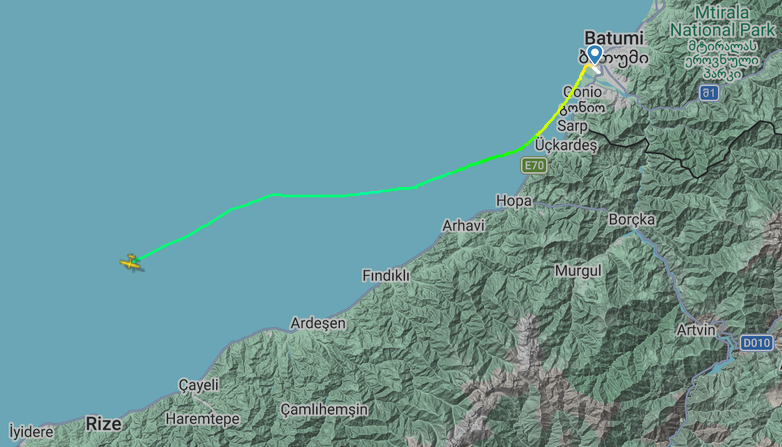
A Belgian-Luxembourgish crew escaped injury after their Aerospool WT9 Dynamic light aircraft, registered F-JIGU, suffered a complete engine failure over the Black Sea on Wednesday.

The aircraft was flying under visual flight rules from Batumi, Georgia, to Ordu-Giresun, Turkey, as part of the Private Pilot Expedition to Georgia 2026. The failure occurred at an altitude of approximately 2,000 metres after departure from Batumi at 12:32.

Following unsuccessful attempts to restart the engine, the experienced pilot and his passenger, aged 55 and 69, decided against deploying the aircraft’s emergency parachute and instead performed a controlled ditching around four nautical miles northwest of Rize-Artvin Airport.

Another expedition aircraft returned to the area and circled above the survivors until Turkish rescue teams arrived at 13:04. Both men were recovered unharmed and taken to Kaçkar Hospital as a precaution. The aircraft was lost.

The Luxembourg Aeronautical Federation said the cause of the engine failure would be investigated and declined to speculate pending officially confirmed findings.

Nine light aircraft departed Luxembourg Airport on 29 August for the 7,400-kilometre non-commercial expedition, with additional participants joining along the route through Europe and Turkey. The group is due to return via Greece, Italy and France, completing the journey on 12 September.

Source: L’Essentiel (Luxembourg), Flightradar24.com

Air Dolomiti unveils new blue livery for Embraer E195 fleet

0

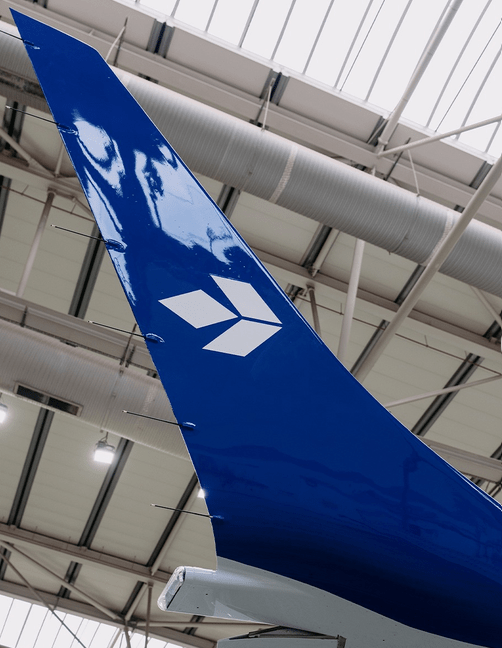
Air Dolomiti will introduce a revised livery replacing its traditional turquoise tail and fuselage titles with Lufthansa Group’s Core Blue. The change is intended to emphasise the Italian airline’s status as a wholly owned Lufthansa Group subsidiary and follows the introduction of new cabin-crew uniforms.

The first aircraft to receive the colours is the fourth of 13 Embraer E195s being transferred from Austrian Airlines. The aircraft is undergoing final maintenance and should enter service within the coming weeks. All 13 are expected to join Air Dolomiti progressively by 2028, supporting its expansion as a wet-lease operator connecting Italy with Lufthansa Group hubs.

Future deliveries will gradually receive the blue livery, while aircraft already in service will retain their turquoise colour scheme for the time being. Turquoise accents will also remain in the uniforms, seats and onboard service.

The former Austrian E195s will be reconfigured with Air Dolomiti’s standard 122-seat layout.

Drone threat delays Zelenskyy’s flight from Chisinau, Moldova, to Oslo

0

Ukrainian President Volodymyr Zelenskyy’s flight from Chisinau, Moldova, to Oslo was delayed on Tuesday evening after drones were detected in Moldovan airspace around the planned departure time.

Norwegian Prime Minister Jonas Gahr Støre initially said Zelenskyy’s aircraft (an Airbus A319-115X CJ registered UR-ABA) had “nearly been hit”, but the Norwegian Prime Minister’s Office later clarified that the actual proximity of the drones to the government aircraft remained unknown.

Moldova’s Defence Ministry confirmed that a drone had violated national airspace, amid reported Russian attacks near the Moldovan-Ukrainian border. The incursion also prompted the temporary closure of the Starokozache border crossing, located roughly two hours by road from the airport used by Zelenskyy. Reuters reports that arrivals and departures at Chi?in?u were temporarily suspended on Tuesday because two Russian drones had entered Moldovan airspace. Some inbound flights were diverted or placed in holding patterns. Zelenskyy’s flight was consequently delayed.

The Ukrainian government aircraft subsequently departed safely and arrived at Oslo Gardermoen on Tuesday evening. Zelenskyy travelled to Norway to attend King Harald’s funeral and hold talks concerning the war and Ukraine’s need for additional air-defence systems.

While the incident caused an operational delay and an apparent security threat, available information does not confirm that a drone came close to—or was on a collision course with—the aircraft.

American Airlines donates 9/11 collection as aviation sector marks 25th anniversary

0
WTC smoking on 9/11 © Michael Foran, CC BY 2.0, https://commons.wikimedia.org/w/index.php?curid=11785530

American Airlines and the CR Smith Museum are donating and lending an extensive collection of 9/11 artefacts to national memorial institutions as the United States prepares to mark 25 years since the terrorist attacks of 11 September 2001. Other aviation organisations are also planning ceremonies and educational initiatives honouring the passengers and crews of the four hijacked aircraft.

American’s initiative commemorates those aboard Flights AA11 and AA77, as well as the thousands of others killed in New York, at the Pentagon and near Shanksville, Pennsylvania.

The airline and its CR Smith Museum in Fort Worth will make additional material available to the National September 11 Memorial & Museum in New York, either as donations or through expanded long-term loans. The collection includes a flag passed between American Airlines flight decks following the attacks, memorial quilts and hundreds of messages sent to the airline from around the world.

More than 1,000 related objects are currently held by the CR Smith Museum. Other American Airlines artefacts—including aircraft fragments, employee identification cards and boarding passes recovered from Ground Zero—have already been displayed in New York. The 9/11 Memorial & Museum has welcomed more than 27 million visitors since opening in 2014.

American will also contribute financially to the museum’s Never Forget Fund, supporting commemorative and educational programmes. The carrier is separately backing the planned Pentagon Memorial Visitor Education Center and considering donating objects documenting its response to the attack on the Pentagon, where American Airlines Flight AA77 crashed.

The education centre is due to reach an important milestone this year with the start of construction. It will tell the stories of the 184 people killed aboard Flight AA77 and at the Pentagon.

Aviation organisations prepare commemorations

American is not alone in marking the anniversary, although its large-scale transfer of historical material appears to be the most substantial airline initiative announced so far.

The Air Line Pilots Association, representing more than 80,000 pilots, will hold a remembrance ceremony on 11 September honouring the flight crews of American Airlines Flights AA11 and AA77 and United Airlines Flights UA175 and UA93. Its 25th-anniversary programme also recounts how the attacks transformed cockpit security and led to the industry campaign for reinforced flight-deck doors.

At the Flight 93 National Memorial in Pennsylvania, the US National Park Service is organising several days of commemorative and educational events between 9 and 13 September. The memorial stands at the site where passengers and crew members fought back against the hijackers before United Airlines Flight UA93 crashed.

Aviation museums are also participating. Aviation Heritage Park & Museum in Kentucky will hold a dedicated ceremony on 11 September to remember the nearly 3,000 victims and recognise those who responded to the attacks.

United Airlines, whose Flights UA175 and UA93 were among the four aircraft hijacked, traditionally participates in remembrance activities involving employees and victims’ families. However, no initiative comparable in scale to American’s museum donations had been publicly detailed at the time of writing.

Beyond aviation, Bank of America has announced a broad commemorative programme, including $1 million in support for a new exhibition at the 9/11 Memorial & Museum and $100,000 for the Pentagon Memorial. Its employees are also expected to contribute 25,000 hours of voluntary service.

The 25th anniversary has particular significance for aviation. The attacks not only claimed everyone aboard the four aircraft but permanently transformed airport screening, cockpit protection, intelligence-sharing and the wider approach to aviation security. For airlines and their employees, the commemorations consequently honour both the victims and colleagues whose loss reshaped the industry.

Sources: American Airlines, ALPA, National Park Service, Aviation Heritage Park

TUI fly passengers stranded in Varna after bus hits aircraft

0

Around 188 passengers remain stranded in Varna, Bulgaria, after a passenger bus collided with a TUI fly Belgium Boeing 737 MAX 8 on Tuesday, 8 September. The aircraft, registered OO-TMT, had operated from Brussels to Burgas before continuing to Varna as flight TB2861. The aircraft arrived safely in Varna, but while passengers were being prepared for the return flight to Brussels, a passenger bus struck the aircraft’s wing. The damage prevented the Boeing 737 MAX from operating the scheduled flight back to Belgium. Flight-tracking data confirms the aircraft remained in Varna after the incident.

Among the passengers was Gianni Peeters from Schoten, who told Belgian media that the situation did not feel like an extra day of holiday. Passengers were accommodated in hotels while TUI worked on arrangements to bring them home.

However, information about the recovery operation remains limited. TUI fly spokesperson Piet Demeyere was unable to provide many details about the aircraft’s damage, the investigation or the precise arrangements for the passengers.

Flight-tracking information currently shows TB2861 scheduled to depart Varna for Brussels on Wednesday, 9 September at 16:00, with an estimated arrival in Brussels at 18:50. It is not yet clear whether this represents the definitive recovery flight for the stranded passengers or a rescheduled operation.

The incident has caused considerable frustration among passengers, who were expecting to return to Belgium on Tuesday but instead had to spend another night in Bulgaria. Eventually, the aircraft departed Varna on Wednesday (9 September) at 22:15 local time, and is expected in Brussels shortly after midnight

Featured image caption: TUI fly Belgium Boeing 737 MAX 8 OO-MAX. The aircraft involved in the incident in Varna is OO-TMT

Air Cairo to launch Brussels flights from Cairo and Luxor in December 2026

0
Air Cairo Airbus A320 © Fabrizio Berni – https://www.jetphotos.com/photo/7067618, GFDL, https://commons.wikimedia.org/w/index.php?curid=17091894

Air Cairo will launch three weekly flights to Brussels Airport from 18 December 2026, adding new capacity between Belgium and Egypt alongside the existing EgyptAir service. The programme includes two weekly Cairo–Brussels return flights and a third triangular operation linking Cairo, Brussels and Luxor.

The two regular Cairo rotations will operate on Thursdays and Fridays with Airbus A320 aircraft. Flight SM619 will leave Cairo at 10:30 and arrive in Brussels at 14:25. The return service, SM620, will depart Brussels at 15:25 and land in Cairo at 20:45.

A third weekly flight will operate on Sundays from 20 December. The aircraft will fly from Cairo to Brussels as SM619, departing at 11:25 and arriving at 15:20. It will then continue from Brussels to Luxor as SM620, leaving at 16:20 and arriving at 22:15.

The Sunday operation therefore gives Belgian travellers a direct flight from Brussels to Luxor, but not a corresponding non-stop service from Luxor to Brussels. Passengers travelling in the opposite direction will instead be able to fly from Cairo.

Additional capacity alongside EgyptAir

Air Cairo’s new services will complement EgyptAir’s established Cairo–Brussels route. EgyptAir currently operates flight MS725/726 around five times weekly, generally on Mondays, Thursdays, Fridays, Saturdays and Sundays, using Boeing 737-family aircraft with business and economy-class cabins.

If that schedule is maintained during winter 2026/27, the two airlines will jointly offer eight weekly non-stop flights from Cairo to Brussels. In the opposite direction, there will be seven weekly flights to Cairo and one additional weekly service to Luxor.

The schedules would effectively provide at least one EgyptAir Group departure from Brussels to Egypt every day. However, the new Air Cairo flights will partly overlap with EgyptAir on Thursdays, Fridays and Sundays instead of operating exclusively on days not currently served by the flag carrier.

Air Cairo and EgyptAir already have a codeshare partnership, although it has not yet been confirmed whether the new Brussels flights will also carry EgyptAir flight numbers. For now, they are listed as Air Cairo services under the airline’s SM flight code.

Majority-owned by EgyptAir

Air Cairo is a separate airline but is majority-owned by EgyptAir, which holds a 60% stake. The remaining 40% belongs to 360 Investments. The carrier operates under its own brand and Air Operator Certificate and follows a lower-cost model combining scheduled and leisure flights.

EgyptAir, by contrast, is Egypt’s full-service flag carrier and a member of Star Alliance. The two airlines increasingly cooperate to serve different parts of the market, with Air Cairo providing additional leisure-focused capacity alongside EgyptAir’s broader hub-and-connection network.

The Brussels expansion consequently serves two purposes: strengthening capacity between the Belgian and Egyptian capitals while introducing a direct link from Brussels to Luxor, one of Egypt’s principal cultural and tourism destinations.

EgyptAir to launch Stockholm–Cairo route in December

0
Egyptair A321neo SU-GFT © Anna Zvereva on Wikimedia Commons

EgyptAir will begin year-round flights between Stockholm Arlanda and Cairo International Airport on 18 December 2026.

The route will operate four times weekly on Tuesdays, Fridays, Saturdays and Sundays using a 182-seat Airbus A321neo configured with business and economy cabins.

The new service will improve direct connectivity between Sweden and Egypt for business, leisure and visiting-friends-and-relatives traffic. It will also provide onward connections through EgyptAir’s Cairo hub to destinations across the Middle East and Africa.

Swedavia said the launch reflects confidence in the Swedish air travel market and supports its objective of strengthening Stockholm’s international connectivity.

More than 2,000 flights affected as UK recovers from NATS system failure

0
NATS Cromer radar station in October 2018

Disruptions continued at airports across the United Kingdom on Wednesday, 9 September, after NATS’ flight-processing system failed a day earlier. Although the technical problem has been resolved and air traffic services are operating normally, airlines are still repositioning aircraft and crews.

According to aviation analytics company Cirium, more than 2,000 flights were cancelled or failed to operate across Tuesday and Wednesday, affecting an estimated 300,000 passengers. Around 1,750 flights were cancelled on Tuesday alone, representing approximately 30% of the day’s scheduled operations, compared with a typical cancellation rate of 1–2%.

Hundreds more flights were cancelled on Wednesday, with London Heathrow particularly badly affected. British Airways recorded the largest number of cancellations as it tried to restore operations at its main hub. London Gatwick and other UK airports warned that residual delays and cancellations could continue and advised passengers to confirm their flight before travelling.

NATS said the failure began at 13:46 BST on Tuesday and affected its flight-processing system. A fix was implemented at 16:40, but the subsequent recovery proved more complex and lasted longer than expected. The provider stressed that the latest fault was unrelated to the major August 2023 outage, while chief executive Martin Rolfe ruled out a cyberattack.

UK Transport Secretary Heidi Alexander summoned Rolfe to explain the incident and ordered NATS to submit an initial investigation report within one week. The government said it continued to have confidence in him, despite renewed calls from Ryanair and other airlines for his resignation and a wider overhaul of the air traffic control provider. The UK Civil Aviation Authority has also requested a full incident report and will assess whether further action is required.

The failure has again raised questions about the resilience of the UK’s air traffic management infrastructure, following major technical disruptions in 2023 and 2024.

Sources: Cirium, Sky News, NATS, Reuters

Finnair carries 1.13 million passengers in August as unit revenue improves

0

Finnair carried 1.126 million passengers in August 2026, up 2.3% from the same month last year. Growth in European traffic offset declines on North Atlantic and domestic services.

Overall capacity, measured in available seat kilometres, fell by 4.8%, or 8.4% when including wet-lease operations. Capacity increased slightly in Europe and Asia but declined substantially across the North Atlantic network, despite the addition of Toronto. Middle East capacity remained at zero following the suspension of flights on 28 February due to regional security concerns.

Revenue passenger kilometres decreased by 3.1%, while the passenger load factor improved to 80.3%. Revenue per available seat kilometre rose by 12.3%, supported by higher yields and stronger aircraft occupancy.

Cargo volumes increased by 2%, although revenue cargo tonne kilometres declined by 1%. Operational punctuality also improved, with 81.4% of flights arriving on schedule, compared with 79.8% in August 2025.

Lufthansa Technik begins final certification phase for AeroSHARK on Airbus A330

0

Lufthansa Technik has entered the final phase of certification for its AeroSHARK drag-reducing surface film on the Airbus A330-200 and A330-300.

A Discover Airlines A330-300 is the first Airbus aircraft to receive the technology and will undergo several weeks of test flights before and after installation at Elbe Flugzeugwerke in Dresden. The certification process with the European Union Aviation Safety Agency includes technical documentation, ground and flight testing, and final validation in commercial service.

Developed by Lufthansa Technik and Surventis, formerly BASF Coatings, AeroSHARK uses microscopic riblets inspired by shark skin to reduce aerodynamic drag. Applied to the fuselage and engine cowlings, it can cut fuel consumption and CO? emissions by around 1%.

The technology is already certified for the Boeing 777F, 777-300ER and 777-200ER. As of August 2026, 22 Lufthansa Group aircraft were equipped with AeroSHARK, collectively saving around 19 tonnes of fuel and 60 tonnes of CO? per day.

Lufthansa Technik and Surventis are also developing a new generation of the film for wings and tail surfaces, which could potentially double the savings. Mastercard is supporting the current A330 certification project through a sustainability partnership with Lufthansa Group.

airBaltic passenger numbers rise 5% in August

0

airBaltic carried 554,700 passengers in August 2026, an increase of 5% compared with the same month last year. The Latvian airline operated 4,801 flights, up 7.9% year on year.

Its load factor declined by 2.3 percentage points to 83.9%, reflecting capacity growth that outpaced the increase in passenger numbers.

During the first eight months of 2026, airBaltic transported a record 3.57 million passengers, 4% more than a year earlier. The airline operated 33,220 flights over the period, representing an increase of 5.7%.

For summer 2027, airBaltic plans to offer 57 direct destinations from Riga, 13 from Tallinn and eight from Vilnius.

Wizz Air expands in Armenia and restores Middle East services

0

Wizz Air is expanding its network from Yerevan while reinstating 12 routes between Europe and the Middle East for the 2026/27 winter season.

The airline will base a fourth aircraft in Yerevan from December and launch three routes: Basel three times weekly from 18 December, Valencia twice weekly from 19 December and Varna from 6 June 2027. The expansion will bring Wizz Air’s Armenian network to 18 routes across 12 European countries.

Frequencies will also increase from 17 December, with Yerevan–Prague rising to five weekly flights and Yerevan–Memmingen to four. Wizz Air’s third Yerevan-based aircraft is due to arrive in October, followed by the fourth in December.

Separately, the carrier is progressively restoring links from nine European cities to Abu Dhabi, Dubai, Jeddah and Amman following revised EASA conflict-zone guidance and its own security assessments. The programme provides 470,000 seats across 49 weekly flights.

Among the returning services, Larnaca–Abu Dhabi will resume three times weekly from 27 October. Routes from Budapest, Bucharest, Cluj, Kraków, Katowice and Sofia will also restart, while services from Budapest, Milan and Rome to Amman or Jeddah resumed in September.

All Middle East flights will remain subject to continuing operational and security assessments. Wizz Air currently operates around 270 aircraft, mainly Airbus A321neos, and expects to approach 100 million annual passengers.

Aruba and San Marino agree joint oversight framework for commercial aircraft

0
Director General, SMAR CAA, Edwin Kelly, Director General, Aruba DCA

The civil aviation authorities of Aruba and San Marino have signed a regulatory framework covering San Marino-registered aircraft operating commercially under Air Operator Certificates issued by Aruba.

The agreement, signed on 7 September 2026, establishes procedures for communication and coordination between the San Marino Civil Aviation Authority, acting as the State of Registry, and Aruba’s Department of Civil Aviation, acting as the State of Operator.

Established under Article 83 of the Chicago Convention, the arrangement does not transfer regulatory responsibilities. Instead, each authority retains its existing duties while coordinating oversight of flight operations, aircraft certification, continuing airworthiness, maintenance, personnel licensing and aircraft records.

Eligible aircraft will be listed individually by type, registration and serial number. San Marino will remain responsible for functions including the issuance and renewal of Certificates of Airworthiness, while Aruba will verify their validity and ensure that operators follow the procedures needed to keep them in force.

The authorities will hold annual meetings to review safety oversight, maintenance, ramp inspections, crew licensing and findings from audits and data analysis. San Marino inspectors will also receive access to relevant Aruba documentation, airport facilities, aircraft and cockpits when required.

The agreement will remain in force for three years and may subsequently be renewed by mutual consent.

Brussels Airport launches major renovation of Sheraton hotel

0

Brussels Airport will carry out an extensive renovation of the four-star Sheraton Brussels Airport Hotel over the next two years. The hotel will remain open throughout the phased works, which are expected to be completed by the end of 2028.

Façade renovation began during summer 2026, while the main structural work is scheduled to start in mid-2027. The project includes a new glass gallery around the reception and restaurant areas, bringing more natural light into an enlarged lobby with dedicated spaces for guests and other visitors.

All guest rooms and the restaurant will be refurbished, while meeting facilities on the top floor will be converted into additional executive rooms to accommodate high occupancy levels and anticipated future demand.

The hotel’s electrical and ventilation systems will also be modernised, and the roof renovated to substantially improve the building’s energy efficiency.

Opened in 1989 directly opposite the terminal, the Sheraton has served passengers, flight crews and business travellers for more than 35 years. Marriott International has operated the hotel since 2017, while Brussels Airport Company has owned the building since 2019.

Baby born prematurely on Vietnam Airlines flight from Copenhagen after five medical passengers step in

0

A 30-week pregnant passenger gave birth to a premature baby aboard a Vietnam Airlines Boeing 787 after five medical professionals travelling as passengers came together to assist during the flight from Copenhagen to Ho Chi Minh City. Flight VN38, which departed Copenhagen on September 5, was around 10 hours into its journey when the Vietnamese passenger suddenly went into labour at around 01:00 on September 6.

The cabin crew asked for medical assistance, prompting four doctors and a nurse to come forward. The group included three Vietnamese doctors, a foreign emergency doctor and a foreign nurse. None of them was an obstetrician.

Dr Ho Khanh Thanh of Cho Ray Hospital examined the passenger and found that her waters had broken and that the baby’s head could already be felt. The crew moved her to the business-class cabin, where the medical team assisted with the delivery.

The baby was born after approximately six to seven minutes and weighed around 1.3 kg. The newborn was breathing and crying, while the medical team used the equipment available on board to keep the baby warm and care for the mother.

With more than two hours of the flight still remaining, the doctors recommended diverting the aircraft because of the risks associated with continuing the journey with a very premature newborn.

VN38 diverted to Yangon, Myanmar, where the mother and baby were taken to hospital. The aircraft subsequently refuelled and continued to Ho Chi Minh City, arriving at 06:05 local time.

Vietnam Airlines said the emergency diversion was necessary to ensure the safety of both the mother and child.

The incident also highlighted the importance of cooperation between the cabin crew and medically qualified passengers in an inflight medical emergency. Chief flight attendant Vu Hai Anh said it was the first time in her nearly 30-year career that she had witnessed a passenger give birth during a flight.

The mother and baby were reported to be safe after being transferred to medical care in Yangon.

Air Cairo orders 15 Airbus A320neo aircraft

0

Egyptian airline Air Cairo has signed a firm order for 15 Airbus A320neo aircraft at the El Alamein International Airshow 2026. The order marks the airline’s first direct aircraft acquisition from Airbus, complementing its existing leased fleet.

Air Cairo has grown from seven aircraft five years ago to more than 45 aircraft today and plans to operate a fleet of more than 130 aircraft by 2034.

The A320neo aircraft will support the airline’s expansion across its domestic, regional and international networks, while providing improved fuel efficiency and operational flexibility.

Airbus said the agreement underlines Air Cairo’s confidence in the A320neo family as it expands connectivity between Egypt and international destinations.

Technical failure disrupts flights across London airports

0

A technical failure at the UK’s air traffic control provider NATS caused widespread disruption at London’s major airports on Tuesday, 8 September 2026. The problem affected NATS’ flight-processing system, forcing significant restrictions on air traffic and resulting in hundreds of delays and cancellations across the UK.

Heathrow, Gatwick, Stansted, Luton and London City were among the airports affected. The disruption also caused knock-on effects across European airports as flights to the UK were delayed or held at their departure points.

NATS said it identified the problem and implemented a fix at around 16:40 BST. However, significant disruption continued as airlines worked to recover their schedules.

Ryanair said more than 65,000 passengers had been affected and called for NATS chief executive Martin Rolfe to resign. Other airlines, including Wizz Air, also criticised the reliability of the UK’s air traffic control system.

The incident comes three years after a major NATS failure in August 2023 caused thousands of flight delays and cancellations across the UK and Europe.

NATS has apologised for the disruption and said it is working with airports and airlines to restore normal operations.

Trump orders America to stop buying Bombardier — except, presumably, when America needs Bombardier

1

US President Donald Trump has called for an end to Bombardier aircraft sales in the United States, accusing the Canadian manufacturer of living off American customers while refusing to build its business jets south of the border. The declaration is forceful, patriotic and slightly complicated by the fact that Bombardier already employs thousands of Americans.

Donald Trump has discovered that many Americans buy Canadian aircraft, and he is not pleased.

“NO MORE SELLING BOMBARDIER IN THE UNITED STATES!” the US president announced on Truth Social on Monday, adding that the company’s products “aren’t good enough”. He nevertheless complained in the same message that Americans buy rather a lot of them.

According to Trump, more than half of Bombardier’s revenue comes from the United States. The precise revenue figure was not substantiated, although the country is unquestionably Bombardier’s largest market: approximately half of the manufacturer’s worldwide fleet of 5,100 aircraft is operated in the US.

The president accused Bombardier of living off “American Buyers, American Companies, American Airports, and American Service”, while Canada allegedly blocks American banks and companies. He again cited Gulfstream Aerospace, claiming that the US manufacturer had been prevented from doing business in Canada.

Trump concluded with a characteristically broad consumer guide: “BUY AMERICAN. FLY ON AMERICAN AIRLINERS. ENJOY AMERICAN LIQUOR AND BEVERAGES. SAIL ON LAKE AMERICA.”

Whether “American airliners” means American airlines or aircraft manufactured in America was left open. That distinction might matter to passengers boarding American Airlines regional flights operated with Canadian-built aircraft.

An old grievance, reheated

The Bombardier dispute began earlier in 2026, when Trump accused Transport Canada of deliberately delaying certification of Gulfstream’s G500, G600, G700 and G800 business jets.

In January, he threatened to withdraw US certification from Bombardier Global aircraft and impose a 50% tariff on all Canadian-made aircraft. Aviation specialists pointed out that aircraft certification is a safety procedure rather than a trade-policy weapon, and that the FAA appeared to have no legal basis for withdrawing a type certificate merely because the president was annoyed with another country.

Nothing was decertified and the threatened tariff was not imposed. Canada subsequently approved the Gulfstream G500 and G600 in February, while validation of the newer G700 and G800 remained pending. Under international aviation arrangements, foreign regulators normally validate the certification granted by the aircraft’s state of design, but they retain the right to request additional technical information. A delay is therefore not the same thing as a commercial ban.

Trump’s latest statement does not explain what new Canadian action prompted the revival of the dispute. Nor has the White House said whether “no more selling” represents an executive decision, a future tariff proposal or simply an unusually capitalised purchasing recommendation.

Bombardier is already partly American

The demand that Bombardier “build here” also overlooks the company’s considerable US presence.

Bombardier employs around 3,000 people in the United States, operates several service centres and has a facility in Wichita, Kansas. The Wichita operation performs engineering, flight testing, aircraft modification and special-mission work, including programmes for US defence customers.

Its Global and Challenger aircraft are assembled mainly in Canada, but their supply chains cross the border repeatedly and include US-made engines, avionics and other equipment. A prohibition on Bombardier would therefore punish Canadian assembly workers while also creating an exciting new form of America First policy in which American suppliers, technicians, operators and owners share the damage.

The US market would not be untouched either. Thousands of Canadian-built aircraft are registered there, ranging from Bombardier business jets to regional aircraft and helicopters. Bombardier owners depend on continued access to parts, maintenance and technical support. An outright ban would affect customers who have already paid tens of millions of dollars for their aircraft — a constituency unlikely to remain silently patriotic while its investment is stranded.

What is likely to happen?

The immediate outcome will probably be less dramatic than the post suggests. A presidential social-media message does not by itself cancel aircraft certifications, prohibit sales or establish a customs tariff. Any concrete measure would require action by agencies such as the Department of Commerce, US Customs and Border Protection or the FAA, depending on the chosen mechanism.

The most plausible next step is another period of pressure on Ottawa, possibly followed by accelerated Canadian certification of the remaining Gulfstream models or a negotiated aviation package. Trump could also announce a tariff, although that would invite Canadian retaliation, legal challenges and objections from US aircraft operators and suppliers.

Bombardier is unlikely to transfer full Global and Challenger production to the United States merely to satisfy a social-media ultimatum. Aircraft factories, skilled workforces and certified production systems cannot be relocated like a hotel reception desk. The company could, however, expand its Wichita activities or announce additional US investment, providing both sides with something they could present as a victory.

For now, Bombardier aircraft remain legal to buy, sell and operate in the United States. Reuters reported that the White House offered no explanation of how the proposed restriction would be enforced, while Bombardier had not immediately commented.

The president’s previous Bombardier ultimatum ended without decertification or tariffs. This one may follow the same flight path: a noisy take-off, some severe turbulence and, eventually, a discreet landing at the negotiating table.


Aviation24.be latest

Aviation24.be trending