Home Blog Page 18

airBaltic secures court approval to continue operations under Chapter 11

0

A US bankruptcy court has granted airBaltic’s initial requests following the Latvian carrier’s voluntary filing for Chapter 11 protection, allowing the airline to maintain normal operations during its financial restructuring.

The court also authorised airBaltic to draw an initial €140 million from a €350 million debtor-in-possession financing facility. The remaining funds will become available in stages, subject to the financing terms and, where required, further court approval.

The decisions allow airBaltic to continue operating its flight schedule, pay employees and suppliers, and honour existing tickets, bookings, refunds, vouchers and loyalty points. Passengers with upcoming journeys do not need to take any action.

The financing facility was arranged by Strategic Value Partners and is backed by Barclays, Hayfin Capital Management, Morgan Stanley, Oaktree Capital Management and Strategic Value Partners. Together with revenue from ongoing operations, it will fund the airline throughout the court-supervised reorganisation.

AirBaltic said the process is intended to produce a more sustainable capital structure and a more competitive cost base. Chief executive Erno Hildén stressed that the airline would continue flying and serving customers normally while negotiating with creditors and other stakeholders.

Stockholm Arlanda named Europe’s most punctual airport this summer

0

Stockholm Arlanda Airport recorded the best punctuality among Europe’s 40 busiest airports during the summer, according to Eurocontrol.

Between 1 June and 31 August, 82.1% of flights at Sweden’s largest airport operated on time, placing Arlanda ahead of Oslo Gardermoen and Istanbul Airport.

Airport operator Swedavia attributed the result to closer cooperation between the airport, airlines and ground-handling companies. Particular attention was given to punctual morning departures, as delays early in the day can disrupt subsequent aircraft rotations and cause knock-on delays.

Swedavia said it would continue working with its partners to maintain high punctuality levels at Arlanda and across its other Swedish airports.

Three killed after news helicopter crashes while covering fatal bus collision

0

An NBC Los Angeles-affiliated news helicopter crashed in a car park in Chatsworth on Tuesday evening while covering a fatal road accident, killing all three people involved in the immediate crash toll.

The two people aboard the Eurocopter AS350 B2 registered N358TV—Angel City Air pilot George Marciniw and aerial photojournalist Eliana Moreno—were killed, along with a person on the ground. Two other people were taken to hospital, but their conditions were not immediately known. The helicopter burst into flames on impact, setting several parked vehicles alight.

The aircraft, operated by aerial production company Angel City Air, had been providing coverage for NBC4 and Telemundo 52 of a collision between a Los Angeles Metro bus and a passenger car. That earlier accident had killed two people and injured several others.

Witnesses reported seeing the helicopter gradually lose altitude before crashing shortly before 19:00 local time. Firefighters and police officers already attending the bus accident quickly responded to the helicopter crash.

Moreno had worked in aerial journalism since 2010 and regularly contributed to several Southern California news outlets. NBC Los Angeles and Telemundo 52 expressed condolences to the families, friends and colleagues of both crew members.

The US National Transportation Safety Board and Federal Aviation Administration are investigating the accident. With two fatalities in the bus collision and three in the helicopter crash, five people died in the two related incidents.

Etna eruption forces Catania Airport to suspend flights again

1
Mount Etna erupting on July 6, 2026. The image is used for illustration and does not depict the current eruption. Etna Walk / AFP

Catania Airport in Sicily has once again suspended flight operations after renewed activity from Mount Etna sent volcanic ash into the airspace around the airport.

Airport operator SAC said on Tuesday, 15 September, that the closure of airspace sectors B3 and C1 had been extended, forcing the suspension of both arrivals and departures until 22:00 local time. Flights scheduled to land in Catania have been diverted to other airports, with Palermo among the main alternatives.

Italy’s National Institute of Geophysics and Volcanology (INGV) has raised the aviation alert level to red. The ash plume from Etna has reached approximately 4,000 metres and is moving towards the Catania area. The volcano has been producing near-continuous ash emissions from its Northeast Crater, together with weak Strombolian activity.

The latest disruption comes only weeks after a major Etna eruption caused widespread disruption at Catania during August. More than 600 flights were diverted and more than one-third of almost 2,000 flights were cancelled during the worst period of that event.

Catania is Italy’s fifth-busiest airport and serves more than 12 million passengers a year. The repeated closures caused by Etna have also reignited debate in Italy about the airport’s location, around 30 kilometres from Europe’s highest active volcano.

Brussels Airport handles 2.5 million passengers in August 2026

0

Brussels Airport handled 2,521,985 passengers in August, an increase of 1.3% compared with the same month last year. More than 5.1 million passengers travelled through the airport during the July and August summer holiday period.

The increase was partly driven by new destinations introduced during the past year, including São Paulo with LATAM, Kilimanjaro with Brussels Airlines, Halifax with Air Canada and Chengdu with Air China. Transavia’s fourth aircraft based at Brussels Airport also contributed to increased summer capacity.

Cargo volumes recorded stronger growth, with 70,764 tonnes handled in August, up 22% year-on-year. Flown cargo increased by 8.5%, driven particularly by full-freighter operations and belly cargo on passenger aircraft.

Commercial flight movements decreased slightly by 0.4%. Passenger flight movements were up 0.1%, while cargo movements fell by 4.6%. The average number of passengers per flight increased from 152 to 154.

The busiest countries for passenger traffic in August were Spain, Italy, Türkiye, Greece, Morocco, Portugal, France, Germany, the United States and Switzerland.

Europe’s airport expansion plans could breach climate limits, T&E study warns

1

European airports are planning significant increases in capacity at a time when aviation needs to reduce its climate impact, according to a new study by environmental organisation Transport & Environment (T&E).

The report, titled “Overshoot: How expansion plans break European airports’ carbon limits”, examines the expansion plans of 20 major European airports across 10 countries. T&E compares projected traffic and emissions with carbon budgets it considers compatible with the Paris Agreement.

According to T&E, all 20 airports analysed would exceed their carbon budgets under the growth scenarios examined. Across the airports included in the study, the organisation estimates that planned expansion could result in approximately 225 million tonnes of additional CO? emissions beyond the emissions associated with existing capacity.

Brussels Airport included in study

Brussels Airport is one of the 20 airports examined by T&E, putting Belgium directly into the debate over future aviation growth and climate targets.

T&E argues that airport expansion should not be assessed solely on the basis of expected passenger demand. New terminals, runways and other infrastructure can enable additional flights for decades, potentially increasing aviation emissions at a time when governments and the industry are committed to reducing them.

The organisation’s analysis suggests that Brussels Airport, like the other airports examined, faces a gap between projected growth and the carbon budget used in the study’s 1.7°C warming scenario.

Efficiency and SAF

The study also looks at the role of newer, more fuel-efficient aircraft and sustainable aviation fuel (SAF). T&E acknowledges that these measures can reduce emissions per flight, but argues that they may not compensate for continued growth in passenger numbers and flight activity.

The organisation says this creates a potential mismatch between airport expansion plans and European climate policy. It argues that efficiency improvements need to be considered alongside traffic growth rather than used to justify unlimited expansion.

T&E proposes the introduction of airport-specific carbon budgets. Under such a system, proposed expansion projects would have to demonstrate that the additional aviation activity could remain within a defined emissions limit.

The findings are likely to add to the debate surrounding future capacity at Brussels Airport and other European hubs. Airports and airlines generally argue that additional capacity is needed to maintain connectivity and support economic activity, while environmental organisations increasingly question whether continued growth is compatible with climate targets.

The study does not single out Brussels Airport, but presents it as part of a wider European pattern in which planned aviation growth could exceed the carbon budgets available to the sector.

The conclusions and figures in this article are based on the analysis published by Transport & Environment, an environmental advocacy organisation. Its methodology and conclusions represent T&E’s assessment of European airport expansion and aviation emissions.

Read the full Transport & Environment study: Overshoot: How expansion plans break European airports’ carbon limits

Charleroi air traffic controllers to launch series of night strikes

0

Skeyes air traffic controllers at Brussels South Charleroi Airport will strike during every night shift from 22:00 to 08:00, beginning on the evening of 16 September. The industrial action could continue until 10 October following the failure of negotiations over night-duty allowances.

The dispute is linked partly to plans for a new digital control centre in Namur, which will eventually manage air traffic at both Charleroi and Liège airports. A strike notice was submitted in late July, although the threatened action did not take place at the time.

Skeyes says the Charleroi controllers are seeking to increase their night allowance to 160% of its current level, which the company claims already exceeds €1,000 per shift. Management argues that the demand is unjustified because Charleroi Airport is officially closed overnight.

The VSOA union counters that controllers still handle night traffic, including delayed Ryanair aircraft based at Charleroi that are permitted to return after closing time. It cited a recent flight that landed at 05:20.

The strikes will affect night shifts only, but the union warns that disruption could extend to a significant number of flights, particularly during the first days of action. It says the walkouts will continue unless management presents a new initiative.

Emirates enters winter with strong demand as fleet and network expansion accelerates

0

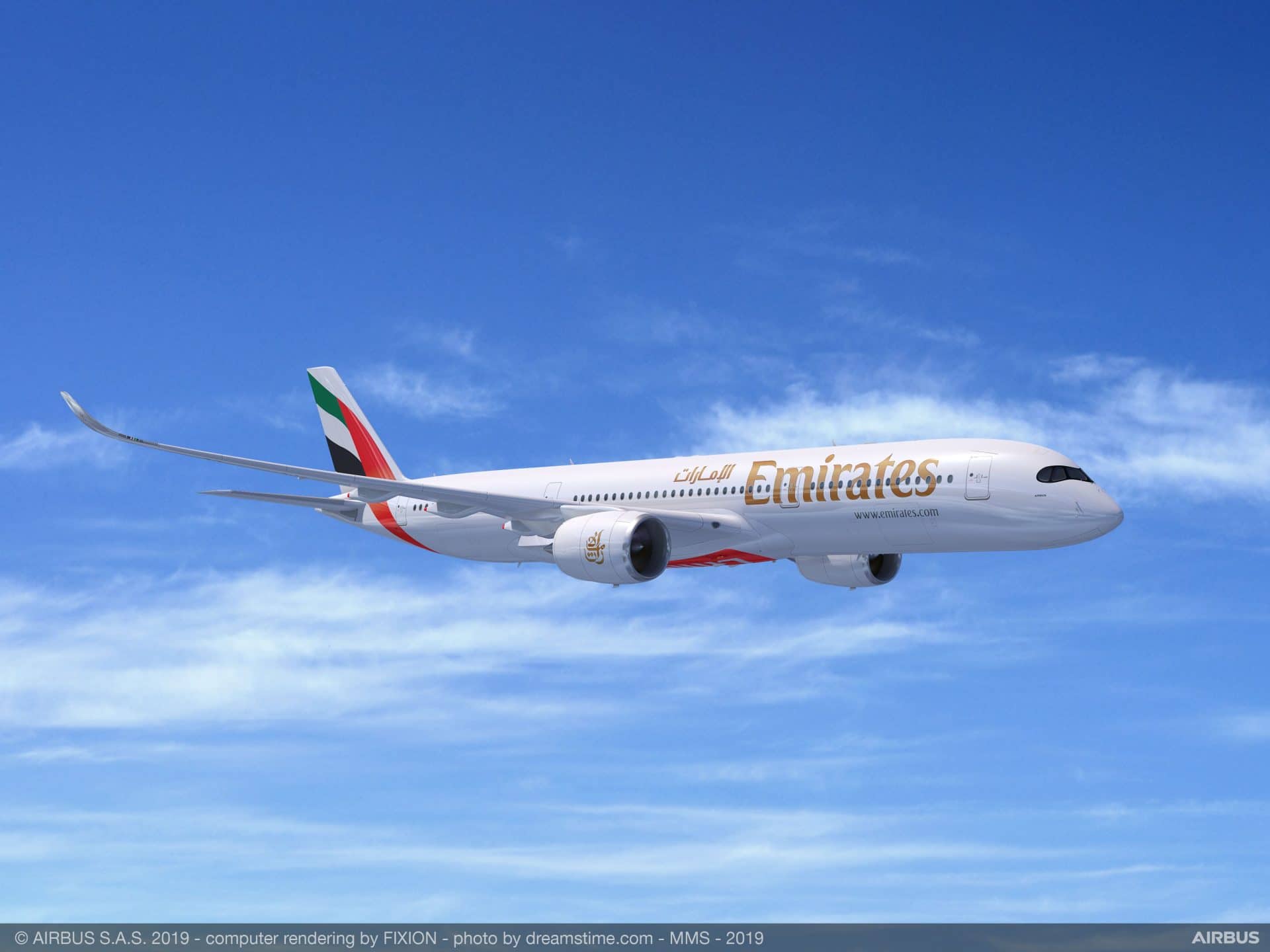
Emirates carried more than 8.6 million passengers during July and August 2026, performing above expectations and maintaining load factors above 75% across several regions. The airline is operating at approximately 93% of its pre-disruption capacity and reports encouraging winter bookings, particularly from South Africa, Brazil, India, Portugal, Egypt, Ghana, Colombia, Saudi Arabia and Pakistan.

Inbound traffic to Dubai also grew, with more than 500,000 Emirates passengers arriving during the second half of August—7% more than in the comparable period of 2025. Demand for premium travel continued to increase, with the Americas recording the strongest growth for Premium Economy.

Emirates has received 18 aircraft since January, comprising 11 Airbus A350s and seven Boeing 777 freighters. Six additional A350s are expected before year-end. Its retrofit programme has now covered 104 aircraft—53 Boeing 777s and 51 Airbus A380s—while Premium Economy and the latest cabin products are available aboard 137 aircraft. This should rise to 155 by December.

Nearly 50 aircraft have received Starlink connectivity. Other product developments include new Economy Class headrests, Premium Economy seats with privacy dividers and redesigned Emirates lounges in Munich, Frankfurt and Manchester.

Network expansion will continue with the launch of Dubai–Helsinki services on 1 October. Emirates will also add frequencies to Accra, Tokyo Narita, Ho Chi Minh City and Hanoi, while upgrading one daily Delhi service to the A380. A350 operations will expand to Larnaca, Malta, Nairobi, Hamburg and Mauritius, with refurbished 777s serving Stockholm and Frankfurt.

The carrier now has 168 codeshare, interline and intermodal partnerships, extending its reach to another 1,750 cities. Its partnership with flydubai has carried more than 28 million passengers since 2017 and currently provides access to over 214 destinations in more than 100 countries.

Cessna Citation Latitude crashes and catches fire at Libya’s Misrata Airport

0

A Cessna Citation Latitude business jet crashed and caught fire while landing at Misrata International Airport in Libya on Monday, 14 September. The aircraft was destroyed in the accident, but all three people on board survived. The aircraft, a Cessna 680A Citation Latitude registered TC-AKF, was operating a positioning flight from Istanbul Atatürk Airport to Misrata.

According to preliminary reports, the aircraft was carrying two pilots and one cabin crew member and had no passengers on board. The jet reportedly encountered a technical problem involving one of its engines and was making an emergency landing when it veered off the runway and caught fire. The exact circumstances of the accident have not yet been established.

Airport emergency crews responded to the fire and rescued the three occupants from the aircraft. They were reported to have survived without serious injuries. Following the accident, Libyan authorities temporarily suspended flights at Misrata International Airport while emergency teams dealt with the wreckage and worked to ensure the safety of air traffic.

The aircraft is reportedly operated by BKNJET Aviation and has been linked in Turkish media reports to Turkish businessman Hamdi Ak?n. The cause of the accident remains under investigation.

airBaltic files for Chapter 11 financial restructuring while flights continue

0

Latvian flag carrier airBaltic has voluntarily initiated proceedings under Chapter 11 of the U.S. Bankruptcy Code to restructure its financial obligations, while stressing that flights and customer services will continue as normal.

According to a press release issued by the airline, airBaltic and certain subsidiaries filed for Chapter 11 protection with the U.S. Bankruptcy Court for the Southern District of New York. The process is intended to provide the airline with protection from creditor claims while it restructures its debt and other obligations, including agreements with aircraft lessors. airBaltic said all flights are operating as scheduled, while tickets, reservations, refunds, vouchers and customer credits remain valid and will continue to be handled under existing policies.

To support its operations during the restructuring, airBaltic has secured a commitment for €350 million in debtor-in-possession (DIP) financing arranged by Strategic Value Partners, with Barclays, Hayfin Capital Management, Morgan Stanley, Oaktree Capital Management and Strategic Value Partners participating as lenders. The financing carries an interest rate of SOFR plus 8%, or approximately 12%, and remains subject to approval by the U.S. Bankruptcy Court. Together with cash generated from operations, airBaltic expects the financing to provide sufficient liquidity throughout the Chapter 11 process.

airBaltic Chairman of the Supervisory Board Andrejs Martinovs said the objective is to emerge from the process with a financially stronger airline and a “substantially reduced level of obligations” that can be sustainably managed over the long term. CEO Erno Hildén added that the airline will continue flying, selling tickets and planning its future schedule while implementing measures aimed at making the company more efficient and financially sustainable.

The airline expects the Chapter 11 process to be completed by approximately June 2027. The existing Management Board and Supervisory Board will remain in place, while airBaltic said it will continue to meet its obligations to suppliers, service providers and other partners in the normal course of business.

airBaltic is majority-owned by the Latvian state, which holds 88.37% of voting rights. Deutsche Lufthansa AG holds a 10% stake, while the remaining 1.63% is owned by private shareholders. The airline operates an all-Airbus A220-300 fleet and is based in Riga.

Global Aviation Conference Frankfurt 2026 to bring together aviation leaders

1

The global aviation industry will converge in Frankfurt on September 29–30 for the Global Aviation Conference Frankfurt 2026, bringing together senior representatives from airlines, airports, lessors, MROs, manufacturers and aviation service providers.

Organised by Aviovis Group, the two-day conference will take place at the Frankfurt Marriott Hotel in the city’s Westend district.

With less than a month to go, the event is set to provide a platform for industry leaders to discuss some of the key challenges and opportunities currently shaping aviation, while offering extensive opportunities for networking and knowledge-sharing.

Two days of aviation industry discussions

The conference programme features 11 panel discussions covering a broad range of topics, including:

  • Sustainability in Aviation: The SAF Reality Check
  • Digitalization and AI in Airline Operations
  • The Aviation Aftermarket Under Pressure: Parts, Engines & Commercial Risk
  • Maintenance Matters: Ensuring Reliability Across Today’s Fleets
  • The Evolving Role of Airports: Hubs of Innovation
  • Biggest Win and Biggest Mistake
  • Crew Welfare and Workforce Management
  • Innovations in Customer Experience: Beyond the Cabin
  • The Future of Air Travel: Trends and Predictions for 2040
  • Financing the Future Fleet: Leasing, Capital & Risk in Aviation
  • Global Aviation Outlook: Navigating Geopolitical Dynamics

The conference’s keynote address will be delivered by Joerg Michael Eberhart, CEO of ITA Airways. Thanos Pascalis, CEO of Cyprus Airways, will also deliver a dedicated 15-minute presentation.

The programme will bring together senior executives and decision-makers from across the aviation industry, with representatives from companies and organisations including Lufthansa Group, Qatar Airways, United Airlines, Fraport, Munich Airport, Delta Air Lines, Avolon, SMBC Aviation Capital, Rolls-Royce, Pratt & Whitney, Turkish Airlines, Finnair, TAP Air Portugal, Alaska Airlines, LATAM Airlines, Ryanair, easyJet, Ethiopian Airlines, Aer Lingus, WestJet, Zurich Airport and Athens International Airport, among others.

The conference will be chaired by Gabriel Hanot, Senior Aviation Consultant at GH Aviation Consulting.

Industry support and networking

The event is supported by Lufthansa Technik and TestSolutions, which are serving as Gold Sponsors.

In addition to the conference programme, attendees will have access to a dedicated networking and exhibition area, where companies will showcase technologies, products and services.

The first day will conclude with a Cocktail Party, providing delegates with an additional opportunity to meet and network with fellow aviation professionals in a more informal setting.

Register for the Global Aviation Conference

With the conference approaching, delegates can register to attend the event or explore opportunities to exhibit and participate.

The Global Aviation Conference Frankfurt 2026 takes place on September 29–30, 2026, at the Frankfurt Marriott Hotel.

More information and registration:
globalaviationconference.com

Smartwings and TUI extend flight partnership for another three years

0

Smartwings and TUI have extended their air transport agreement for three more years, continuing a long-standing partnership covering package-holiday flights from Central and Eastern Europe.

Under the renewed contract, Smartwings will carry TUI customers to dozens of leisure destinations in the Mediterranean, Turkey and Egypt. Summer operations will focus mainly on Mediterranean resorts, while winter flights will include the Egyptian destinations of Hurghada and Marsa Alam.

TUI Eastern Europe CEO Marcin Dymnicki said Smartwings’ reliability and range of direct connections were important to the tour operator’s customers. Smartwings described the renewed agreement as recognition of the quality of its services in a highly competitive charter market.

Separately, the Czech carrier is expanding its scheduled network from Prague for winter 2026/27. New routes will serve Bergen, Venice and Lisbon, while frequencies to Porto, Bilbao and Toulouse will increase. The seasonal Prague–Nice route will also operate during winter for the first time.

Smartwings, the Czech Republic’s largest airline and a major Central European charter operator, flies to around 80 destinations. The group operates 49 aircraft and also conducts services from Poland, Slovakia and Hungary.

Melting Swiss glacier reveals wreckage from 1963 aircraft accident

0

Around 250 kilograms of aircraft debris have been recovered from the Hüfifirn Glacier in the Swiss canton of Uri after melting ice exposed wreckage hidden for more than six decades.

A mountaineer reported the discovery to the cantonal police. An investigation conducted with the Swiss Transportation Safety Investigation Board concluded that the material “most likely” came from an aircraft that crashed on the glacier in 1963. The debris will now be recycled.

Several aviation incidents occurred near the Clariden Pass in May 1963. A Champion light aircraft crashed on 9 May, followed the next day by a Piper Super Cub involved in a recovery attempt. No one was injured in either accident.

Although the Champion was eventually removed, efforts to retrieve the Piper repeatedly failed. During the final attempt on 22 May, its suspended wreckage began swinging violently beneath a helicopter and had to be released, falling several hundred metres back onto the glacier.

The remains were never recovered with the limited equipment available at the time and only reappeared as the glacier retreated. Their removal on 3 September involved investigators, Uri police, private helicopter and transport companies, and the Swiss Air Force’s mountain detachment.

Piper Super Cub (picture for illustration only) © Martin Gillet

TAROM receives Romania’s first Boeing 737 MAX

0

TAROM has taken delivery of its first Boeing 737-8, making it the first Romanian airline to operate a 737 MAX. The aircraft represents an important step in the flag carrier’s restructuring and fleet-modernisation programme.

Named Mircea Lucescu, the aircraft is the first of two 737-8s leased from CDB Aviation. They will help renew TAROM’s single-aisle fleet, which currently includes four previous-generation Boeing 737s.

TAROM plans to deploy the aircraft from Bucharest to major European capitals. According to Boeing, the 737-8 consumes 20% less fuel and produces correspondingly lower carbon emissions than the aircraft it replaces, while offering improved operating efficiency and passenger comfort.

Chief executive Cristian Anghel said the delivery would support TAROM’s efforts to increase efficiency, modernise its operations and build a younger fleet. Boeing forecasts that Eurasian airlines will expand their combined fleet from around 6,800 aircraft today to almost 11,000 by 2045, with single-aisle models accounting for approximately 81% of new deliveries.

NATO fighter scrambled and Vilnius Airport closed—over a flock of birds

0
Vilnius Airport © Pofka CC BY-SA 4.0, https://commons.wikimedia.org/w/index.php?curid=82550687

Vilnius Airport temporarily suspended operations on Sunday morning after unidentified objects detected in Lithuanian airspace were initially believed to be drones.

The alert prompted the authorities to close the airport and scramble at least one NATO fighter jet from Šiauliai Air Base in northern Lithuania. Italian Air Force aircraft are currently stationed there as part of NATO’s Baltic air-policing mission.

After approaching the area, the fighter visually identified the suspicious objects as a flock of birds. Lithuania’s National Crisis Management Centre subsequently lifted the alert, allowing Vilnius Airport to reopen after an interruption of approximately 38 minutes.

The centre explained that birds and drones can produce similar indications on radar, making immediate identification difficult. The incident nevertheless demonstrated how seriously Baltic authorities now treat any unidentified aerial activity.

Lithuania and its neighbouring NATO members have increased their vigilance following repeated incursions or suspected sightings of military drones close to the alliance’s eastern borders. The war in Ukraine has heightened concerns that unmanned aircraft could accidentally—or deliberately—enter NATO airspace.

Although Sunday’s alert proved harmless and caused only a brief interruption to airport operations, the precautionary response underlined the growing challenge facing both military authorities and civil aviation: distinguishing an ordinary radar anomaly from a potentially serious security threat.

The Vilnius marathon, taking place in the Lithuanian capital at the time, continued without interruption.

Italian Air Force Eurofighter Typhoon © Dmitry A. Mottl – Own work, Public Domain, https://commons.wikimedia.org/w/index.php?curid=2292896

Source: Reuters

Second drone detected near Brussels Airport, this time with digital detection record

0

A drone was detected near Brussels Airport for the second consecutive evening on Saturday, September 12, with Skeyes confirming that the unmanned aircraft was not only visually observed but also digitally detected by its drone-detection equipment.

The new incident occurred at around 20:00 local time, according to Skeyes spokesperson Kurt Verwilligen. “There was indeed another drone incident,” Verwilligen confirmed. Unlike Friday evening, when the drone was visually observed by an air traffic control supervisor and Brussels Airport security personnel, Saturday’s incident also produced a technical record.

“We not only saw the drone visually, but also have a digital registration of the incident. This was done with our detection equipment,” Verwilligen said.

Skeyes has not released details about the drone, including its type, flight characteristics or who may have been operating it. An investigation into the incident is ongoing. It is also not yet known whether Saturday’s drone was operated by the same person or was otherwise connected to the drone reported near Brussels Airport on Friday.

skeyes confirms drone was visually spotted at Brussels Airport, triggering safety procedure

How 9/11 changed aviation forever: from airport checkpoints to the cockpit door

1

Twenty-five years after the attacks of 11 September 2001, their effects are still visible on almost every commercial flight. Passengers pass through controlled security checkpoints, baggage is screened, crews follow strict flight-deck access procedures, and airlines work with governments to identify threats before an aircraft leaves the ground.

The attacks exposed a failure of aviation security—the protection of aircraft and passengers against deliberate harm. Four passenger aircraft were hijacked and used as weapons, overturning the assumption that a hijacking would end in demands and negotiations. The industry’s response was therefore not simply to look harder for weapons. It was to rethink who could reach an aircraft, who could enter its cockpit and how authorities should respond to a threat in flight. The 9/11 Commission examined the failures that allowed the attacks to happen.

The most consequential change on board was the reinforced cockpit door. Flight decks were hardened against forced entry, and access during flight became tightly controlled. Cabin crews also received revised security training. These measures put a barrier between potential attackers and the controls of the aircraft—an essential defence against the kind of attack carried out on 9/11.

At airports, the United States created the Transportation Security Administration, transferring responsibility for passenger screening to a federal agency. Screening of people and baggage became more extensive, while access to secure areas was restricted. Behind the checkpoint, passenger information, intelligence and watchlists became a larger part of the security system. The result was a layered approach: no single check was expected to catch every threat.

The changes extended well beyond the United States. After 9/11, the International Civil Aviation Organisation strengthened its international security standards, including provisions affecting domestic as well as international flights. Airlines, airports and governments increasingly had to treat aviation security as a shared responsibility across borders.

Not every familiar airport rule dates directly from 2001. Restrictions on liquids, for example, followed a later terrorist plot. Security has continued to evolve as threats and screening technology have changed. Some procedures can be eased or redesigned; others, particularly the protection of the flight deck, remain central.

There has been a cost in time, money and convenience, and debate continues over whether every measure is proportionate. But 9/11 permanently changed the question aviation asks. Getting an aircraft safely into the air still depends on pilots, maintenance, air traffic control and sound operating procedures. It also depends on preventing someone from turning that aircraft into a weapon.

Airport check at Berlin-Schönefeld in 2005 © Ralf Roletschek on Wikimedia Commons
Cockpit door of a Boeing 757

Sources: Testimony to the 9/11 Commission; TSA history; ICAO’s history of Annex 17

Ryanair adds five Swedish routes but warns rising charges could threaten future growth

0

Ryanair has announced what it calls a record winter 2026 schedule for Sweden, with 43 routes and an eighth aircraft based in the country. The additional Boeing 737 will be stationed at Stockholm Arlanda. The airline expects to carry 4.6 million passengers annually in Sweden, up 16%, and values its based-aircraft investment at US$800 million.

The five new routes are Stockholm–Rabat, Stockholm–Warsaw, Stockholm–Wroc?aw, Gothenburg–Budapest and Malmö–London. Ryanair says its Swedish operations support more than 3,600 jobs.

Alongside the expansion, the airline warned that future growth could be at risk from rising airport costs. Ryanair claims Swedavia’s charges have increased by 22% since Sweden abolished its aviation tax in July 2025, and says the security fee is due to rise by 67% from March 2027. It is urging the government to restore airport charges to 2024 levels and abolish the security fee permanently.

Ryanair says it would like to double its annual Swedish traffic to eight million passengers by 2030 and base five more aircraft in the country. Chief executive Eddie Wilson cautioned, however, that those plans depend on Sweden remaining competitive with other European markets.

KLM’s early Norwich–Amsterdam flight cancelled for second consecutive day

0

KLM’s 06:00 flight from Norwich to Amsterdam KL1054, usually operated by Embraer E175 aircraft, was cancelled on 12 September, following the cancellation of the same service the previous day. KLM attributed Saturday’s cancellation to “measures imposed by the local government or air traffic control”, while Friday’s was listed as being for “operational reasons”.

Norwich Airport has faced disruption linked to staff sickness and industrial action. On Friday, it closed to air traffic during three periods, including from 20:30 until the end of the day. A late KLM arrival from Amsterdam was cancelled, and a TUI flight from Dalaman diverted to Stansted.

It remains unclear whether the two early-morning KLM departures were directly affected by the ongoing pay dispute between Prospect union members and the airport. All other flights scheduled for 12 September operated normally.

skeyes confirms drone was visually spotted at Brussels Airport, triggering safety procedure

1

skeyes has confirmed that a drone was actually observed at Brussels Airport on Friday evening, September 11, contradicting the initial impression that the reported drone had not been detected.

The incident briefly disrupted operations at Brussels Airport between approximately 21:45 and 22:10 local time. According to Skeyes spokesperson Kurt Verwilligen, the drone was visually observed by both a supervisor air traffic controller in the control tower and members of Brussels Airport’s security team.

“It was indeed a drone that was observed,” Verwilligen told Belgian media. Because the sighting occurred in an area considered a risk to aircraft operations, Skeyes activated its Rogue Drone Procedure. The procedure was developed to determine how air traffic controllers and other stakeholders should respond when an unauthorised drone poses a potential threat to aircraft.

“When a drone enters a danger zone around a runway, we take that runway out of service and try to progressively shift operations to another runway,” Verwilligen explained. The objective is to avoid shutting down the entire airport unnecessarily.

As a result, departing aircraft were still able to operate, while arriving aircraft scheduled to land on runways 25R and 19 were temporarily placed in holding patterns. Several aircraft could be seen circling over the Brussels area while waiting for the situation to be resolved.

The first report was received at around 21:45. According to Brussels Airport, no aircraft were able to land between approximately 21:45 and 22:10. Three flights were ultimately diverted, with two sent to Ostend and one to Liège. Other flights were able to continue operating, although the full recovery of the traffic flow took longer than the period during which the runway restrictions were in place.

Aviation24.be latest

Aviation24.be trending