Home Blog Page 1620

Brussels Airlines rewarded with several awards

0

Best trans-Atlantic Airline, JFK Business Class Excellence, Best Short Haul Airline, Best International Business Class Wine Card and the Golden Bridge Export Award. Over the course of the last few months, Brussels Airlines has been rewarded several times for its service, as well as its social responsibility.

Brussels Airlines does not only look back on a significant passenger growth in 2014, but also on several acknowledgements by the travel industry. No less than 5 awards confirm this.

During the annual Travel Magazine Awards gala, Belgian travel agencies and industry experts rewarded Brussels Airlines with the title Short Haul Airline 2014. In addition, Brussels Airlines Business Class was awarded Best Travel Option for its flights to New York. In the United States Brussels Airlines’ quality and service was also honoured. Global Traveler, the most respected American magazine for frequent business travellers, named the Belgian airline as Best Transatlantic Airline. Brussels Airlines came out on top, next to several renowned airlines from the Gulf countries and Europe.

At the annual American Wines on the Wing competition Brussels Airlines got voted as the airline serving the best wine on board, during a “blind-test” by an international wine specialists’ jury (24 oenologists, sommeliers & wine producers). All in all 29 airlines participated. It is the third time in a row that Brussels Airlines receives this award.

Not only Brussels Airlines service efforts were praised these last months but also its contribution to international trade. The Belgian-Luxemburg Chamber of Commerce based in the UK rewarded Brussels Airlines with the prestigious Belux Golden Bridge Award. ‘Brussels Airlines is not only an ambassador for Belgium, this airline also promotes the United Kingdom’, the jury justifies its decision but also wants to put forward the airline’s humanitarian efforts: ‘With its flights to Ebola-stricken countries, used by numerous doctors and transporting medical aid to West-Africa, Brussels Airlines proves that its humanitarian engagement/commitment is more than just a marketing slogan’.

On top of this, Bernard Gustin, CEO of Brussels Airlines, has been awarded the title of Entrepreneur of the Year during the Lobby Awards 2014, organised by the Belgian magazine Lobby. This title rewards “the social efforts of Brussels Airlines, not only in Belgium but especially in Africa“, as written in the press release of Lobby.

According to Brussels Airlines CEO Bernard Gustin these five awards reward Brussels Airlines’ hard work by choosing to deliver quality service within a competitive market environment. ‘We are happy that so many industry experts and partners acknowledge our ‘value for money’ approach and at the same time reward our humanitarian side as well as our contribution to the Belgian Economy. These awards motivate us to do even better.”

Tuesday 13 January, 2015

Traffic results for the year 2014: About 11.2 million passengers flew with Austrian Airlines

0

• Entire year 2014: More than 127,000 flights – capacity utilization up to 78.9 percent
• Fewer flights due to cancellations in crisis regions of Russia, Ukraine and the Middle East, leading to a decline in total passenger volume
• Strong growth to North America: 120,000 more passengers than in 2013

The Austrian Airlines Group operated more than 127,000 flights in the period January to December 2014, carrying approximately 11.2 million passengers. This corresponds to an average of about 348 flights and more than 30,000 passengers per day. On balance, total passenger volume in 2014 declined slightly by 1.1 percent compared to the previous year. This decrease can be attributed to flight cancellations and flight service reductions in the crisis regions of Russia, Ukraine and the Middle East. As a result, the number of flights operated by Austrian Airlines in 2014 fell by 6.4 percent, leading to a 2.5 percent drop in passenger volume in Europe. However, the number of passengers flying with Austrian Airlines on its intercontinental flights in 2014 climbed by more than 120,000 in comparison to the previous year, a rise of 7.3 percent despite the flight reduction in the Middle East. The higher passenger volume on intercontinental flights is mainly due to the capacity increase related to an additional Boeing 777 as well as the expansion of flight service to North America. On balance, the offering measured in available seat kilometers (ASK) was 3.6 percent higher than in the previous year, and revenue passenger kilometers (RPK) were up by 4.1 percent. Capacity utilization (passenger load factor) improved by 0.3 percentage points from the prior-year level to 78.9 percent.

“The crisis regions in the Middle East, Russia and the Ukraine considerably dampened demand in 2014”, says Andreas Otto, Chief Commercial Officer of Austrian Airlines. “However, the strong expansion of our offering to North America was a complete success.“

Europe
In the year 2014 as a whole, Austrian Airlines carried about 9.4 million passengers in Europe, corresponding to a decrease of 2.5 percent from the previous year. This drop is due to the political crises in the Ukraine and Russia, which in turn led to short-term flight cancellations and flight service reductions. Austrian Airlines completely terminated all flights to the destinations of Kharkov and Dnepropetrovsk in the Ukraine for close to five weeks in the summer of 2014, and reduced its offering when flight service was resumed in order to reflect the restrained level of demand. Flight service to and from Russia was also adjusted downwards in the course of 2014 to reflect declining demand. On balance, capacity measured in available seat kilometers (ASK) was reduced by 3.6 percent. Capacity utilization (passenger load factor) on European flights was down 0.5 percentage points to 76.5 percent.

Intercontinental
Austrian Airlines carried close to 1.8 million passengers on its intercontinental flights in 2014, comprising an increase of 7.3 percent from the previous year. This passenger growth was achieved thanks to the strong expansion of flight service to North America in spite of flight cancellations and flight service reductions which were necessary as a response to the political crises in the Middle East.

The crises in the Middle East and the resulting precarious security situation led Austrian Airlines to temporarily terminate flight service to Erbil in Iraq for the most part of August. For security reasons, Austrian Airlines no longer offered flights to Baghdad in Iraq as of January 30, 2014 and to Tripoli in Libya as of March 21, 2014.

The expansion of flight service to North America succeeded very well in cushioning the flight cancellations to Middle East destinations. Accordingly, Austria’s national carrier added a new destination to its flight schedule, namely Newark, starting on July 2, 2014. In addition, it operated a larger aircraft, a Boeing 777, on its daily flights to Washington instead of a Boeing 767 as of July 1, 2014. Moreover, the number of weekly flights to Chicago was raised from five to seven as of May 2014.

On balance, capacity in available seat kilometers (ASK) on intercontinental routes was increased by 10 percent in 2014, and revenue passenger kilometers (RPK) climbed by 11.2 percent in a year-on-year comparison. The passenger load factor was up 0.8 percentage points to 81.0 percent.

Traffic statistics in detail

First 242 tonne take-off weight Airbus A330 successfully completes first flight

0

  • Key milestone for the latest evolution of the popular A330 Family
  • Paves the way for entry into service in 2015 with launch customer Delta Air Lines.
The first 242 tonne Maximum Take-Off Weight (MTOW) variant of the A330 has successfully completed its maiden flight, landing back in Toulouse-Blagnac Airport following a 3 hours and 30 minutes flight.

Didier Evrard, Airbus Executive Vice President Head of Programmes said: “I congratulate the whole team in charge of the A330 242 tonnes weight variant for making this day happen ahead of schedule. We are on track to deliver this new higher weight variant in 2015 to launch customer Delta Air Lines, who will also be the launch customer for the A330neo.”

The A330 242 tonne MTOW is the platform for the future A330neo and is concrete example of Airbus’ incremental innovation strategy. The newest enhancement offers more capability at lower operating cost with a range extended by up to 500 nautical miles and up to two percent reduced fuel consumption while also benefiting from operational reliability of above 99 percent. The 242 tonne MTOW is capable of flying missions up to 15 hours.

12 JANUARY 2015 PRESS RELEASE

Brussels Airlines welcomed 6,608,867 passengers in 2014, 757,749 more than in 2013

1

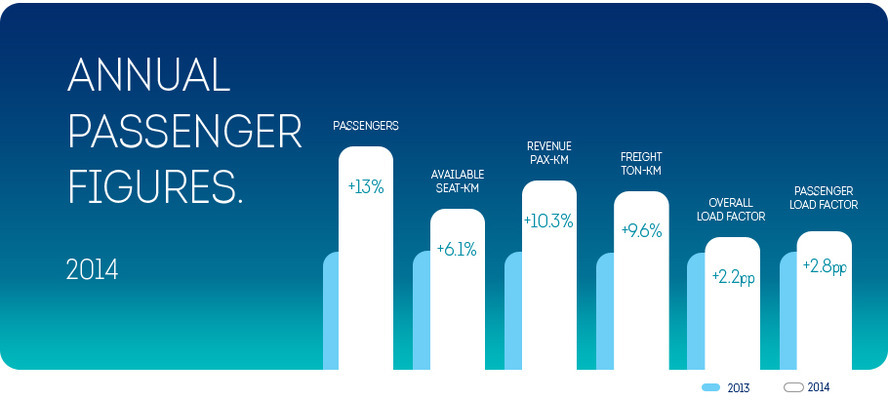
During the past year, 6,608,867 passengers flew with Brussels Airlines, 757,749 more than in 2013. This is the largest passenger growth in the airline’s history. Thanks to the new commercial strategy, the seat load factor improved by 2.8 percentage points.

The new commercial strategy of Brussels Airlines has yielded very positive results in 2014. Thanks to the newly launched  travel formulas, lower fares and the network expansion, 13 percent more passengers chose to fly with Brussels Airlines compared to 2013. That is a record for Brussels Airlines and makes it one of the airlines with the largest growth in Europe. Other European airlines registered a growth around 3%.


“The traveler today has more choice than ever from Brussels Airport and has clearly chosen for Brussels Airlines. Our new travel formulas and very competitive prices have been positively received by the market. Our strategy to offer attractive fares to the leisure market, on top of our focus on business travelers, has clearly worked.”

— Bernard Gustin, CEO Brussels Airlines 


Out of the 6.6 million passengers, 5.6 million flew on a short- or mid haul flight operated by Brussels Airlines, while 222,781 passengers crossed the Atlantic and 751,805 flew between Brussels Airport and Africa.

The new commercial strategy also led to a significant improvement of the seat load factor, which increased by 2.8 percentage points and amounted to 72%.

The annual passenger results have been negatively impacted in December, due to the provincial and national strike days, which limited the growth during that month to 6.8%.

“In addition to our growing scheduled flight activity, we also operated more holiday flights for tour operators in 2014, in line with our strategy to have an even larger leisure offer in the Belgian market.”

— Lars Redeligx, Chief Commercial Officer Brussels Airlines


Passenger figures for these charter activities are not included in the figures of this press release.


Annual figures

2014  2013Year/year difference in %
Passengers6,608,8675,851,118+ 13.0
Available seat-kilometres (in millions)14,947.5214,094.58+ 6.1
Revenue Passenger-kilometres (in millions)10,755.779,753.58+ 10.3
Freight ton-kilometres (in millions)191,075174,272+ 9.6
Overall Loadfactor (Passengers & Freight)62.6%60.3%+ 2.2 pct point
Passenger Load Factor (PLF)72.0%69.2%+ 2.8 pct point


Monthly figures December 2014:

December 2014 December 2013Month/month difference in %
Passengers461,577432,068+ 6.8
Available seat-kilometres (in millions)1,073.931,162.19– 7.6
Revenue Passenger-kilometres (in millions)753.48784.67– 4.0
Freight ton-kilometres (in millions)14,41716,804-14.2
Overall Loadfactor (Passengers & Freight)61.4%59.1%+ 2.3 pct point
Passenger Load Factor (PLF)70.2%68.6%+ 2.6 pct point


Friday 9 January, 2015

AEGEAN to launch direct flights from Larnaca to Tel Aviv and Kiev

0
  • Launch of a direct route from Larnaca to Tel Aviv

  • Restart of the connection between Larnaca and Kiev in the summer 2015 schedule

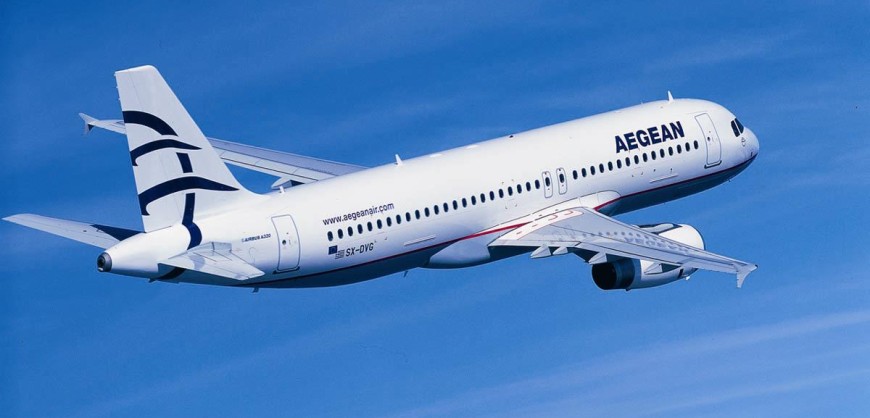
aegean1With the start of the summer 2015 schedule, AEGEAN, a Star Alliance member, boosts its network and its presence in Cyprus. AEGEAN will begin daily non-stop flights between Larnaca and Tel Aviv on 29 March 2015, adding significant capacity and options. It is the first time the company connects Larnaca with Tel Aviv, taking advantage of the deregulation of traffic rights to this destination. In addition the company reinstates on 31 March 2015 and two years after their disruption, its direct flights from Larnaca to Kiev, Ukraine, 3 times a week. All flights will be operated with Airbus A 320 aircraft.

It is worth noting that AEGEAN’S 2015 schedule includes a network of 134 destinations in 42 countries and Greece with 15,000,000 available seats, 2 million more seats than in 2014. The flights will be performed with one of the youngest fleets in Europe, comprising 56 aircraft, after AEGEAN´s recent investment in new additional Airbus A320ceos.

AEGEAN’s CEO, Mr Dimitris Gerogiannis, stated: “The strategy for our growth from Cyprus continues, investing in the quality relationship we have established with the Cypriot market. The launch of direct flights from Larnaca to Tel Aviv represents another important step towards the implementation of our company’s strategic plan.  At the same time, these new flights will support business growth and the increase of tourism to Cyprus.”

Athens 8 January 2015

An Ethiopian Airways cargo Boeing 737, ex OO-VES, crash-lands in Accra

1

An Ethiopian Airways cargo plane from travelling from Lome, Togo to neighbouring Accra, Ghana is said to have crash-landed at the Kotoka International Airport in Accra.

Eyewitness accounts say the plane skidded off the runway in the process of landing at about 10:00 am local time on Saturday.

All three crew members said to have been on board cargo plane ET-AQV survived the incident and are currently receiving treatment at the 37 Military Hospital in Accra.

Bad weather is thought to have contributed to the crash landing incident although Ghanaian authorities have not confirmed this.

Ethiopian Airlines is top rated in Africa and has one of the continent’s best airline accident records. As of January 2014, the Aviation Safety Network has recorded 60 accidents/incidents totalling 322 fatalities since 1965.

This incident has prompted members of the public to begin asking questions on safety standards at the Kotoka International Airport. In 2012, a Nigerian Cargo plane skidded off the tarmac and run into a passenger vehicle killing about ten passengers.

Source: Sahara Reporters

More: https://www.modernghana.com/news/591245/1/ethiopian-cargo-airline-crash-lands-at-kotoka-airp.html

http://saharareporters.com/2015/01/10/ethiopian-airlines-cargo-plane-crash-lands-accra-airport

Accident report in The Aviation Herald: http://avherald.com/h?article=4800ff53&opt=0

Vistara takes to the skies

0

Dr Mahesh Sharma, Hon’ble Minister of State for Culture, Tourism and Civil Aviation inaugurated the first flight
Children from Salaam Baalak Trust flew the new feeling on the inaugural Delhi-Mumbai flight

New Delhi, January 9, 2015: At 12.30 pm today, Vistara’s inaugural flight, to Mumbai, took off from Terminal 3 of Delhi’s Indira Gandhi International Airport, in the presence of Dr. Mahesh Sharma, Hon’ble Minister of State for Culture, Tourism and Civil Aviation who cut the ribbon in the presence of the senior dignitaries at the event.

A host of senior executives from the parent companies – Tata Group and SIA – were onboard the first flight. Amidst palpable excitement Mr Prasad Menon, Chairman, Vistara lit the ceremonial lamp at the check-in counter along with Dr Mukund Rajan, Mr Mak Swee Wah, Members of the Board of Directors, Mr Phee Teik Yeoh, CEO Vistara, Mr Madhu Kannan, Mr NS Rajan, Tata Sons GEC Members, Mr TK Lim, Singapore HC to India and Mr I Prabhakara Rao, CEO, Delhi International Airport (P) Ltd and was handed over the first boarding pass. The Hon’ble Minister Dr Sharma, then cut the ribbon at the boarding gate to inaugurate the first flight and wished good luck to the Vistara team.

vistara

A group of very excited children from the Salaam Baalak Trust aged between 7-12 years, were boarded first to enjoy their first flying experience ever. They were followed by the rest of the passengers and the dignitaries. The fully loaded Airbus A320-200 branded in royal aubergine and gold then took off for Mumbai’s GVK Chhatrapati Shivaji International Airport, Terminal 2.

While congratulating the entire team at Vistara and the executives from Tata and SIA, Dr Mahesh Sharma, Hon’ble Minister of State for Culture, Tourism and Civil Aviation said: “Though India is projected to be the third largest aviation market globally by 2020, and the sector opening up to allow 49 % FDI will attract many new players, the focus will be on safety and quality, which is more important. Also it is the prime ministers vision to develop India as a leading tourism hub and connectivity is imperative to achieve this. So we welcome Vistara”.

Conveying his best wishes on the occasion of the first Vistara flight, Mr Ratan N Tata, Chairman Emeritus, Tata Sons, said, “It has been a long-cherished dream for the Tata group to establish a world-class full service airline in India, in partnership with Singapore Airlines, and today that dream has come to life. I would like to dedicate this day to Mr JRD Tata, the man who started it all, and established India’s first international airline. His futuristic vision continues to inspire us and we salute his spirit and dream. I would like to extend my best wishes to the Vistara team as they embark upon a remarkable journey today.”

Mr GM Rao, Chairman, GMR group, said, “Vistara is the latest entrant into our family of partner airlines and we extend our heartiest congratulations and best wishes to the team for everlasting success. Vistara is a promising brand with a strong lineage and I am confident that they will deliver an unmatched flying experience to travelers. My team and I join in celebrating this momentous occasion together with the Tata group, Singapore Airlines and Vistara.”

Mr Goh Choon Phong, CEO, Singapore Airlines said, “India’s aviation market has been expanding rapidly and we have been eager to directly participate in and contribute towards this growth story for many years. We are confident that Vistara will help to stimulate market demand and provide economic benefits to India, and are committed to supporting Vistara to deliver on its brand promise to Indian travellers.”

Mr Prasad Menon, Chairman, TATA SIA Airlines Limited, said, “Today marks the start of the new exciting chapter in Tata Group’s history as we take to the skies again. I feel honoured to be part of this journey of Vistara, which has its core philosophy steeped in the same tradition as the Tata group. For long now, we have held on to this particular dream and today I can proudly say that our persistence has been well worth it and has paid off. Vistara’s first flight today is a commencement of a unique flying experience.”

Mr Phee Teik Yeoh, CEO, Vistara said, “To see Vistara take flight in record time is a matter of great pride to me and my entire team that has been working tirelessly for the past many months. The flight today has re-energized the team which is now focused on ensuring that we live up to our brand promise of a seamless and personalized Vistara experience. Today I would like to invite India to ‘Fly the New Feeling’ with Vistara.”

Cyprus Airways closes down – Ryanair launches rescue fares for its stranded customers

0

Foreword

The European Commission ordered struggling airline Cyprus Airways to pay back over 100 million euros it received in state aid from the Cypriot government in 2012 and 2013, it said in a statement on Friday.

EU Competition Commissioner Margrethe Vestager said that Cyprus Airways had no possibility of becoming viable without continued state subsidies, meaning the money would have to be recovered by the government.

Cyprus suspended operations at its flag carrier Cyprus Airways after the European Commission ordered the struggling airline to pay back over 65 million euros in illegal state aid.

The last flight will take place Friday night, government officials said. And indeed, Last flight   from Athens landed at Larnaca 20:56 local time.


Ryanair wanted to take over Cyprus Airways, but was prevented from doing so.

Ryanair statement


Ryanair today (9 Jan) announced rescue fares for customers affected by the collapse this afternoon of Cyprus Airways. These rescue fares, starting from just €49.99, will help customers left stranded following the closure of Cyprus Airways and are available for booking and travel from Friday, 9th to Friday, 16th January.

Ryanair’s Robin Kiely said:

“Cyprus customers can avail of these Ryanair rescue fares, starting from just €49.99, and should log onto the Ryanair website, with fares from Athens and Thessaloniki (to Paphos) starting at just €49.99, and fares from London Stansted to Paphos at just £69.99, on the Ryanair.com website.

Cypriot consumers already choose Ryanair for our low fares, industry leading customer service and great route choice. Now they can also book their flights even earlier on our improved website and great new app, carry a free small 2nd carry-on bag, enjoy allocated seats, avail of our new Family Extra and Business Plus services, and use their personal electronic devices at all stages of their flight, as Ryanair continues to deliver so much more than just the lowest fares.”

RYANAIR RESCUE FARES* – 9th Jan to 16th Jan 2015

Ryanair RouteFare
Athens – Paphos€49.99
Thessaloniki – Paphos€49.99
London Stansted – Paphos£69.99

09 Jan 2015

Luxembourg Airport: 2.47 million passengers in 2014 (+ 12.3% compared to 2013)

0

Traffic increase for the 5th consecutive year

After a record year in 2013, the airport of Luxembourg achieved a double-digit growth again in 2014. Almost 2.5 million passengers were carried, an increase of 12.3%.

This growth rate is more than twice as high as the average for European airports (source: ACI Europe, Airport Traffic Report – November, 2014).

This result comes only one year after the airport has exceeded for the first time the threshold of 2 million passengers a year. Overall, the airport traffic jumped by almost 30% in two years and 60% in five years.

In one year, 270,000 additional passengers were welcomed. Most of this growth is to be credited to Luxair which opened three new destinations (Dublin, Stockholm and Lisbon), increased frequencies on several other routes (Milan, London, Copenhagen and Porto), and developed competitive prices.

easyJet has also significantly contributed to this rise, by launching a new service to Lisbon at the end of 2013 in addition to London and Milan. Its total traffic increased by almost 60%.

One year after its first flight in Luxembourg, Turkish Airlines has almost tripled its traffic through additional frequencies that now allow to connect everyday Istanbul and the rest of the world.

These positive results are shared by almost all of the 11 airlines operating in Luxembourg.

The movements increased by only 3%, confirming the trend to use larger capacity aircraft and improve load factors.

New prospects for growth in 2015
This year promises to be very positive again. Traffic is expected to increase by about 8%, allowing lux-Airport to approach 2.7 million annual passengers.

Luxair will significantly enhance some of its scheduled services:
– Increase of aircraft size to Rome, Nice, Madrid, Munich and Barcelona ;
– Additional frequencies to London City, Hamburg, Stockholm and Dublin ;
– Extension of the operation period to Venice and Bari ;
– Non-stop flights to Berlin.

easyJet has announced the opening of a fourth service, Porto (starting June 4th), whose three weekly flights will complement those of Luxair and TAP Portugal.

Turkish Airlines will increase the capacity of its aircraft by using more Boeing 737-800 with 151 seats.
Finally, a new airline, Sun Express, will set up in Luxembourg on April 3rd and will offer flights to the Turkish Riviera (Antalya), in addition to those of Luxair Tours.

PRESS RELEASE Luxembourg Airport, January 9th, 2015

Boeing delivered all P-8As to U.S. Navy on schedule and on cost in 2014

0
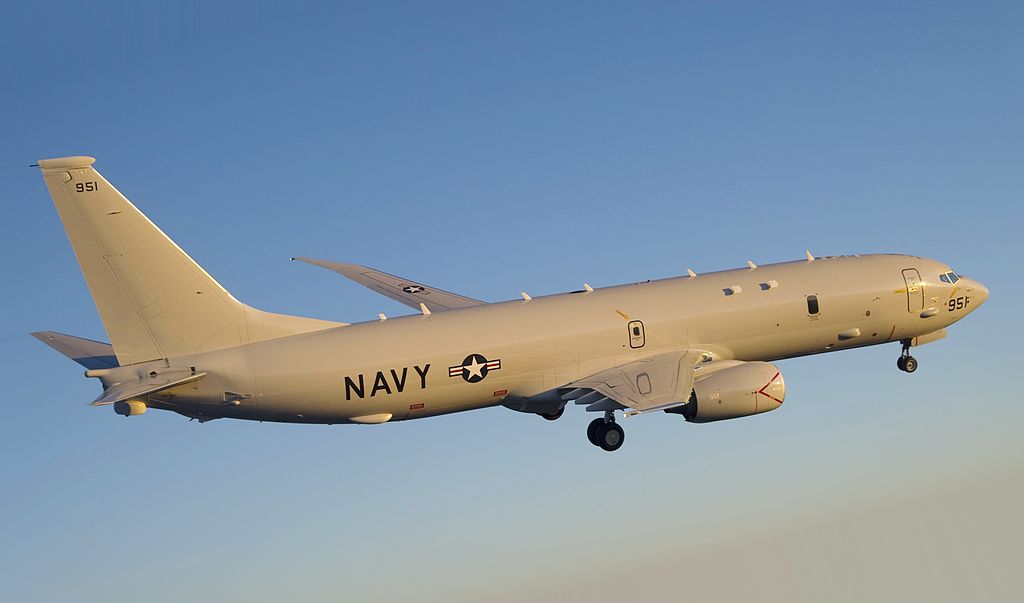
P-8A_PoseidonBoeing last month delivered the eighth P-8A Poseidon of 2014, completing all planned deliveries to the U.S. Navy for the year on time and on cost.

That airplane, the 21st overall for the program, flew from Seattle to Naval Air Station Jacksonville in Florida on Jan. 8. It joined other P-8As being used to train Navy crews.

“Our U.S. Navy and P-8 industry team continues to meet milestone after milestone on this world-class program,” said Jimmy Dodd, Boeing Mobility, Surveillance and Engagement vice president and program manager. “We’re delivering an aircraft that is providing superior capabilities to the men and women in uniform.”

The ‘Mad Foxes’ of Patrol Squadron (VP) 5 are conducting operational missions during the second overseas deployment of a P-8A Poseidon squadron. Last summer the VP-16 ‘War Eagles’ completed 600 sorties and 3,500 flight hours on the P-8A’s maiden deployment.

“We put the Poseidon to the test,” said Cmdr. Daniel Papp, VP-16 squadron commanding officer, of the first deployment. “We tested the aircraft, our aircrew, and the logistics tails. Across the board, detachment after detachment, the message was Boeing delivers us a reliable and dependable aircraft, and our crews got on station and knocked it out of the park.

Based on the Boeing Next-Generation 737-800 commercial airplane, the P-8A provides the Navy anti-submarine warfare, anti-surface warfare, and intelligence, surveillance and reconnaissance capabilities.

The Navy plans to purchase the versatile multi-mission aircraft to replace its P-3 Orion fleet. Boeing is currently under contract for 53 P-8As.

SEATTLE, Jan. 9, 2015

Lufthansa and Germanwings successfully complete transfer of decentralized routes

0

Total of 115 routes transferred from Lufthansa to Germanwings – Düsseldorf–Zurich to be operated by Germanwings from today

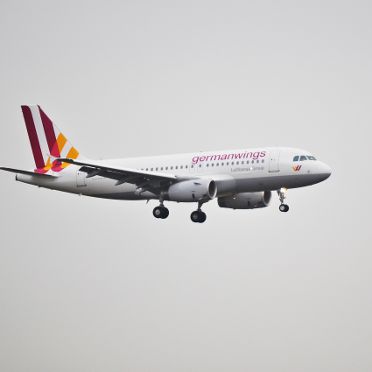
germanwingsThe Lufthansa Group has made a successful start to the new year with the transfer of the Düsseldorf–Zurich route from Lufthansa to Germanwings today (Thursday, 8 January 2015). One of the biggest structural projects ever undertaken by the company has thus been successfully completed on time.

The concept of the new Germanwings was presented in December 2012, followed by the market launch on 1 July 2013. The transfer of the Düsseldorf–Zurich route means that the decision to operate all domestic and European routes under Germanwings, apart from at the Frankfurt and Munich hubs, has now been fully implemented as scheduled. In all, Germanwings has taken over 115 routes from Lufthansa in recent months, with the biggest number of routes (52) at Düsseldorf Airport.

Carsten Spohr, Chairman of the Executive Board of Deutsche Lufthansa AG, said: “The first Germanwings flight from Düsseldorf to Zurich today marks the successful completion of what is to date the biggest project to make the Lufthansa Group more competitive. The positioning of the new and significantly larger Germanwings has been a resounding success. I would like to extend my gratitude to all employees, who have worked hard for this achievement. As a result of low costs in the WINGS business model, we combine favourable prices with the punctuality, quality and safety of the Lufthansa Group. This combination meets with a positive response among our passengers and also finds favour in many European markets. At the same time therefore, the success of the project will bolster our confidence for the creation of our new Eurowings, which will be launched before the year is over.”

Thomas Winkelmann, spokesman for the Germanwings Executive Board: “Over recent months, we have been laying the necessary foundations for the continued successful development of the company. We have never been bigger, and have never been a market leader at so many German airports. Of much greater importance, however, is the fact that we are once again enjoying success in commercial terms.” The completion of the migration of Lufthansa routes to Germanwings represents the successful conclusion of a major project that has been a big challenge for the company, added Winkelmann. “However, the team rose to the challenge magnificently. We can now build on this success.”

The new Germanwings service between Düsseldorf and Zurich will comprise 24 flights per week, making it one of the most high-volume routes from the North Rhine-Westphalian capital. The early morning flight will depart from Düsseldorf at 7.00 a.m. In addition to this, there will be a midday flight at 1.30 p.m., an afternoon flight at 5.05 p.m. and an evening service at 6.55 p.m. All flights for the current winter flight timetable and the 2015 summer flight timetable, which will run until the end of October, are already available for booking – at www.germanwings.com, for example.

08.01.15

Silkway West Airlines of Azerbaijan commits for three Boeing 747-8 freighters

0

Boeing Statement on Silk Way West Commitment for Three 747-8 Freighters

Boeing and Azerbaijan-based airline Silk Way West announced that the two companies are finalizing terms and working toward a purchase agreement for three 747-8 Freighter airplanes.

When finalized, the contract will be valued at more than $1.1 billion at current list prices. The order will be posted on Boeing’s Orders & Deliveries website once all contingencies are cleared.

“Silk Way Group is a longstanding customer and operator of Boeing’s products and services,” said Marty Bentrott, vice president, Middle East, Russia and Central Asia Sales, Boeing Commercial Airplanes. “We value our partnership with Silk Way West and are grateful for their enduring confidence in Boeing and the 747-8 Freighter.”

Silk Way West is an enterprise of the Silk Way Group, which includes 23 companies working in the aviation industry and related services. The airline currently operates seven Boeing airplanes, including two 767-300 Freighters, three 747-400 Freighters and two 747-8 Freighters.

The 747-8 Freighter has no competitors, providing cargo operators the lowest operating costs and best economics of any large freighter airplane while providing enhanced environmental performance. The 747-8 Freighter offers 16 percent more revenue cargo volume than the 747-400, while keeping its iconic nose door.

BAKU, Azerbaijan, Jan. 8, 2015 /PRNewswire/

Bill Boeing Jr., son of the founder of the company, dies at the age of 92

0

William Boeing Jr., son of Boeing Co. founder William E. Boeing, died Thursday morning at the age of 92. He was at home in Seattle, surrounded by family.

Boeing Chairman and CEO McNerney Statement on William E. Boeing, Jr.

Boeing Chairman and CEO Jim McNerney released the following statement today:

bill_boeing_jr“We are deeply saddened by the passing of Bill Boeing, Jr.

“Bill’s impact on the social and economic development of the Puget Sound has greatly benefited generations in the community.

“We are especially grateful for his efforts to preserve our largest home community’s history of aerospace innovation by helping secure and renew the legendary Red Barn, our first factory, a special place that he visited as a boy. Then, as a leading light in the creation and expansion of the Museum of Flight, he helped showcase our heritage and inspire generations to join in and further advance the science and business of aerospace.

“As a successful businessman and a model for citizenship, Bill positively shaped the region around Seattle, not least through his family support for the Seattle Children’s Hospital, and all the while sharing his passion for education and history wherever he could.

“Bill continued his family’s great heritage with grace, energy and goodwill. As we cherish his memory, we will also continue to see his works through the institutions he left us and the people who were helped and inspired by his leadership.”

Charleroi Airport: 6,440,000 passengers in 2014, 6% above expectations

0

With the beginning of the New Year 2015, it is time to assess last year’s results for Brussels South Charleroi Airport.  2014 has ended on a positive note since, over the last twelve months, a total of 6,440,000 passengers went through BSCA, meaning 6% more than what was initially expected.

BSCA’s CEO is pleased with the airport’s performance, which is obviously linked to its assets.  « At the end of 2013, Ryanair’s announcement to reposition three aircrafts to Zaventem Airport created havoc. Together with our staff, we worked on our methods and processes to best cancel out the impact of this announcement. Our efforts allowed us to not only reduce the expected loss of customers from 900,000 passengers to 350,000 – which means 5% less than the 11% initially announced at the beginning of the year – but to also generate a better aircraft load factor. We also welcomed two new airlines, Thomas Cook and Pegasus Airlines. Thanks to our airport’s accessibility, Pegasus is able to offer to our passengers faraway destinations like Dubai, Doha, Tel Aviv,… through its hub located in Istanbul Sabiha Gökçen.  », CEO Jean-Jacques Cloquet declares. 

Finnair Traffic Performance in December 2014

0

In December, Finnair’s overall capacity decreased by 1.5 per cent and traffic measured in Revenue Passenger Kilometres grew by 0.2 per cent year?on?year. Passenger load factor was 77.0 per cent.

The capacity in Asian traffic decreased by 4.2 per cent and the traffic measured in Revenue Passenger Kilometres by 3.2 per cent year?on?year.

The capacity in European traffic increased by 1.5 per cent and traffic measured in Revenue Passenger Kilometres by 4.3 per cent year?on?year.

In October–December, the passenger unit revenue* per available seat kilometre increased by 1.8 per cent year?on?year and totalled 5.26 euro cents.

“In the last quarter of 2014, the passenger unit revenue increased for the first time since the first quarter  of 2013, This positive development resulted  mainly from the improved passenger loads factors in almost all traffic areas,” says Finnair CFO Erno Hildén.

In cargo, traffic measured in revenue tonne kilometres decreased by 0.9 per cent and the overall capacity grew by 8.5 per cent year?on?year. The load factor fell by 5.8 percentage points year-on-year and was 61.6 per cent.

In December, 82.2 per cent of all flights arrived on schedule (82.9).

Finnair changed its traffic reporting practices at the beginning of the winter season and discontinued reporting leisure traffic as a separate traffic area. These changes were communicated on 7 November 2014 with a separate release.

*Unit revenue = Ticket revenue/ASK.

December 2014Change
%
Jan -Dec 2014Change
%
Total traffic
Passengers, 1000721.23.99,629.63.9
Available seat kilometres, mill2,405.0-1.530,888.8-0.9
Revenue passenger kilometres, mill1,852.80.224,771.70.0
Passenger load factor, %77.01.3 p80.20.7 p
Cargo tonnes11,317.5-3.8149,140.91.7
Available tonne kilometres, mill361.9-2.24,644.3-1.4
Revenue tonne kilometres, mill235.4-0.23,130.20.7
Overall load factor, %65.01.3 p67.41.4 p
Europe
Passengers, 1000423.96.36,004.35.0
Available seat kilometres, mill888.01.512,239.40.9
Revenue passenger kilometres, mill693.04.39,649.31.0
Passenger load factor, %78.02.1 p78.80.1 p
North Atlantic
Passengers, 100017.41.2221.0-7.3
Available seat kilometres, mill159.71.01,776.8-6.2
Revenue passenger kilometres, mill122.50.91,512.1-7.5
Passenger load factor, %76.7-0.1 p85.1-1.2 p
Asia
Passengers, 1000125.1-3.11,691.1-1.0
Available seat kilometres, mill1,234.8-4.215,564.4-2.0
Revenue passenger kilometres, mill950.9-3.212,741.4-0.3
Passenger load factor, %77.00.8 p81.91.4 p
Finland
Passengers, 1000154.94.01,713.36.8
Available seat kilometres, mill122.53.41,308.14.1
Revenue passenger kilometres, mill86.36.6868.96.6
Passenger load factor, %70.52.1 p66.41.6 p
Cargo traffic
Cargo scheduled traffic total, tonnes9,129.41.5115,470.61.2
– Europe, tonnes1,901.83.123,949.21.8
– North Atlantic, tonnes661.1-3.47,646.3-0.5
– Asia, tonnes6,403.21.382,063.21.2
– Domestic, tonnes163.313.01,811.9-2.1
Cargo leisure traffic, tonnes0.0–0.0–
Cargo flights, tonnes**2,188.2-20.933,670.43.6
Cargo tonnes total11,317.5-3.8149,140.91.7
Available cargo tonne kilometres*, mill.112.98.51,420.4-1.3
Revenue cargo tonne kilometres, mill.69.6-0.9912.42.7
Cargo load factor*, %61.6-5.8 p64.22.6 p
– North-Atlantic cargo load factor*, %47.6-17.1 p52.0-2.6 p
– Asia cargo load factor*, %60.2-6.5 p63.52.6 p

Cargo ATK’s for the year 2013 are restated due to more accurate metrics implemented in calculation.
* Operational calculatory capacity
**Including purchased traffic


Traffic statistics for January are published on Monday, 9 February 2015.

Finnair Plc      Stock Exchange Release         8 January 2015 at 09:00 EET

IATA: November Global Air Freight Growth Concentrates in Asia and Middle East

0

The International Air Transport Association (IATA) reported November 2014 data for global air freight markets showing that demand measured in freight tonne kilometers (FTK) grew 4.2% compared to November 2013. Capacity grew by 3.3% over the previous November. Compared to October 2014, air freight demand expanded by a healthy 0.8%.

The most significant growth was recorded by carriers in the Asia-Pacific and Middle East regions, at 5.9% and 12.9%, respectively. Carriers in these regions captured the vast majority of the global increase (93%). Carriers in Asia-Pacific accounted for 55% of the total year-on-year growth (with a market share of 39.7%), while airlines in the Middle East region contributed a further 38% of growth (with a market share of 13.3%).

An important development emerged at the end of 2014 which, if it continues, bodes well for air freight markets. Air freight is closely linked to world trade (by value about a third of goods traded internationally are shipped by air). Air cargo growth stagnated from 2011 as world trade volumes basically grew in tandem with domestic production. A strong growth trend in cross-border trade emerged over the second half of 2014 (while domestic industrial production remained stable) which has had a positive impact on air cargo volumes.

“More goods are being traded internationally and that is fueling the growth in air freight. It was clear in November that most of that growth is being captured by carriers in the dynamic and relatively business-friendly Asia-Pacific and Middle East regions. This year we expect air freight markets to expand by 4.5%, outpacing projected growth in world trade (4.0%). But that optimism is tempered by the many macro-economic and political risks that continue to impact trade flows,” said Tony Tyler, IATA’s Director General and CEO.

Nov 2014 vs. Nov 2013FTK GrowthAFTK GrowthFLF
International4.6%4.0%53.5
Domestic1.3%0.0%32.9
Total Market4.2%3.3%49.6
YTD 2014 vs. YTD 2013FTK GrowthAFTK GrowthFLF
International4.7%4.0%49.2
Domestic2.7%2.0%30.9
Total Market4.4%3.6%45.6

Regional Analysis in Detail

Asia-Pacific airlines reported a 5.9% increase in FTKs with a 4.0% capacity increase. Although business confidence in China has weakened, government policies to encourage consumption are having a positive impact. Japan, although weakened by a recent consumption tax increase, has seen business confidence improve. Reflecting these trends, emerging Asian economies have seen a sharp rise in imports over the last six months.

European airlines saw a small 0.9% rise in FTKs while capacity expanded by 2.6%. The Eurozone economy continues to flatline, affected by renewed concerns over the Euro and Russian sanctions. Export markets in Asia and North America have potential but this is not outweighing the negative impact of weak home markets.

North American carriers recorded a FTK decline of 0.3% and a fall in capacity of 2.6%. This was despite a ports strike on the West Coast which helped shift some demand from sea to air. Underlying indicators for the US economy remain sound, which should support a return to growth.

Middle Eastern carriers continued their strong performance, with FTK growth of 12.9% and a 17.1% increase in capacity. The region’s efficient hubs continue to provide a strong platform for connecting long-haul freight shipments.

Latin American airlines saw FTKs fall by 0.7%, reflecting economic weaknesses across the continent, but particularly in Brazil and Argentina. Capacity was reduced 0.5%.

African airlines expanded FTKs by 10.5%, maintaining the positive trend of previous months. Load factors also improved as capacity was trimmed by 2.9%.

“The air cargo industry enters 2015 propelled by solid growth trend. Shippers have a choice in modes of transport and, like customers everywhere, demand ever greater value. To turn the growth into sustained stronger profitability, the air cargo industry faces the challenge of investing in more efficient and higher quality processes and facilities that will give it the winning edge over its competitors,” said Tyler.

Enhancing air freight’s competitiveness is at the top of the agenda for the World Cargo Symposium in Shanghai (10-12 March). The event is expected to draw 1,000 leading air freight executives to debate industry competitiveness and transformation under the theme of ‘Improving the Customer Experience’.

View November air freight results (pdf)

Press Release No. 1, Geneva –  7 January 2015

IATA: Healthy Passenger Demand in November – Domestic Markets Driving Growth

0

The International Air Transport Association (IATA) announced global passenger traffic results for November 2014 showing a continuation of the healthy demand trend of recent months. Total revenue passenger kilometers (RPKs) rose 6.0% compared to November 2013, which was ahead of the 5.7% year-over-year growth recorded in October as well as the 10-year average growth rate of 5.6%. November capacity expanded by 5.4%, leading to a 0.5 percentage point rise in the load factor to 76.7%.

Growth was driven primarily by domestic markets which experienced a 6.9% increase in demand over the previous November (an acceleration over the 5.3% year-to-date average for domestic travel). Chinese domestic travel (which rose 15.4% over the previous November) was the main contributor to this growth. International travel, meanwhile, experienced a slight deceleration in growth towards the end of the year.

Nov 2014 vs. Nov 2013RPK GrowthASK GrowthPLF
International5.4%5.9%75.1
Domestic6.9%4.5%79.3
Total Market6.0%5.4%76.7
YTD 2014 vs. YTD 2013RPK GrowthASK GrowthPLF
International6.1%6.4%79.3
Domestic5.3%4.2%80.7
Total Market5.8%5.6%79.8

“November demand was healthy, but the overall picture is mixed. For example, strong traffic performance within China and India has not carried over into international demand for Asia-Pacific carriers. And while lower oil prices should be positive for economic activity, softening business confidence is having a dampening effect on international travel,” said Tony Tyler, IATA’s Director General and CEO.

International Passenger Markets

November 2014 international passenger demand was up 5.4% compared to the year-ago period, which was below the 6.1% year-to-date growth trend. Capacity rose 5.9% and the load factor dipped 0.3 percentage points to 75.1%. All regions except Africa recorded year-over-year increases in demand. However, compared to October, most regions reported slower demand growth for November.

  • European carriers’ demand for international services rose 5.6% in November 2014 compared to the year-ago period in spite of the region’s economic frailties and risks. Robust travel on low cost carriers is behind much of the growth. Capacity climbed 4.9% leading to a 0.5 percentage point rise in the load factor to 77.7%.
  • Asia-Pacific airlines recorded a 4.9% demand increase compared to November 2013 amid signs of a slowdown in regional production activity. Trade volumes have remained strong, however. With capacity up 5.6%, the load factor slipped 0.5 percentage points to 74.6%.
  • North American airlines saw demand rise 2.0% over the 2013 period. This was an improvement over growth of 1.6% in October. November capacity rose 3.1%, causing load factor to fall 0.8 percentage points to 76.8%. The US economy is a notable bright-spot among developed economies, and recent gains in trade volumes bode well for business-related travel.
  • Middle East carriers had the strongest traffic growth at 11.7%. This was the fourth consecutive month of double-digit year-over-year growth and the region’s economies are comparatively well-placed to withstand plunging oil revenues. Capacity rose 13.9% and load factor fell 1.4 percentage points to 70.1%.
  • Latin American airlines experienced a 4.9% rise in demand in November. Capacity increased 5.7% and load factor fell 0.6 percentage points to 78.8%. Despite the decline, the load factor was the highest for any region. Although major economies in the region have been weak, the strength of the US economy has supported traffic carried by the region’s airlines.
  • African carriers were the only ones to see a decline in demand: November traffic fell 2.5% compared to the same month in 2013. Capacity fell 3.1%, causing load factor to rise 0.4 percentage points to 63.8%, the lowest for any region. Passenger volumes for the region’s carriers are back at late 2012 levels. The recent weakness appears to reflect adverse economic developments in parts of the continent including Nigeria, which is highly reliant on oil revenues. The impact on traffic owing to the Ebola outbreak is largely restricted to Guinea, Liberia and Sierra Leone (markets that comprise a very small proportion of overall African traffic).

Domestic Passenger Markets

Demand for domestic travel rose 6.9% in November 2014 compared to the year-ago period, an acceleration of the October increase of 5.9%. Total domestic capacity was up 4.5% and load factor climbed 1.7 percentage points to 79.3%.

  • China’s domestic traffic soared 15.4% compared to November 2013, the strongest performance for any market. In fact, two-thirds of the total increase in domestic RPKs over the last few months is attributable to gains in the Chinese domestic market. This is occurring in spite of ongoing signs of a slowdown in the Chinese economy and industrial activity, although consumer surveys and retail sales data remain robust.
  • Australia’s domestic demand was virtually flat year-over year and traffic volumes have largely remained stagnant since mid-2013. The economy is struggling to rebalance away from mining investment-led growth.
Nov 2014 vs. Nov 2013RPK GrowthASK GrowthPLF
Australia0.3%-2.1%78.9
Brazil7.7%5.4%81.2
China P.R.15.4%11.3%79.7
India14.2%2.4%80.3
Japan2.6%0.7%70.2
Russian Federation8.0%6.5%69.0
US3.6%2.1%81.4
Domestic6.9%4.5%79.3

The Bottom Line:

Aviation is a vital driver of the global economy. Last month IATA issued an updated outlook forecasting industry earnings of $25 billion in 2015. While this appears large, at the global level, on revenues of $783 billion, a $25 billion profit represents a margin of just 3.2% or around $7 per passenger. And it is spread over a highly-fragmented and hyper-competitive industry with many hundreds of players, some of whom are making sustainable returns and many of whom are struggling.

“Nonetheless, the industry is investing to improve the passenger experience. This year we expect to see some implementation of the New Distribution Capability, giving travelers the ability to view and purchase all of an airline’s products and services wherever they shop for air travel. And more passengers will have access to Fast Travel options such as self-boarding and self-tagging of luggage that offer convenience and time-savings and give them greater control over their journey,” said Tyler.

View full November passenger results (pdf)

Press Release No. 2, Geneva – 8 January 2015

Finnair improves its frequent flyer program

0

Finnair is improving its Finnair Plus frequent flyer program and now offers better benefits to its Finnair Plus members. Now the loyal customers can now book the Classic European award flights without having to pay fuel surcharge fee. The fuel surcharge fee is removed from European Classic flight awards, as well as from Tel Aviv and Dubai Classic flight awards, that are reserved and/or ticketed on January 8th, 2015 and onwards.

? Finnair Plus members are important to us, and we want to continue to offer them even better benefits, says Johanna Jäkälä, Director for Finnair Plus. ? Flight awards are the most popular way to use Finnair Plus points, and now our customers get better value for their points.

The surcharge has ranged between 15-40 euros per one way within Europe. The amount of Finnair Plus points needed for Classic flight awards remains the same, and in addition the passenger pays necessary taxes and other government charges.

More information about the Finnair Plus frequent flyer program is available on www.finnair.com/plus

Thomas Cook and Brussels Airlines intensify strategic partnership

0
Thomas Cook and Brussels Airlines expand their strategic cooperation. This year, both companies will operate even more holiday flights together (824 flights, +26%). Tens of thousands of Thomas Cook clients will also make use of Brussels Airlines’ scheduled flight offer to popular holiday destinations.Brussels Airlines and Thomas Cook have been cooperating since 2002, but this year the partnership will have an even more strategic character. “Next to our own aircraft fleet, Thomas Cook will use Brussels Airlines more than ever to get travelers to holiday destinations in the Mediterranean”, says Jan Dekeyser, Chief Commercial Officer at Thomas Cook. “Last year, Brussels Airlines already operated 654 flights for Thomas Cook; this year that amount will increase to 824. Next to these chartered flights, we have also decided to book seats for our clients on several scheduled Brussels Airlines flights.  Thanks to this cooperation, Thomas Cook clients have a choice between more flight days, making their travel plans more flexible.”


Brussels Airlines will launch Ibiza this summer as an eleventh new destination in 2015, with the support of Thomas Cook.The Brussels Airlines / Thomas Cook partnership is successful because both companies share the same values: Quality, innovation, reliability, attractive fares, large choice, a personal service and a 100 percent Belgian product are key. Thomas Cook, Neckermann and Pegase clients receive a service on board Brussels Airlines flights, which has been created in collaboration with Thomas Cook.

“Everyone who plans his or her well-deserved vacation is looking for attractive fares and a quality offer by reliable service providers”, says Brussels Airlines Chief Commercial Officer Lars Redeligx. “That is why  more and more travelers choose Brussels Airlines and Thomas Cook. With Catania, Seville, Alicante, Barcelona, Faro, Malaga, Lourdes, Olbia, Naples and Palermo, among others, in its portfolio, Brussels Airlines offers many destinations highly sought-after by Thomas Cook clients. This partnership is a perfect match, as it allows us to offer even more holiday destinations to the Belgian market on the one hand, and to innovate with new attractive travel products on the other hand, like our b.family product.”

Naamloos12


Thursday 8 January, 2015

Qatar Airways inaugurates A350 XWB into the fleet at Doha ceremony

0

Press conference in Doha attended by more than 150 international media as Qatar Airways showcases the first of its 80 A350 XWB aircraft for the first time in its hub and home
Celebrations continue for Global Launch Customer

Doha, QATAR – Qatar Airways Group Chief Executive, His Excellency Mr. Akbar Al Baker, hosted a press conference in the airline’s hub today at the Premium Terminal of Doha International Airport, to a crowd of more than 150 international media, who had travelled to Qatar to view the first A350 XWB, for which the airline is the global launch customer.

Also in attendance at the press conference were Mr. Didier Evrard, Airbus Executive Vice President Head of Programmes and Mr. Eric Schulz, Rolls-Royce President of Civil Large Engines, both of whom previously attended the official delivery of the aircraft from Airbus to Qatar Airways at a ceremony held in December at the Airbus Delivery Centre in Toulouse.

Qatar Airways Group Chief Executive, His Excellency Mr. Akbar Al Baker, said: “We are ready to commence operations with the A350 XWB and are delighted to introduce another level of service with our expanded fleet.
“The engineering design of the A350 XWB is modern, technologically refined and spacious, and we are proud to welcome yet another fine aeroplane into the Qatar Airways’ fleet.”

Following the press conference, media were given the opportunity to meet with the airline’s Group Chief Executive, before continuing to tour the newly inducted aircraft.

Qatar Airways Group Chief Executive, His Excellency Mr. Akbar Al Baker.

As global launch customer for the A350 XWB, Qatar Airways will be the only airline to fly this aircraft type for the foreseeable future, and was a significant contributor to its cutting-edge design in partnership with aircraft manufacturer, Airbus, and engine manufacturer, Rolls-Royce.
The first commercial service will be deployed on the Doha-Frankfurt route – a sold-out service – on January 15, 2015.

The A350 XWB will comprise a two-class configuration with 36 Business Class seats in a 1-2-1 configuration, featuring 80” fully flat beds and 17” HD in-flight entertainment screens. Economy Class will comprise of 247 seats, each 18-inches wide in a 3-3-3 configuration, with up to a 32-inch pitch. Each individual seat will feature a 10.6” in-flight entertainment screen, and more space at shoulder level for passengers in window seats, thanks to a vertical side wall panel design.

Over 70 percent of the A350 XWB’s weight-efficient airframe is made from advanced materials combining composites (53 percent), titanium and advanced aluminium alloys. The aircraft’s innovative all-new carbon fibre reinforced plastic fuselage results in lower fuel burn as well as easier maintenance.

Qatar Airways is the only airline in the world to operate every family of Airbus’ modern airline portfolio. In addition to the 80 A350s it has on order, the airline has a current Airbus fleet comprising of the A320, A330 Freighter, A319LR, A321, A330, A340 and A380 families.

Aviation24.be latest

Aviation24.be trending