Home Blog Page 1613

Emirates to commence daily service to Bali

0

Daily service to launch 3rd June

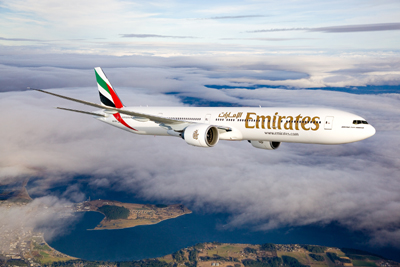
DUBAI, U.A.E., 2 March 2015: Emirates, a global connector of people and places today announced that it will launch a new daily service to the island of Bali in Indonesia, from 3rd June 2015.
One of the most popular islands in Indonesia with spectacular mountains and picturesque beaches, Bali is a leading tourist destination which welcomed more than 3.7 million foreign tourist arrivals in 2014. Emirates’ new service will add to Bali’s global connectivity, further stimulating the island’s economic and tourism growth.

Rice fields in Bali li 1_tcm133-2181859

Bali will be Emirates’ 148th global destination, adding to the airline’s route network in the Asia Pacific region which currently spans 23 destinations in 13 countries. The non-stop service between Dubai and Bali will be operated by a Boeing 777-300ER aircraft in a two-class configuration.

Bali 2_tcm133-2181860

“Bali is a significantly important market for Emirates. There is high interest in Bali from across our network, specifically in the leisure segment. We are pleased to be able to offer the Emirates product on a daily basis, connecting passengers in Bali to Dubai and to more than 80 destinations in Europe, the Middle East, Africa and the Americas, via one convenient stop in Dubai.” said Thierry Antinori, Executive Vice President and Chief Commercial Officer, Emirates airline.
“The new service will greatly increase convenience, choice, and consistency of travel experience for consumers who currently have to travel via multiple stops, or via other points in Indonesia to reach Bali.”
Emirates’ new daily flight to Bali will depart Dubai as EK398 at 0820hrs* and arrive at Bali’s Denpasar International Airport at 2140hrs* the same day. The return flight, EK399, will depart at 2340hrs* and arrive at Dubai International Airport at 0500* the next day.
Throughout all cabin classes, passengers can enjoy more than 2,000 channels of entertainment on demand on ice, the airline’s award-winning in-flight entertainment system.

Passengers on all Emirates flights also have the added bonus of generous baggage allowance with 30 kilogrammes for those travelling in Economy Class and 40 kilogrammes for Business Class.

Emirates commenced services to Indonesia in 1992 with three flights per week via Singapore and Colombo, and since March 2013, the airline has been operating three non-stop flights daily from Jakarta to Dubai with a Boeing 777 aircraft.

Ryanair launches new customer charter and unveils 2015 (year 2) “Always getting better” plan

0

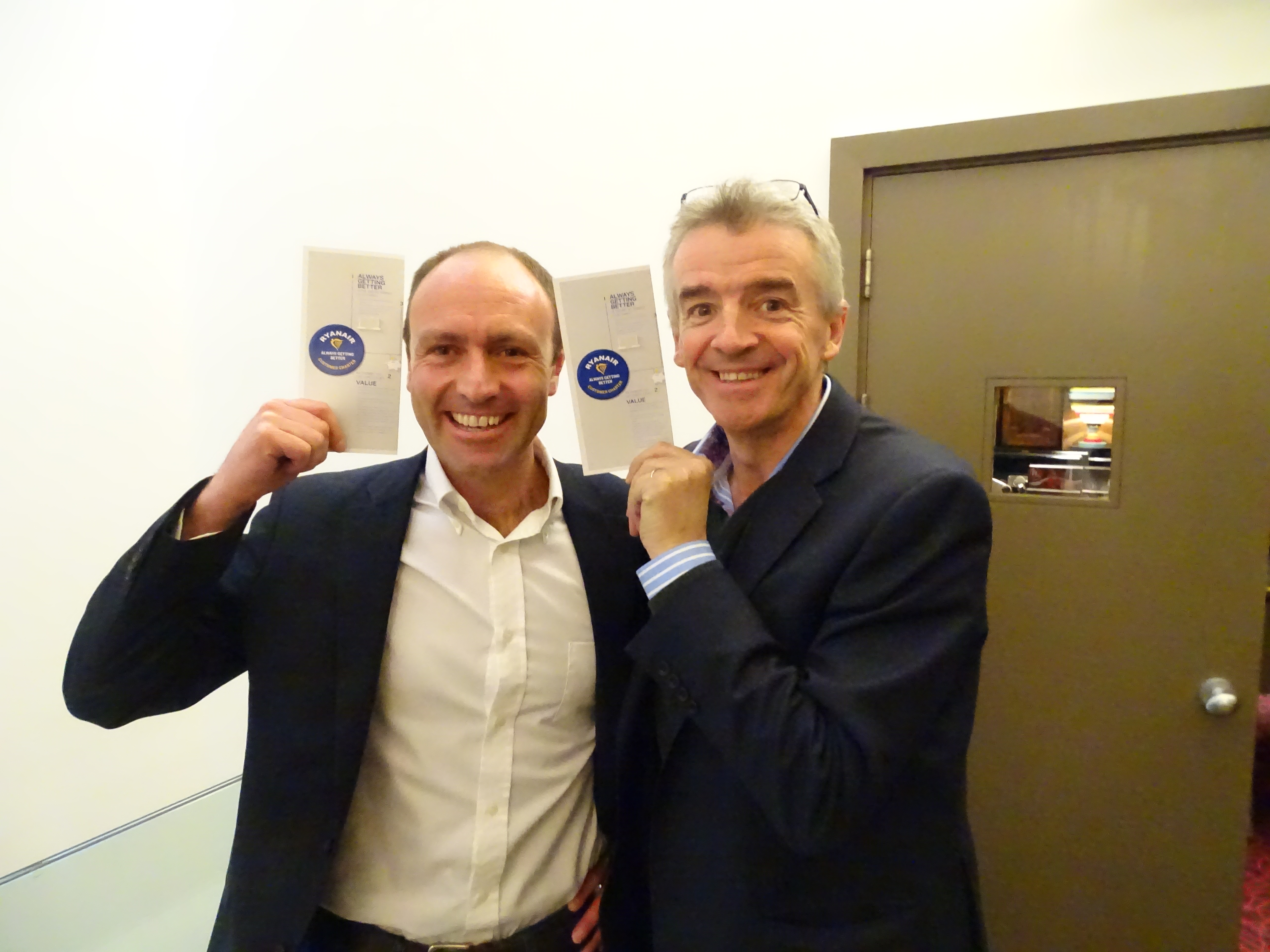
RYR2015Ryanair today (3 Mar) launched its new Customer Charter and unveiled its 2015 customer experience initiatives which form year 2 of its “Always Getting Better” programme.

Ryanair’s new Customer Charter, launched in London today to mark the airline’s 30th birthday, will underpin its relentless drive towards improving all aspects of the Ryanair experience for its 100m customers and comprises an 8-promise plan as follows:

  1. Always Getting Better is the way we promise to do things
  2. We promise the lowest fares
  3. We promise the best choice of destinations
  4. We promise to always prioritise safety
  5. We promise to strive to make your travel an enjoyable experience
  6. We promise we will always be Europe’s most reliable airline
  7. We promise to be transparent and to make travel simple for you
  8. We promise to innovate to make your travel exciting

Ryanair also announced a series of initiatives which will be rolled out over 2015 under the second year of its 3-year “Always Getting Better” programme, with a range of improved services, fee reductions and exciting digital developments to be introduced over the coming year. These include:

  1. New aircraft interiors & new cabin crew uniforms
  2. Lower airport check-in fees*, missed departure fees** and a new flight cancellation option (€15 per segment fee, within 24 hours of booking).
  3. Real time airline fare comparisons on Ryanair.com.
  4. A new destination content service, featuring customer reviews.
  5. A new travel insurance product, replacing the current drop down insurance.
  6. A personalised Ryanair.com website with up to 100 versions of the homepage and personalised promotional emails with customer-specific tailored offers.
  7. A new ‘hold the fare’ feature (€5 to hold a fare for 24 hours).
  8. An improved inflight menu, with more healthy meal choices and a hot breakfast pre-order service on key routes.
  9. New seats with more leg room & new Boeing Sky Interiors.
  10. Faster native mobile apps, an improved Ryanair.com desktop and an enhanced “My Ryanair” customer registration system.

In London, Ryanair CMO, Kenny Jacobs said:

“Europe’s customers have always chosen Ryanair for our low fares and great choice of routes and through our “Always Getting Better” programme, we are continuing to improve our customer experience. Those low fares won’t change, but we will continue to listen and strive to enhance every aspect of our business and our new Customer Charter outlines the way we want to deliver an enjoyable, simple and low cost travel experience to customers. Our customers can look forward to an improved inflight experience with new cabin interiors and a new menu, fantastic new digital features including personalised websites, a faster app, ‘hold the fare’ and price comparison features and great destination content, reduced fees and a new flight cancellation option, as well as new insurance products. We will also continue to add new routes and airports to what is already Europe’s largest network, offering an even greater choice to our 100m annual customers.”

Ryanair CEO, Michael O’Leary said:

“2014/15 was a record year for Ryanair, as we grew our traffic to 90m customers and started to dramatically improve the customer experience through the introduction of allocated seating, a second free carry-on bag, our new mobile app and website and our new dedicated Family Extra and Business Plus services, as well as more routes to even more airports, with improved schedules and frequencies. We now want to celebrate our 30th birthday in 2015 by launching our new Customer Charter and the 2nd year of our “Always Getting Better” plan as we grow to carry 100m customers this year. We thank our customers for making Ryanair Europe’s favourite airline and assure them that we will continue to offer them so much more than just the lowest fares, with the biggest route network, industry leading reliability and performance, and the best customer service.”

?Embraer’s Phenom 300 is the most delivered business jet for the second year in a row

0

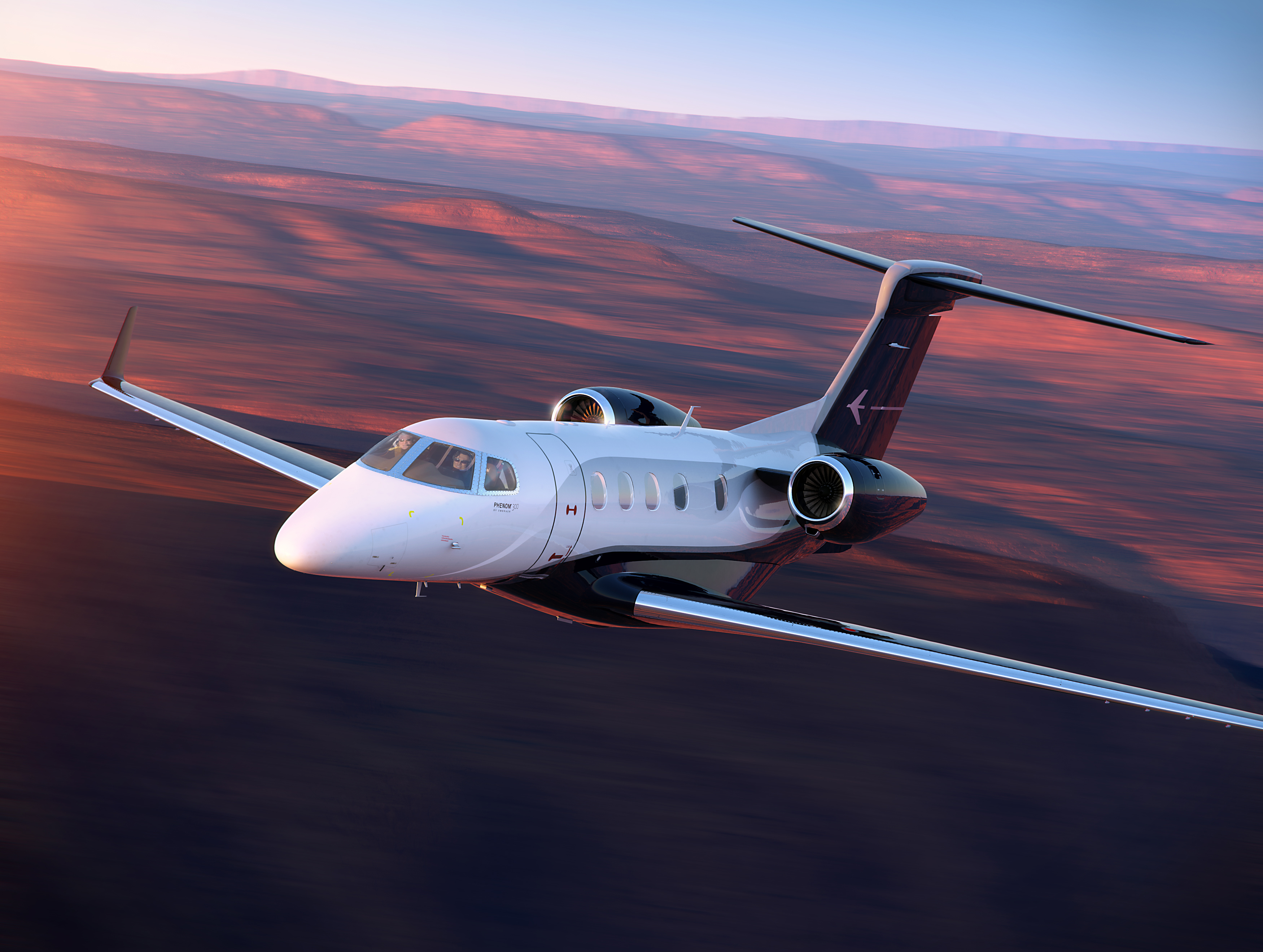
PhEmbraer Executive Jets delivered 73 Phenom 300 in 2014, making it the most delivered business jet in the world, according to a report by the General Aviation Manufacturers Association (GAMA). Deliveries of this aircraft reached a total of 60 in 2013, also the largest quantity for that year.

“We are very grateful for our customers’ preference for the Phenom 300, a truly revolutionary aircraft, designed with extensive customer input and feedback,” said Marco Túlio Pellegrini, President and CEO, Embraer Executive Jets. “This achievement further reaffirms our commitment to deliver the highest level of customer support and services.”

In just five years of operation, the Phenom 300 fleet has reached the 250 aircraft mark, having accrued a 57% market share in the light jet category. The aircraft is in operation in more than 20 countries and has accumulated close to 200,000 flight hours.

The Phenom 300 is one of the fastest light jets, having recently established a National Aeronautic Association (NAA) cross-country speed record in the United States, from Bellingham, Washington, to Albany, New York.

São José dos Campos, Brazil, March 2, 2015

bmi regional and Lufthansa link Jönköping to the world via Frankfurt

0

• Direct flights to Frankfurt six days a week
• Madrid, Mumbai or Mexico City: Check-in to your final destination at Jonkoping airport and travel conveniently with just one transit needed
• A boost to Jonkoping Business & Tourism

The first direct flights from Jonkoping to Frankfurt with bmi regional (www.flybmi.se) start today. The new service, operated twice daily flights six days each week with codeshare partner Lufthansa Airlines, a member of Star Alliance, means that the people of Jonkoping can now fly direct to Frankfurt and connect seamlessly to Lufthansa’s worldwide network of 235 global destinations.

The services from Jonkoping Airport to Frankfurt, depart Monday to Friday at 07:35 and Sunday to Friday 16:05 with arrival in Frankfurt at 09:20 and 18:00 respectively, opens up new destinations for corporate and leisure travellers based in and around Jonkoping, as well as offering huge benefits to inbound tourism. Flights from Frankfurt depart at 09:30 and 18:30, arriving at 11:35 and 19:15 respectively: the aircraft continues on to Karlstad.

Ulrich Link, General Manager – Lufthansa Airlines, Scandinavia, Finland and Baltic States, said: “Our Jonkoping passengers may now enjoy quick, easy and seamless access to the Asian, African, American and European destinations within our worldwide network by transiting through our hub at Frankfurt.”

He added: “Passengers from Jonkoping can now take advantage of the attractive and highly competitive year-round fares we offer. They will find that when they book with Lufthansa the price they pay includes a clear and transparent baggage policy from origin to destination, comprising the ability to take hand-luggage on board, as well as complimentary food and beverages in-flight, and the option to check-in online or at the airport with no extra cost.”

Cathal O’Connell, CEO of bmi regional, said: “Today we are very proud to launch the first flights to Frankfurt from Jonkoping, together with our partners Lufthansa Airlines with whom we already operate several codeshare routes in the UK and Europe. The new destination further strengthens both airlines’ network presence in Sweden and connects Jonkoping passengers with Karlstad , Frankfurt and the world.”

2 March 2015

Interjet takes options for up to 10 more Sukhoi Superjet SSJ100s

0
Although Interjet is already in possession of firm orders for 30 Sukhoi Superjet 100s from Superjet International, the airline has now confirmed options for an additional 10 aircraft valued at $350 million.

Of the original 30 orders, 12 SSJ100s are currently in service with Interjet, operating on routes between Mexico City and various Mexican and US destinations. The thirteenth SSJ100 has been already delivered and will join the Interjet fleet soon.

“We are delighted to add 10 aircraft to our SSJ100 fleet. The Superjet 100 is a really good product, we are very satisfied with its superior performance and the reduced operating costs. The SSJ100 was the right choice for Interjet’s fleet development. It is perfectly suitable for domestic mid-density routes as well as several short-haul international ones,” stated Interjet CEO, Jose Luis Garza.

Along with the order, and according to a SuperCare Agreement applied to the entire Interjet SSJ100 fleet, SuperJet International will provide the airline with a full assistance on training services and after-sales support.

March 2, 2015

Aerolineas Argentinas receives first of four new A330-200s on order

0

Versatile, flexible, economic A330s to fuel Airline’s fleet renewal

Argentina’s flagship carrier, Aerolineas Argentinas, has taken delivery of their first new, directly purchased Airbus A330-200 aircraft as a part of the carrier’s fleet renewal strategy. The aircraft, equipped with GE engines, joins the airline’s existing fleet of 11 Airbus widebody aircraft, comprising four A330-200s and seven A340s.

“The addition of this new A330-200 to our wide body family will enable Aerolineas Argentinas, to redefine its long-haul network and enhance its international service offering,” said Dr. Mariano Recalde, President of Aerolineas Argentinas. “This new A330 not only shares commonality with our existing A330 and A340 airliners, it also offers exceptional operational flexibility with the right range and lowest costs. It will play a key role in our fleet renewal strategy, ensuring that we continue to offer our passengers the best in world class comfort and service levels.”

Aerolineas Argentinas will deploy its new A330 on starting on long haul routes from their Buenos Aires hub to Miami and New York City, and then Madrid in July 2015.

“The A330-200 will bring superior long-range flying capability, unmatched economics and excellent passenger appeal to Aerolineas Argentinas’ widebody fleet,” said John Leahy, Airbus Chief Operating Officer Customers. “Aerolineas Argentinas has partnered with Airbus for over two decades and we are delighted to see them base their long-range fleet renewal strategy on the popular A330.”

Aerolíneas Argentinas has been an Airbus operator since 1994 when the airline began flying the A310-300. In February 2013, Argentina’s national airline announced their order for four Airbus A330-200s to renew and consolidate its widebody fleet.

The A330 Family includes Freighter, VIP, and Military Transport/Tanker variants, has now attracted more than 1,400 orders. Over 1,100 A330 Family aircraft are flying with more than 100 operators worldwide. The A330 is one of the world’s most efficient aircraft with best in class operating economics. With numerous on-going product enhancements entering service in the coming years, the A330 Family remains the most cost-efficient and capable widebody aircraft, averaging operational reliability above 99 percent.

With more than 850 aircraft sold and a backlog of nearly 400, more than 550 Airbus aircraft are in operation throughout Latin America and the Caribbean. In the last 10 years, Airbus has tripled its in-service fleet, while delivering more than 60 percent of all aircraft operating in the region.

Airbus is a leading aircraft manufacturer with the most modern and comprehensive family of airliners on the market, ranging in capacity from 100 to more than 500 seats.

2 MARCH 2015 PRESS RELEASE

Austrian Airlines sets up Tyrolean Technik as a separate company

0

Tyrolean Technik Newly Founded with 120 Employees

Yesterday, on March 1, 2015, Tyrolean Airways Luftfahrzeuge Technik GmbH (in short: “Tyrolean Technik” or “TAT“) headquartered in Innsbruck was re-established as a separate company. It is currently a fully-owned subsidiary of Tyrolean Airways Tiroler Luftfahrt GmbH and specializes in the maintenance of Dash 8 aircraft from the Canadian manufacturer Bombardier. Approximately 120 technicians are working at the Innsbruck facility.

Tyrolean Technik can look back at a decades-long tradition in the maintenance of the turboprop aircraft, but was spun off as a separate company within the context of the reorganization of the entire Austrian Airlines Group. The underlying reason is among others its good positioning on the external market. The fusion of Tyrolean Airways, in which flight operations are bundled, and Austrian Airlines will take place as of April 1, 2015. Then Tyrolean Technik will become a fully-owned subsidiary of Austrian Airlines.

Tyrolean Technik is responsible for the maintenance and repair work implemented on 18 turboprops of the Austrian Airlines fleet and aircraft of well-known European Dash-8 400 airlines. External customers in the field of base maintenance already account for about 40% of business, a figure which the company aims to further expand.

“Tyrolean Technik is a regional company with an international reputation and recognition. We want to further expand upon this“, says Bernd Meyer, the new Managing Director of Tyrolean Technik.

Tyrolean Technik carries out base maintenance at the Innsbruck site including A and C checks as well as the replacement of landing gear and related components. The Innsbruck facility includes its own brake and tire workshops as well as an engine workshop, in which specially trained personnel carry out maintenance work or completely replace engines, propellers and engine components. In addition, technical services are offered for aircraft electronics and electrical systems and the complete interior furnishings of Dash-8 aircraft. Highly qualified aircraft metalsmiths carry out structural repairs in the company’s own sheet metal garage. Furthermore, Tyrolean Technik boasts a mobile team to implement maintenance work on location, and trains employees of other airlines in the maintenance of Dash-8 turboprop aircraft.

VLM Airlines to introduce Superjet in Q3 2016

0

Antwerp-based regional carrier VLM Airlines, which last month launched several new scheduled routes with its Fokker 50 fleet, has announced that the Sukhoi Superjet 100 LR (SSJ100 LR) regional aircraft is to enter service with the airline in Q3 2016.

Delivery of the aircraft to VLM is being postponed from April 2015 to enable the completion of EASA certification of features on the long-range variant, including takeoff and landing flaps settings, which are modified from the EASA-certified base model Superjet and which bring significant performance enhancements.

The long-range capabilities of the aircraft are expected to be very beneficial to VLM, enabling the airline to add new, commercially attractive destinations to its expanding scheduled route network.

Under a Letter of Intent signed in October 2014 with Ilyushin Finance Co., VLM has the option to lease up to four SSJ100 LRs and a further purchase option on ten aircraft.

Arthur White, CEO of VLM Airlines, says: “We have entered an exciting new phase of VLM’s growth, with new scheduled services linking Antwerp with Geneva and Hamburg, Rotterdam with Hamburg, and, from May onwards, Liège with Avignon, Nice, Bologna and Venice.

“The Superjet will be an excellent complement to VLM’s Fokker 50 fleet, and the long-range variant is best suited to our business model. While we are naturally looking forward to the new aircraft entering service, this mutually agreed delay will allow us to enjoy the Superjet’s full capability from the very first day of operation.”

Alexander Rubtsov, CEO of Ilyushin Finance Co., comments: “We have worked with VLM to develop a business model which extracts the maximum advantage of the Superjet in its long-range version. We are still working together to see if there are opportunities within the VLM network to deploy some of the basic version aircraft.  It has been interesting working with VLM to explore how the Superjet can be used in Europe, where there are some significant opportunities for the SSJ and VLM Airlines.”

Antwerp, Belgium, 2 March 2015

SAS transfers an additional slot-pair at London Heathrow and generates a positive earnings impact of MUSD 22

1

SAS has entered into a slot transaction with Turkish Airlines that will take over one afternoon slot-pair at London Heathrow from SAS at the beginning of the winter traffic program on 25 October 2015.

The transaction will generate a positive earnings impact of MUSD 22 for SAS to be accounted for during the second quarter with a corresponding cash effect during calendar year 2015.

As part of creating balance between frequencies and capacity during the day and following the disposition of a morning slot-pair earlier in February 2015, SAS has entered into a second slot-pair transaction. Following this transaction, SAS will have 19 daily slot-pairs at London Heathrow and will still be the fifth largest airline operating at London Heathrow, measured in number of weekly departures. After this transaction, SAS does not have any plans to reduce its portfolio of slots.

SAS currently operates from London Heathrow to Copenhagen, Gothenburg, Oslo, Stockholm and Stavanger. SAS will continue to offer a strong and comprehensive network between Scandinavia and London Heathrow with the intention to keep the seat capacity to/from London Heathrow unchanged through the use of larger aircraft on remaining departures. As noted earlier in February 2015, SAS will consider the use of other airports in the London-region.

February 27, 2015 07:30 / Capital market / English

Airbus A350 XWB – Welcome and “Grüß Gott” in Munich

0
First visit of an A350 XWB to Munich International Airport

The A350 MSN2, one of Airbus’ five A350 XWB test aircraft, landed on Thursday evening at Munich International airport for the first time. Munich is one of the biggest Lufthansa and Star Alliance hubs worldwide. Lufthansa has 25 Airbus A350 XWB on order. The flight on Thursday landed with 90 international journalists on board who attended the Airbus Group Annual Results Press conference on Friday in Munich.

The A350 XWB is an efficient medium-capacity long-range wide-body aircraft. With a range of up to 8,000 nm / 14,800 km. it is available in 2 basic passenger versions: the A350-900 seating 315 passenger and the A350-1000 for 369 in a typical two-class layout.

The A350 XWB is the latest addition to the market-leading Airbus Widebody product line. Offering its customers a game-changing reduction in fuel-burn, the all-new mid-size long-range A350 XWB has carbon fibre fuselage and wings and sets new standards in terms of passenger comfort, operational efficiency and cost-effectiveness. At the end of January 2015, the A350 XWB had won 780 orders from 40 customers worldwide.

27 February 2015 Press Release

Airbus increases A320 rate, adjusts A330 for NEO transition

0

Airbus has decided to further increase the production rate for its very successful A320 Family to 50 aircraft per month from Q1 2017, matching market demand. Additionally, Airbus is adjusting the A330 production rate to six a month from Q1 2016 as it transitions towards the A330neo.

“As an aircraft manufacturer, it is our role, for our employees, partners, customers and investors to anticipate market demands whilst delivering on orders and managing revenues,” said Didier Evrard, Executive Vice President Programmes. “Given the success of the A320 Family, both CEO and NEO, we work closely with our supply chain, assess our manufacturing capabilities and decide on the most appropriate rate. On widebodies we are adjusting A330 production in preparation for transition to NEO while in parallel the A350 XWB is on a steep ramp-up.”

With over 11,500 Airbus single aisle aircraft sold and more than 6,400 delivered to 317 operators, the A320 family which includes the A319, A320 and A321, is the world’s best-selling and most modern single aisle family.

Airbus has the most modern and comprehensive widebody product line. It includes the versatile A330, the larger A350 XWB and the double deck A380. Together, the aircraft efficiently cover all airline widebody requirements for regional, medium and long haul operations, seating from 250 to over 500 passengers and sharing unique levels of operational commonality.

27 February 2015 Press Release

Airbus A350 XWB makes its “première” in Paris

0
Xtra mature, reliable, innovative, efficient, comfortable
The A350 MSN2, one of Airbus’ five A350 XWB test aircraft, has landed today at Paris Charles de Gaulle airport for the first time ever. The aircraft will continue its journey from Paris to Munich this evening, with media guests on board travelling to the Airbus Group Annual Results conference taking place on the 27th February.

The A350 XWB is an efficient medium-capacity long-range wide-body aircraft. With a range of up to 8,000 nm / 14,800 km. it is available in 2 basic passenger versions: the A350-900 seating 315 passenger and the A350-1000 for 369 in a typical two-class layout.

The A350 XWB is the latest addition to the market-leading Airbus Widebody product line. Offering its customers a game-changing reduction in fuel-burn, the all-new mid-size long-range A350 XWB has carbon fibre fuselage and wings and sets new standards in terms of passenger comfort, operational efficiency and cost-effectiveness. At the end of January 2015, the A350 XWB had won 780 orders from 40 customers worldwide.

26 February 2015 Press Release

Bombardier CS300 aircraft successfully completes maiden flight

0
  • Aircraft and its systems performed as expected
  • CS300 aircraft joins five CS100 flight test vehicles in the CSeries flight test program

Another major milestone in Bombardier’s CSeries aircraft program was reached today with the maiden flight of theCS300 airliner. The technologically advanced CSeriesaircraft will provide operators with an all-new family of single-aisle mainline jets specifically designed for the 100- to 149-seat market segment.

The CS300 airliner – bearing Canadian registration markings C-FFDK – departed Montréal–Mirabel International Airport at 11:00 EST and returned at 15:58 EST. It reached an altitude of 41,000 feet (12,500 metres) and a speed of 255 knots (470 km/h).

At Bombardier’s Mirabel, Québec facility, some 2,000 Bombardier employees, Board members, partners, suppliers and customers braved frigid temperatures to witness the flight.

Capt. Andris (Andy) Litavniks, who was the co-pilot on the historic maiden flight of the smaller CS100 model on September 16, 2013, was pilot-in-command on today’s milestone flight. Capt. Litavniks was assisted by co-pilot Christophe Marchand and flight test engineers Anthony Dunne and Mark Metivet.

“It was an absolute privilege to fly the first flight of the CS300 airliner and I’m absolutely ecstatic with how well it handled. It’s a pilot’s aircraft and handled exactly as predicted by simulation,” said Capt. Litavniks. “Pilots will find it easy to transition from the CS100 to the CS300 aircraft or vice versa, which will greatly reduce training costs for operators using both models.”

“Our CSeries aircraft program is progressing well, with results from testing as expected or better. The CS300 airliner will now join the five CS100 aircraft flight test vehicles that have amassed more than 1,000 flight test hours to date,” said Rob Dewar, Vice President, CSeries Program. “We are confident the CS100 aircraft will be certified in the second half of 2015, followed closely by entry-into-service. The CS300 airliner is expected to follow about six months later.”

“It was a thrill to see the first CS300 aircraft take to the skies for the first time and I heartily congratulate our teams for this achievement,” said Mike Arcamone, President, Bombardier Commercial Aircraft.  “We continue to see increased interest from all over the world and as our performance targets are validated, we expect the enthusiasm for the CSeries family of aircraft to grow even more.”

The CS300 aircraft offers the best seat-mile cost in its category, making it the most profitable solution for mid-sized markets with up to 150 passengers per flight, and ideal for a range of routes from short-haul to longer transcontinental markets.

February 27, 2015 Montréal Aerospace,  Press Release

ERA (European Regions Airline Association) celebrates 35 years of service to members

0

The European Regions Airline Association (ERA) is celebrating its 35th year of service to members. Originally founded in 1985 in Switzerland by a small group of airline entrepreneurs, ERA’s membership and focus has evolved considerably over the last 35 years in line with industry changes. Today, ERA represents the interests of 53 airlines and over 123 companies involved in European air transport, including airframe and engine manufacturers, airports, suppliers and service providers. In addition to its policy and technical work, ERA provides an invaluable forum for members to come together, network and learn from each other.

ERA has seen significant changes in the European regional aviation market and its membership base over the years. As well as representing the traditional regional niche, point-to-point operators ERA now speaks for a growing number of ACMI* carriers in the passenger and freight market, smaller network carriers as well as the subsidiaries of major airlines who provide feed to Europe’s hubs.

“ERA member airlines have shown throughout the years that they are highly adaptable and resourceful and can respond to the vagaries of what is an ever-changing market,” says Simon McNamara, director general of ERA. “ERA has supported its members through challenging times, working with them and on behalf of them to search out new business opportunities and ensure that their interests are represented at the very highest levels in Europe.”

For more information about ERA and its members, please follow this link: http://www.eraa.org/about/era-industry-video

ERA head office, UK, 27 February 2015

Air Tahiti Nui commitment to purchase two Boeing 787-9 Dreamliners

1

Boeing Statement on Air Tahiti Nui Commitment for Two 787-9 Dreamliners

Boeing is pleased that Air Tahiti Nui has announced a commitment to purchase two 787-9 Dreamliners. The order, valued at $514 million at current list prices, will be posted on Boeing’s Orders & Deliveries website when finalized.

“Boeing is honored to start this new partnership with Air Tahiti Nui,” said Dinesh Keskar, senior vice president of Asia Pacific and India Sales, Boeing Commercial Airplanes. “The 787-9 will provide Air Tahiti Nui with superior performance, range capabilities and economics, while its passengers will enjoy the Dreamliner’s unique features such as higher humidity, lower cabin altitude and the largest windows of any current commercial airplane, providing a commanding view of the horizon above beautiful Tahiti throughout the airplane.”

Air Tahiti Nui, the flag-carrier for French Polynesia, has headquarters in Papeete and operates from Faa’a International Airport on the island of Tahiti.

SEATTLE, Feb. 27, 2015

Heathrow Terminal 2 ? The Queen’s Terminal named Airport of the Year at Air Transport World Annual Awards

0

London Heathrow and Star Alliance take joint accolade

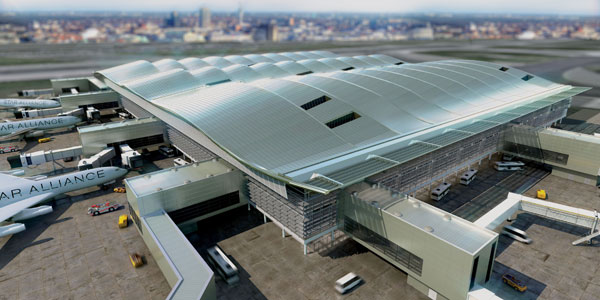
heathrow-t2London Heathrow and Star Alliance have won the World’s Airport of the Year at Air Transport World’s (ATW) 41st Annual Airline Industry Achievement Awards, honoured jointly for their collaborative work on the new Terminal 2 at Heathrow. The accolade was presented to Andy Garner Director Airline Business Development, London Heathrow, and Mark Schwab, Star Alliance CEO, at the Omni Shoreham Hotel in Washington, D.C. last night (25 February).

“London Heathrow Airport truly stood out for its exceptional project in the redesign of Terminal 2 and its demonstration of what can be achieved when airports and airlines work together. Heathrow and Star Alliance have produced a marvellous facility that is a win, win for its passengers in every respect,” ATW Editor-in-Chief Karen Walker said.

The award is one of the first bestowed on the new Terminal 2 | the Queen’s Terminal which opened on June 4th, 2014. The purpose-built, state of the art facility was jointly conceived by Heathrow Airport, Star Alliance and its member carriers with the aim of establishing a true seamless hub at one of the world’s premier international airports. The building was designed by Spanish Architect Luis Vidal to be simple and intuitive, with a bright and airy atmosphere. The 2.5 billion GBP investment is part of an overall upgrade to Heathrow Airport, which has cost a total of 11 billion GBP over the last five years.

Mark Schwab commented: “In June last year we rang in a new era for our customers, member carriers and employees at London Heathrow. Feedback we have received so far confirms that we offer our customers a superior travel experience, are creating new business opportunities for our member carriers and providing an improved working environment for employees. It is great to see our joint efforts culminate in receiving the prestigious Air Transport World Airport of the Year Award; the first time ever that this award is being given jointly to an airport and an airline alliance.”

Andy Garner said: “We are absolutely delighted to win this coveted award. This is a very valuable accolade within the airline industry and our success is the result of a strong collaboration with over 180 organisations, particularly Star Alliance, to deliver such a complex project. Our passengers are pleased with the result – our airport service quality scores show that if Terminal 2 was an airport in its own right we would have the best customer service scores in Europe. We couldn’t be more proud of what we have achieved so far and this award is a step towards fulfilling our ambition to become one of the best airports in the World.”

Being able to operate from a single terminal at Heathrow ensures that Star Alliance member carriers can offer their more than 12 million passengers using the airport on an annual basis a vastly improved travel experience, including shorter connecting times. The latest technology is used throughout the terminal to give passengers control of their journey. The check-in area has been specially designed for speed and efficiency. Airlines are grouped in zones, while a row of 81 common use self-service kiosks can be used by any passenger to check in and/or print a bag tag before handing their luggage to an agent at the fast bag drop. Full-service traditional check-in desks are provided for the use of First Class, Business Class and Star Alliance Gold passengers. This passenger group also has a Gold Track option to speed them through the security checks.

Eight out of 12 gates at the T2B satellite allow self-boarding, meaning passengers simply pass through a mechanical barrier to board their flight.

Three airline lounges are currently available for premium passengers, including those with Star Alliance Gold status. These are located in the main terminal building and the satellite, so eligible passengers can relax close to their gate. A fourth lounge is due to open in the coming months.

The terminal also houses some of the best in British retail, including John Lewis, Cath Kidston and Mulberry.

The Star Alliance airlines serving Heathrow are Aegean Airlines, Air Canada, Air China, Air India*, Air New Zealand, ANA, Asiana Airlines, Austrian, Avianca, Brussels Airlines, Croatia Airlines, EGYPTAIR, Ethiopian Airlines, EVA Air, LOT Polish Airlines, Lufthansa, Scandinavian Airlines, Singapore Airlines, South African Airways, SWISS, TAP Portugal, Turkish Airlines, THAI, and United.

Together they operate over 121 flights per day to 47 destinations in 26 countries. Each of these flights acts as a gateway to the full Alliance network of more than 18,500 daily flights to 1,321 airports in 193 countries.

WASHINGTON, D.C., USA – February 26th, 2015

Boeing named ‘Eco-Company of the Year’ by Air Transport World

0

Leading industry publication cites fuel-efficient airplanes, ‘collaborative, creative, innovative’ environmental strategy

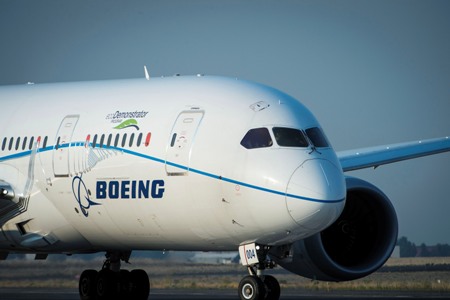
787 ecoDemonstratorBoeing was named “Eco-Company of the Year”  at the trade publication’s 41st Annual Industry Achievement Awards.by Air Transport World (ATW)

ATW editors credited Boeing for “ever-more fuel and emissions-efficient aircraft” such as the 787 Dreamliner, 737 MAX and 777X, the company’s global effort to develop sustainable aviation biofuels and the Boeing ecoDemonstrator Program, which tests new technologies to improve fuel efficiency and reduce emissions and noise.

“For continued success, air transportation must also be sustainable,” said ATW Editor-in-Chief Karen Walker. “Boeing Commercial Airplanes understands this and has developed a multifaceted eco-aviation strategy that is collaborative, creative and innovative.”

“Boeing is honored to receive Air Transport World’s award as Eco-Company of the Year for our leadership, in close collaboration with customers, governments, research institutions and many others, to improve aviation’s environmental performance,” said Boeing Commercial Airplanes President and CEO Ray Conner. “This award is a recognition of our company’s and our employees’ dedication toward a better and cleaner future for commercial aviation?.”

Boeing customers Southwest Airlines, Lufthansa Group, Air Astana and Ethiopian Airlines were also honored by ATW for their leadership in aviation.

For more information, see www.boeing.com/environment and www.newairplane.com

WASHINGTON, D.C., Feb. 26, 2015

Lufthansa Group receives Eco-Airline of the Year award

0

US journal Air Transport World recognizes the Group’s ground-breaking role in the area of climate and environmental awareness for the second time

Conducting its business in a sustainable and responsible manner is firmly embedded in the Lufthansa Group’s strategic principles. And its efforts have been recognized: US journal Air Transport World (ATW) has once again awarded the Lufthansa Group the title of Eco-Airline of the Year. In 2013, the magazine also recognized the Group’s diverse range of initiatives and innovations in the area of eco-conservation. This means that the renowned award has gone to the Lufthansa Group for the second time in three years. The award was presented to Lufthansa on 25 February at the 41st Annual Airline Industry Achievement Awards in Washington, D.C.

“Lufthansa has been an outstanding contributor to eco-aviation awareness and progress since long before it became compulsory or ‘trendy’”, said Karen Walker, ATW editor-in-chief. “Not only does Lufthansa Group adhere to some of the world’s strongest eco-aviation practices, but this is a company that truly invests in and devotes time and effort to efficiency programs and developments that benefit the planet and the entire aviation industry”, continued Walker.

In its application for the award, Lufthansa impressed the magazine with the Group’s strategic environmental program. It aims to make mobility sustainable for the environment and the climate and is therefore a key element of Group-wide efforts in this area. Important priorities for the Group here include continuous investment in an efficient, low-noise fleet of aircraft and a diverse range of programs for greater fuel efficiency and fewer CO2 emissions. The Lufthansa Group will take delivery of 263 new, state-of-the-art aircraft at a list price of EUR 37bn by 2025. The Company actively supports the use of alternative fuels and research into them. In 2011, Lufthansa conducted ground-breaking work with its long-term testing of biofuel and demonstrated that it can be used without any problems. From spring 2015, the Lufthansa Group will be filling its aircraft at Oslo airport with a biokerosene blend.

Deutsche Lufthansa AG, Media Relations Lufthansa Group, 26.02.15

New First Class experience on all long-haul flights from Munich

0

Award-winning travel class offers outstanding quality and impeccable service

Lufthansa passengers can now experience the airline’s new First Class service on all long-haul flights from Munich. At the end of last week, the final Airbus A340-600 in the airline’s Munich-based long-haul fleet was retrofitted with the new First Class cabin. This winter, a total of 24 A340-600 and A330-300 aircraft will serve 22 intercontinental destinations from Munich. “Lufthansa has thus taken another major step towards its goal of becoming the first 5-star airline in the western hemisphere,” says Thomas Klühr, member of the Lufthansa German Airlines Board, Finances & Hub Munich.

Lufthansa’s new First Class and the corresponding range of services provided have received the highest recognition worldwide and been honoured with several international awards. In the Skytrax Star Ranking, the new travel class was awarded five stars – a synonym for outstanding quality, first-rate comfort and individual service. This summer, the retrofit of the new First and Business Class cabins on the remainder of the long-haul fleet will be completed. By the end of 2015, all Lufthansa long-range aircraft will feature the new Premium Economy cabin. Altogether 11,000 seats are being installed on 105 aircraft.

In the award-winning First Class cabin, passengers can look forward to individual service and a wide selection of top-quality food and drinks. Each of the eight First Class seats can be extended to create a lie-flat bed measuring 2.07 metres in length and 80 cm in width, enabling passengers to enjoy a deep, relaxing sleep. The new Business Class seat offers exceptional comfort, whether in an upright or a reclining position. At the press of a button, the seat converts into a comfortable bed with a horizontal sleeping surface measuring 1.98 metres in length. In Business Class, passengers can select what they want to watch from the expanded inflight entertainment programme and view it on their personal 15-inch monitor. The new Premium Economy Class offers 50 per cent more space plus an enhanced service, and passengers can also check in two items of baggage. In the course of this year, Lufthansa will offer its Business Class passengers a new, more personalized, restaurant-style service.

Deutsche Lufthansa AG, Media Relations Southern Germany, 27.02.15

Airbus Group achieves record revenues, EBIT* and order backlog in 2014

0

• Revenues increase five percent to € 60.7 billion

• Reported EBIT* up 54 percent to € 4.0 billion with a 6.7% return on sales

• Earnings per share up 61 percent to € 2.99, despite A400M charge

• Free cash flow positive at € 2.0 billion, including € 0.9 billion proceeds from divestments

• Proposed 2014 dividend € 1.20 per share, up 60% from € 0.75 in 2013

• Airbus Group targets slight increase in EBIT* before one-off in 2015

• Production rate adjustments: A320 family production up to 50 aircraft a month from Q1 2017; A330 production down to six aircraft per month from Q1 2016

• Airbus order backlog 6,386 aircraft, providing solid platform for growth

Airbus Group (stock exchange symbol: AIR) reported strong 2014 results, reflecting an improved operational performance with record commercial aircraft deliveries, revenues and order backlog.

“We achieved a significant improvement in profitability and cash generation in 2014 thanks to a record order book and strong operational performance in most areas,” said Tom Enders, Airbus Group Chief Executive Officer. “We delivered more commercial aircraft than ever before, including the first A350, and our net orders were, once again, more than twice the number of deliveries. Due to strong demand for single aisle aircraft we have decided to increase production of our A320 family to 50 aircraft per month from 2017 onwards. At the same time, we have decided to temporarily reduce A330 production to six aircraft per month in 2016. Most importantly, we confirm the A380 break-even for 2015. We are focused on tackling our various operational challenges, including the A350 and A400M ramp-up and costs, first A320neo deliveries, boosting helicopter sales, and continuing the reshaping of our defence and space portfolio.”

Group order intake(2) in 2014 was € 166.4 billion (FY 2013: € 216.4 billion(1)), with the order book(2) worth a record € 857.5 billion at year-end (year-end 2013: € 680.6 billion(1)). Airbus received 1,456 net commercial aircraft orders (FY 2013: 1,503 net orders), with a net book-to-bill ratio above 2 and a backlog of 6,386 aircraft at year-end.

Net order intake at Airbus Helicopters was 369 units (FY 2013: 422 units), including a backlog adjustment of 33 NH90s.

Airbus Defence and Space’s 2 order intake by value rose four percent, driven by continuing strong momentum in space systems and good order flow in light and medium (L&M) military aircraft.

Group revenues increased five percent to a record € 60.7 billion (FY 2013: € 57.6 billion(1)). Commercial Aircraft revenues rose seven percent, driven by the overall increase in deliveries to a record 629 aircraft (FY 2013: 626 deliveries) and a more favourable delivery mix including 30 A380s compared to 25 in 2013.

In the fourth quarter, the first A350 XWB was delivered to Qatar Airways as planned and IAS 11 accounting standards were implemented for limited launch customer contracts. Revenues at

Helicopters rose four percent, mainly driven by government programmes including the ramp-up in NH90 activity. Helicopter deliveries totalled 471 units (FY 2013: 497 units), including the successful entry-into-service (EIS) of the EC175 in the fourth quarter following the EIS of the EC145 T2 and EC135 T3 earlier in the year.

Defence and Space’s revenues were broadly stable, with eight A400M deliveries in total to four nations and six Ariane 5 launches during the year. Group EBIT* before one-off(4) – an indicator capturing the underlying business margin by excluding material non-recurring charges or profits caused by movements in provisions related to programmes and restructurings or foreign exchange impacts – improved to € 4,066 million (FY 2013: € 3,537 million(1)).

Commercial Aircraft EBIT* before one-off increased to € 2,529 million (FY 2013: € 2,214 million(1)), reflecting a solid underlying performance. Helicopters’ EBIT* before one-off rose slightly to € 413 million (FY 2013: € 397 million), despite higher research and development (R&D) expenses and a less favourable revenue mix. Defence and Space’s EBIT* before one-off was stable at € 920 million (FY 2013: € 911 million(1)). Group self-financed R&D expenses totalled € 3,391 million (FY 2013: € 3,118 million(1)).

Group EBIT* before one-off return on sales improved to 6.7 percent (FY 2013: 6.1 percent(1)). Reported EBIT*(4) increased 54 percent to € 4,040 million (FY 2013: € 2,624 million(1)) with a low level of net one-offs amounting to € -26 million in total, composed of:

• A fourth quarter net charge of € 551 million due to delays on the A400M programme as outlined in the nine month 2014 results. The sequence of progressive military enhancements and associated deliveries are under negotiation with customers to reflect the revised programme baseline and delivery schedule. In the last quarter of 2014, management reviewed the programme evolution mostly driven by military functionality challenges and industrial ramp-up together with associated mitigation actions. Significant 3 management actions have been launched to secure future deliveries and the programme continues to be closely monitored;

• A positive € 142 million contribution from the dollar pre-delivery payment mismatch and balance sheet revaluation;

• A total of € 383 million in capital gains linked to the divestment of eight percent of the company’s Dassault Aviation participation and the sale of the stake in Patria.

In January 2015, Airbus Group and Safran completed the initial phase of the integration of their respective space launcher businesses. The Airbus Safran Launchers Joint Venture has now entered its operational phase and will focus primarily on the development of the new Ariane 6 launcher and the continuation of production of Ariane 5 launchers. In the second phase, all remaining activities and industrial assets of Airbus Group and Safran dealing with civil space launchers and military launchers will be integrated into the Joint Venture. Given the relative size of the businesses to be contributed by Airbus Group and Safran respectively, an economic compensation of € 800 million will be made by Safran to Airbus Group in order to attain the 50/50 shareholding in the Joint Venture in the second phase. Key terms and conditions of the implementation of the second phase, including usual adjustments notably regarding working capital positions and the nature and timing of the compensation, are still to be finalized between the parties. The implied multiple for the activities contributed to the JV by Airbus Defence and Space is 12x 2014 EBITA(7) .

Net income(5) rose to € 2,343 million (FY 2013: € 1,473 million(1)), while earnings per share (EPS) increased to € 2.99 (FY 2013: € 1.86(1)). Net income and EPS increased strongly despite the finance result of € -778 million (FY 2013: € -610 million(1)), which included a negative foreign exchange valuation of € 341 million linked to the weakening of the euro in the fourth quarter. Free cash flow before mergers and acquisitions improved significantly to € 1,109 million (FY 2013: € -811 million(1)), reflecting a strong fourth quarter performance and efforts to improve cash flow across the Group during the year and proceeds from divestments further boosted free cash flow to € 2,002 million (FY 2013: € -827 million). The net cash position at the end of 2014 was € 9.1 billion (year-end 2013: € 8.5 billion(1)) after the 2013 dividend payment of € 587 million and € 462 million pension plan contribution. The gross cash position on December 31, 2014 was € 16.4 billion.

Based on EPS of € 2.99, Airbus Group’s Board of Directors will propose to the Annual General Meeting the payment of a 2014 dividend of € 1.20 per share on 3 June 2015 (FY 2013: 4 € 0.75 per share). The record date shall be 2 June 2015. “To reflect the good financial progress we made last year and the outlook for 2015, we are proposing a payment in line with the top end of our stated dividend policy. At € 1.20 per share, it implies growth of 60 percent compared to 2013 and a payout ratio of 40 percent,” said Harald Wilhelm, Airbus Group Chief Financial Officer.

Outlook

As the basis for its 2015 guidance, Airbus Group expects the world economy and air traffic to grow in line with prevailing independent forecasts and assumes no major disruptions.

Airbus deliveries should be slightly higher than in 2014, and the commercial aircraft order book is again expected to grow.

In 2015, before mergers & acquisitions (M&A), Airbus Group expects an increase in revenues and targets a slight increase in EBIT* before one-off.

Based on its current view of the industrial ramp-up, Airbus Group targets breakeven free cash flow in 2015 before M&A.

Airbus Group targets its EPS and dividend per share to increase further in 2015.

______________________________

* Airbus Group uses EBIT pre-goodwill impairment and exceptionals as a key indicator of its economic performance.

The term “exceptionals” refers to such items as depreciation expenses of fair value adjustments relating to the former EADS merger, the Airbus Combination and the formation of MBDA, as well as impairment charges thereon.

Airbus Group

Airbus Group is a global leader in aeronautics, space and related services. In 2014, the Group – comprising Airbus, Airbus Defence and Space and Airbus Helicopters – generated revenues of € 60.7 billion and employed a workforce of around 138,600.

Footnotes:

1) The 2013 figures have been restated to reflect the application of IFRS 10 and 11. Wherever necessary, Divisional figures are also restated to reflect the new Group structure as of 1 January 2014.

2) Contributions from commercial aircraft activities to Order Intake and Order Book based on list prices.

3) Earnings before interest, taxes, depreciation, amortisation and exceptionals.

4) Earnings before interest and taxes, pre goodwill impairment and exceptionals.

5) Airbus Group continues to use the term Net Income. It is identical with Profit for the period attributable to equity owners of the parent as defined by IFRS Rules.

6) To be proposed to the Annual General Meeting 2015.

7) Earnings before interest, taxes and amortisation of intangibles.

Safe Harbour Statement: Certain statements contained in this press release are not historical facts but rather are statements of future expectations and other forward-looking statements that are based on management’s beliefs. These statements reflect Airbus Group’s views and assumptions as of the date of the statements and involve known and unknown risk and uncertainties that could cause actual results, performance or events to differ materially from those expressed or implied in such statements.

When used in this press release, words such as “anticipate”, “believe”, “estimate”, “expect”, “may”, “intend”, “plan to” and “project” are intended to identify forward-looking statements.

This forward looking information is based upon a number of assumptions including without limitation: assumption regarding demand, current and future markets for Airbus Group’s products and services, internal performance, customer financing, customer, supplier and subcontractor performance or contracts negotiations, favourable outcomes of certain pending sales campaigns.

Forward looking statements are subject to uncertainty and actual future results and trends may differ materially depending on variety of factors including without limitation: general economic and labour conditions, including in particular economic conditions in Europe, North America and Asia, legal, financial and governmental risk related to international transactions, the cyclical nature of some of Airbus Group’s businesses, volatility of the market for certain products and services, product performance risks, collective bargaining labour disputes, factors that result in significant and prolonged disruption to air travel worldwide, the outcome of political and legal processes, including uncertainty regarding government funding of certain programs, consolidation among competitors in the aerospace industry, the cost of developing, and the commercial success of new products, exchange rate and interest rate spread fluctuations between the euro and the U.S. dollar and other currencies, legal proceeding and other economic, political and technological risk and uncertainties. Additional information regarding these factors is contained in the Company’s “registration document” dated 4 April 2014. For more information, please refer to www.airbusgroup.com.


Amsterdam, 27 February 2015

Aviation24.be latest

Aviation24.be trending