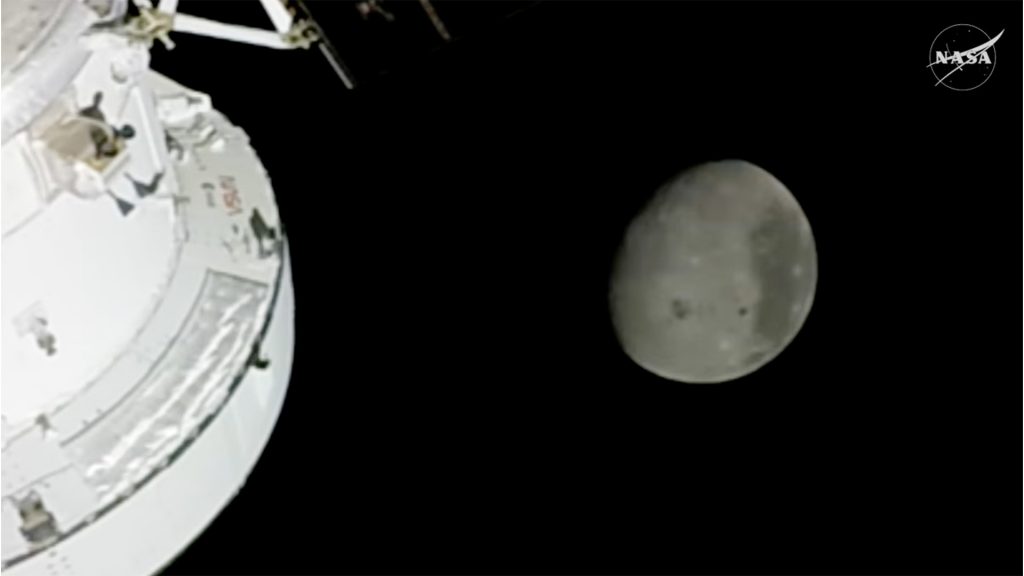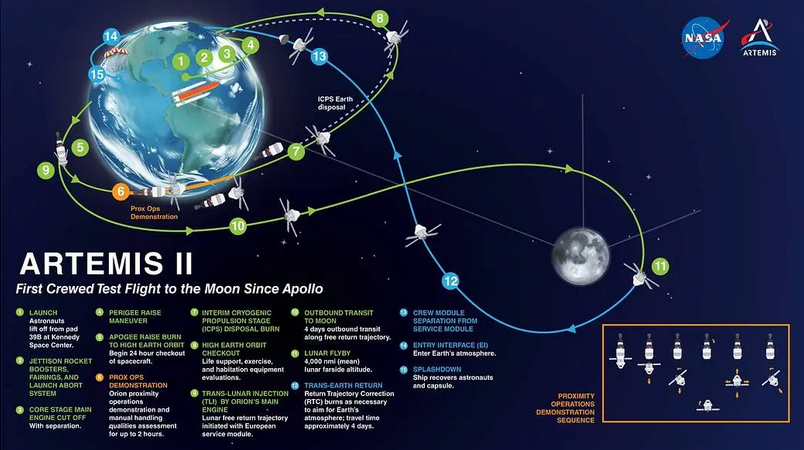
Artemis II mission marked a major milestone in human spaceflight, as its four astronauts became the farthest humans have ever travelled from Earth, surpassing 400,171 km during their Moon flyby on April 6, 2026.
The crew—Christina Koch, Victor Glover, Reid Wiseman, and Jeremy Hansen—broke the previous record set by Apollo 13. Their journey marks the first human lunar flyby since the Apollo era and the first to include a woman, a Black astronaut, and a non-American crew member.
Although Artemis II did not land on the Moon, the astronauts conducted detailed observations of the lunar surface, including the far side—never visible from Earth. Their training enabled them to document geological features through verbal descriptions, notes, and photography, contributing valuable scientific data.
The mission also included an emotional moment when the crew named a lunar crater “Carroll” in honour of the late wife of commander Reid Wiseman, and another feature “Integrity,” the name of their spacecraft.
Artemis II is a key step in NASA’s broader plan to return humans to the Moon, with a crewed landing targeted for 2028 if upcoming missions proceed successfully.