

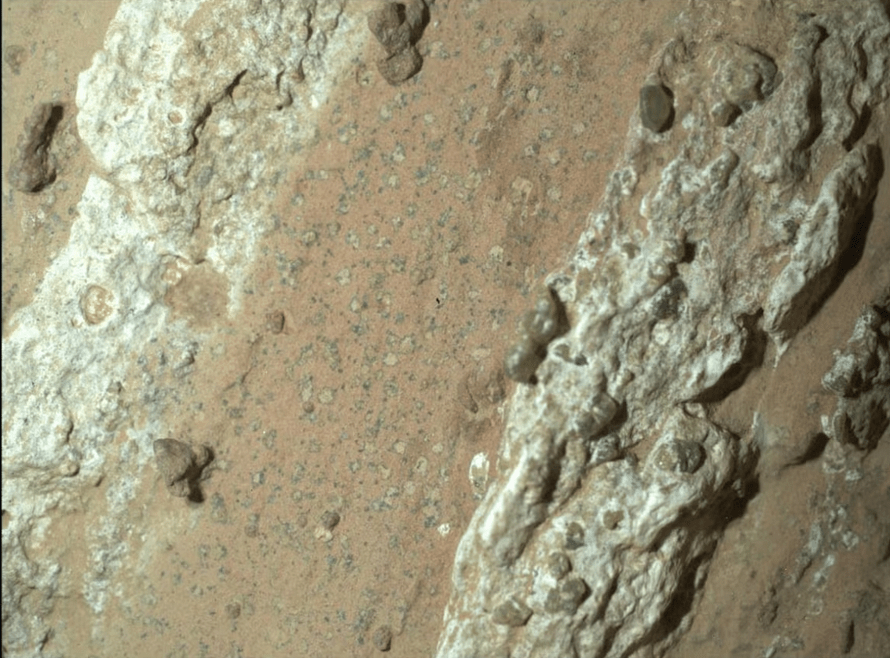
NASA’s Perseverance rover has detected minerals in a Martian rock sample that may signal past microbial life, though scientists caution the evidence is not conclusive.
The rover drilled the Sapphire Canyon sample from the Bright Angel formation in Jezero Crater, a site believed to have hosted a lake more than 3.5 billion years ago. The sample contained vivianite (iron phosphate) and greigite (iron sulfide), minerals that on Earth often form through microbial activity when organic matter reacts with mud.
Lead researcher Joel Hurowitz stressed that while these features are a potential biosignature, they could also result from non-biological chemical processes. The findings, published in Nature, represent some of the strongest evidence yet that Mars may once have supported life.
Scientists say that future research – and possibly returning the sample to Earth – will be needed to confirm whether these mineral traces are truly of biological origin.