

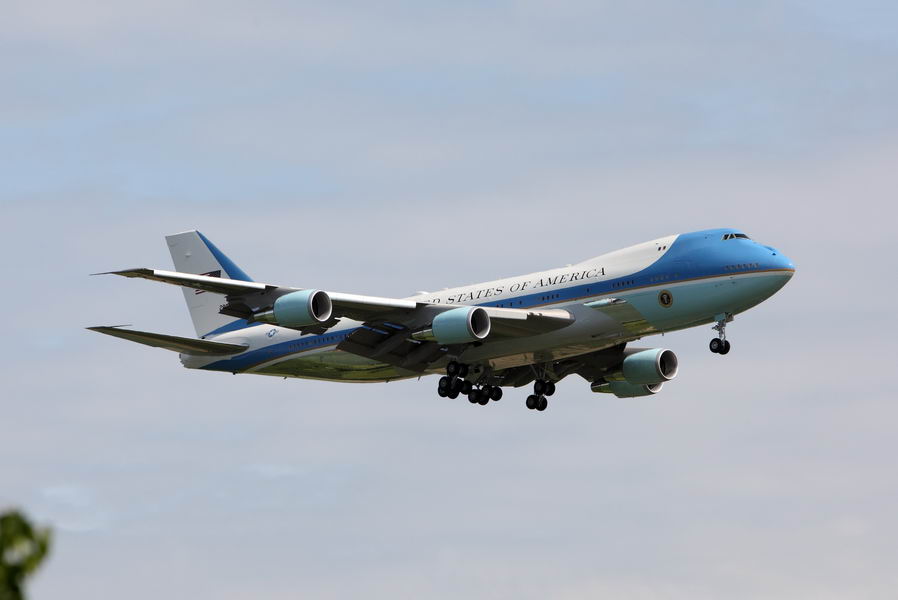
President Donald Trump departed Turkey aboard the ageing Air Force One rather than the recently acquired Boeing 747 donated by Qatar, a decision that sources familiar with the travel arrangements say was driven by heightened security concerns following the renewed outbreak of hostilities with Iran.
According to people briefed on the presidential travel plans, U.S. security officials recommended using the long-serving presidential aircraft as a precaution after intelligence assessments pointed to an elevated threat environment across the Middle East. While the White House has not publicly commented on the decision, the move underscores the degree to which the deteriorating regional security situation is influencing even the logistics of presidential travel.
The Qatari-donated Boeing 747, which has attracted considerable political attention since its transfer to the United States, has been undergoing modifications to meet the extensive communications, defensive, and security requirements expected of an aircraft transporting the U.S. president. Although the aircraft has reportedly begun limited official use, aviation and security experts have questioned whether it yet possesses the full suite of classified defensive countermeasures carried aboard the existing Air Force One fleet.
The older Air Force One aircraft—based on the Boeing 747-200B platform and operated by the U.S. Air Force’s 89th Airlift Wing—remains equipped with sophisticated electronic warfare systems, encrypted global communications, missile warning sensors, and aerial refuelling capability. Those features make it one of the most secure aircraft ever built and continue to provide confidence during periods of heightened geopolitical instability.
The decision to rely on the legacy aircraft came as tensions between the United States and Iran escalated sharply. The resumption of hostilities has prompted the Pentagon to reinforce force protection measures across the region, while U.S. intelligence agencies continue to monitor potential threats against American personnel and assets.
Presidential aircraft movements are routinely adjusted in response to changing security assessments. Flight routes, departure times, aircraft selection, and escort arrangements are frequently modified when intelligence indicates an increased risk, particularly during overseas visits in volatile regions.
The Qatari aircraft has remained controversial since its donation was announced. Supporters argue that it provides an interim solution while the long-delayed next-generation Air Force One programme continues to face production setbacks. Critics, however, have raised concerns over the optics of accepting a foreign-donated aircraft and the substantial time and cost required to retrofit it to presidential security standards.
Neither the White House nor the U.S. Air Force has officially confirmed the reason for Trump’s choice of aircraft. However, officials familiar with the planning indicated that, in the context of renewed conflict with Iran, the proven capabilities of the existing Air Force One were considered the lower-risk option for the president’s return flight.
The episode illustrates how rapidly changing geopolitical developments can influence even the most carefully planned aspects of presidential travel, with security considerations continuing to outweigh operational convenience whenever threat levels rise.
After departing Turkey aboard the older Air Force One, President Trump is understood to have switched to the Qatari-donated Boeing 747 during a stopover in England before continuing his journey to the United States. Officials have not publicly explained the change of aircraft, but people familiar with the planning said the decision reflected a revised security assessment once the presidential party had left the immediate Middle East. By transferring to the newer aircraft after reaching British territory, U.S. officials were able to minimise the time the less extensively modified jet spent operating in what was considered a higher-threat environment while still allowing the president to complete the transatlantic leg aboard the new aircraft.
