

“Our mission is safe, everyday flight for everyone.” — Wisk Aero
When Wisk Aero announced on May 7, 2025, that Sébastien Vigneron would take over as CEO—succeeding Brian Yutko, who has transitioned to a senior role within Boeing Commercial Airplanes—it signalled more than just a change of leadership. It marked the entry of Wisk into a critical phase of certification, commercialisation, and delivering on the promise of autonomous, electric air taxis.
Below is what shaping this next chapter looks like—based on Wisk’s public plans and technology roadmap, Vigneron’s decade-plus experience in aerospace, and his exclusive interview by Aviation24.be.
A Vision for Autonomous Urban Flight
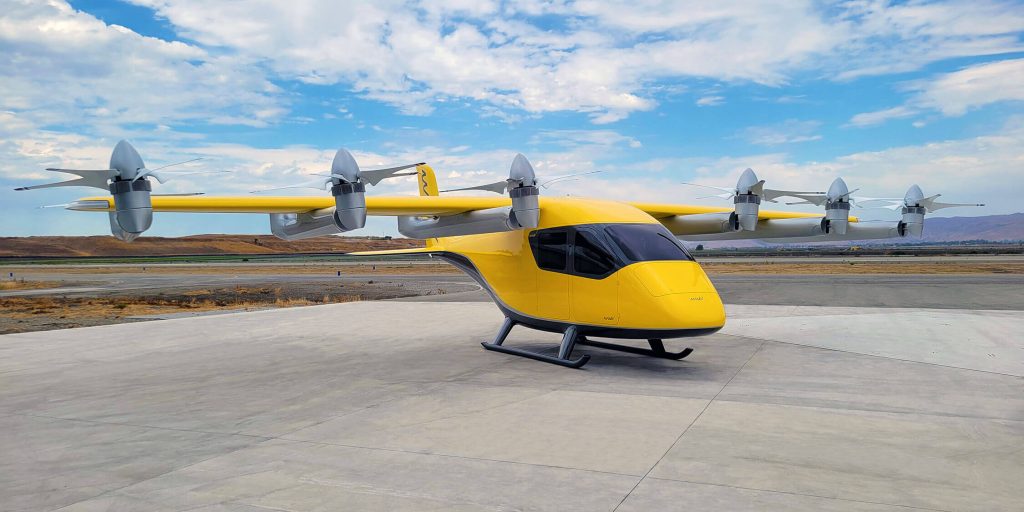
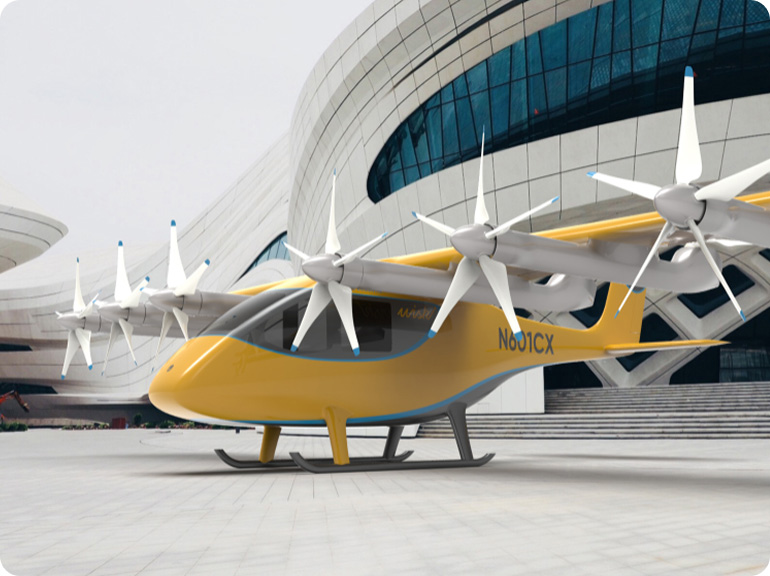
Wisk is building toward a future where people can avoid traffic congestion by flying over it—not with a pilot on board, but via a fully autonomous, all-electric vertical take-off and landing (eVTOL) aircraft. The company’s 6th Generation, or Gen 6, eVTOL is designed to be the first candidate for FAA type certification of a passenger-carrying, autonomous eVTOL air taxi in the U.S.
Key performance targets include:
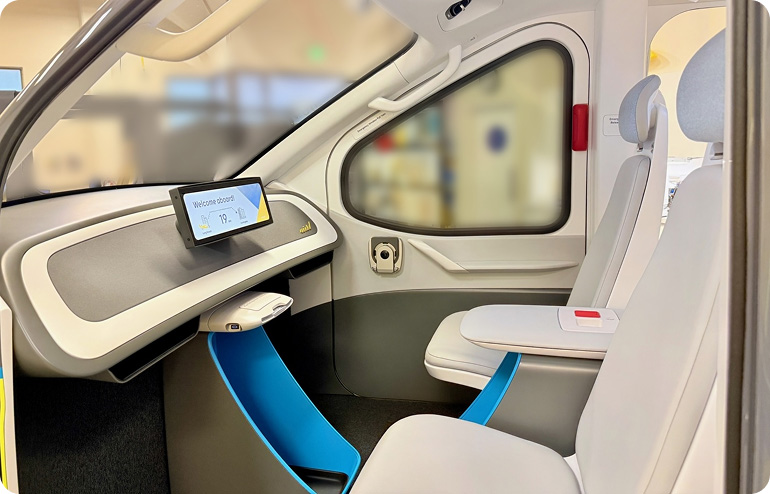
- A four-seat cabin with baggage capacity, thanks to the absence of a pilot
- A range of approximately 90 miles (with reserves), or about 144 km,
- Cruise speed in the order of 120 knots, ? 200-220 km/h,
- Approximate recharging time of 15 minutes between flights, rather than battery swaps.
Safety is central: Gen 6 combines redundancies, simplified design with fewer moving parts, continuous autonomous monitoring from the ground, and human oversight. Wisk emphasises that there is no single point of failure and that the aircraft must meet or exceed the safety expectations already imposed in commercial aviation. For example, Wisk utilises the TCAS collision avoidance system, which is standard in commercial aviation. All safety functions are computer-controlled, but there is still a human being on the ground to intervene when necessary.
Wisk’s aircraft are all-electric eVTOLs; the company positions electric propulsion as a path to lower lifecycle emissions compared with fossil-fuel ground transport for equivalent trips. Wisk also highlights quieter operations and efficiency advantages as part of its sustainability case, while acknowledging broader ecosystem issues (grid emissions, infrastructure) that affect net environmental impact.
The Roadmap: Certification, Partnerships, and Entry into Service
Wisk is undertaking a multi-stage strategy toward making a fully autonomous flight routine:
- Certifying Gen 6: The company is progressing through FAA type certification.
- System testing & prototyping: Wisk has developed flight test programmes, simulation and hardware/software integration tools (e.g. “Iron Bird” test rigs), and is preparing for its first flights of the Gen 6 prototype.
- Airspace integration and autonomy infrastructure: Wisk acquired SkyGrid to deepen its capabilities in navigation (flying gondolas between vertiports), autonomy, and digital airspace services.
- Global and regulatory collaboration: The company is working with different cities/regions (e.g., South East Queensland in Australia via Skyports, Miami and Fullerton in the U.S.) on establishing networks of vertiports and service entry points.
Wisk is aiming for certification and limited commercial operation “before the end of the decade,” i.e. by 2030, though precise service launch timelines will depend on regulatory approvals and infrastructure readiness.
What Sets Wisk Apart
Several factors are often cited as Wisk’s competitive advantages:
- Autonomy first: Wisk is committed from the ground up to fully autonomous flight (no pilot onboard), which they believe allows better scalability and lower operating costs.
- Experience and safety track record: Wisk has flown many test flights under previous generations (Gen 4, 5) and leveraged those to refine hardware, software, sensors, autonomy architecture, and airspace integration.
- Strong backing and technical partnerships: As a wholly owned subsidiary of Boeing, Wisk draws on Boeing’s aerospace engineering, certification knowledge, and manufacturing experience. Conversely, all the technologies developed by Wisk can later be used on Boeing aeroplanes. Wisk has also formed technical partnerships (for example, with Safran for inertial navigation) to strengthen critical avionics.
Challenges Ahead
While the vision is compelling, Wisk’s path is not without obstacles:
- Regulatory approval: FAA certification for a craft of its kind (fully autonomous, passenger-carrying) is unprecedented. Wisk will have to navigate nontrivial regulatory and safety proof demands.
- Public trust & safety perception: Convincing communities, cities, passengers, and regulators that a pilotless aircraft is safe, reliable, and acceptable will require not just technical demonstration but transparency, reliability, and repeated success. The company argues that demonstrating robust systems, transparent safety processes, and working closely with regulators and communities are essential to building public trust.
- Infrastructure & scale: Vertiports, charging infrastructure, airspace corridors, maintenance, ground operations—all must be designed, built, and permitted. These depend on partnerships and supportive local regulation.
If We Meet Again in 2030: What Wisk Aims to Have Achieved
Based on its roadmap and public statements, by 2030 Wisk aims to have:
- Earned type certification from the FAA (or equivalent in other jurisdictions) for the Gen 6 aircraft.
- Completed initial deployment of autonomous passenger flights in selected early markets.
- Established key infrastructure (vertiports/charging stations/airspace integration) in partner cities or regions.
- Demonstrated consistent, safe, routine operation under autonomous flight with oversight, building acceptance among users and regulators.
About Sébastien Vigneron — A Technical Leader at the Helm
 Sébastien Vigneron is no newcomer to the challenges Wisk faces. Here’s a snapshot of his career leading into the CEO role:
- Education: Degrees in Mechanical Engineering from École Polytechnique (France) and a Master’s in Aeronautics & Astronautics from Stanford University.
- Early career: Worked at Dassault Aviation, where he contributed to major business and commercial aircraft programmes (including the Falcon 5X/6X/7X) and dealt with aerodynamic design, flight testing, and certification.
- Later, he moved to Bombardier, where he worked on the Global business jets (including the Global 7500) and on what would become the Airbus A220, and gained hands-on experience from early design through to flight testing and certification.
- Before Wisk, he was Vice-President of Product Development Engineering & Chief Engineer at Virgin Hyperloop, leading hyperloop system development from concept and requirements through prototype test and validation.
- Joined Wisk in 2021 as Senior Vice President of Engineering & Programs. In that role, he drove development of the Gen 6 aircraft, managed hardware and software engineering, simulation, system and flight testing, airspace integration, and programme management.
Conclusion
Under Sébastien Vigneron’s leadership, Wisk now stands at a pivotal moment. The technical foundations—autonomy, safety systems, Gen 6 design—are largely in place; the critical next steps are certification, proving routine autonomous flight, building infrastructure, earning public trust, and scaling. If these pieces come together as planned, Wisk could be among the first companies to make airborne, pilotless commuting a normal part of urban life.
Aviation24.be wishes to thank Sébastien Vigneron for his availability and time for this interview, and Boyan Novakov of Boeing Brussels for organising this meeting.