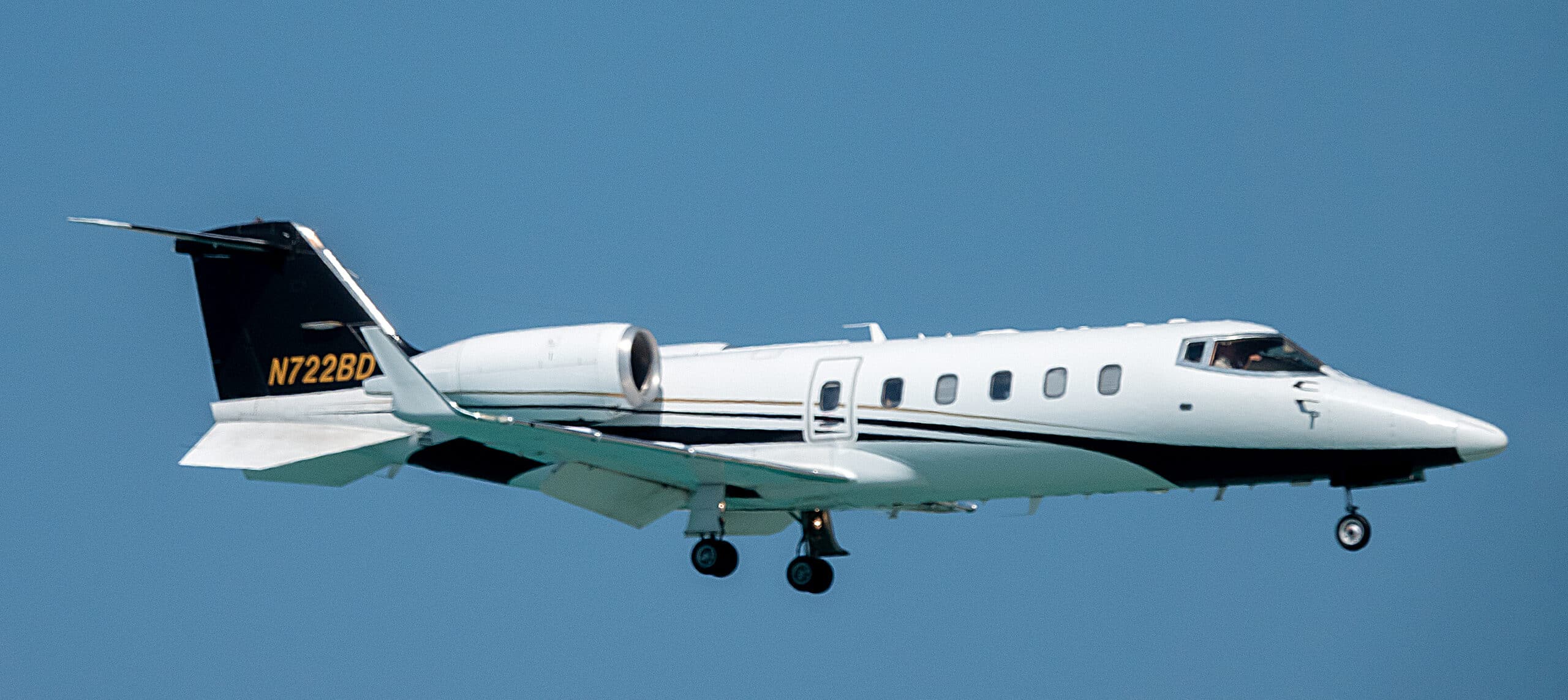
Credit: Mike Illien / Wikimedia Commons / CC BY-SA 4.0.
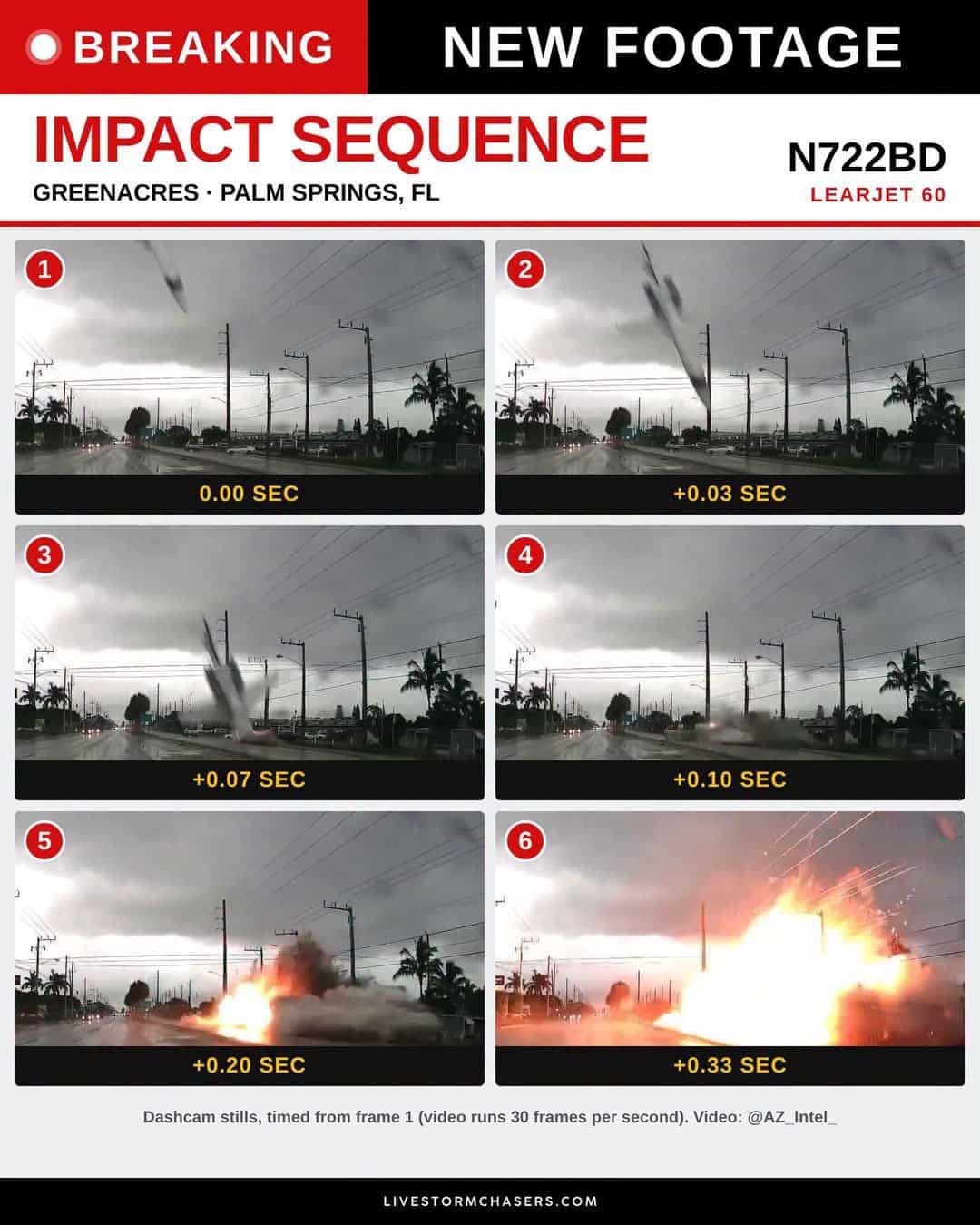
Investigators have confirmed that part of Learjet 60 N722BD’s tail separated before it struck the ground near West Palm Beach on 1 November, killing all nine people aboard. However, whether that separation caused the loss of control or resulted from the aircraft’s rapid descent remains unresolved.
The aircraft was flying from Austin-Bergstrom, Texas, to North Eleuthera in the Bahamas. The NTSB identifies its operator as Aurora Aviation, trading as Upper Jet. Its latest published update, dated 5 November, confirms that wreckage recovery remains under way; no probable cause has been established.
From a requested climb to a rapid descent
Flightradar24’s tracking shows that the 2004-built business jet departed Austin at approximately 15:37 UTC. After cruising at higher altitude, it descended towards 35,000 feet over southern Florida, before briefly climbing and entering a steep right-hand descent at around 17:48 UTC.
The crew’s radio calls provide important context. According to NTSB briefing details reported by Aviation Week, the pilots described light clear icing, considered manageable, and moderate turbulence causing altitude deviations of approximately 700 feet. They subsequently reported precipitation and requested a climb to 37,000 feet. Shortly after receiving clearance, they declared an emergency, reporting a rapid descent and an overspeed condition. These are observations made by the crew, not findings that icing caused the accident.
The downloadable Flightradar24 data illustrates the descent’s severity: recorded altitude falls from 31,350 feet at 17:48:39 UTC to 8,750 feet at 17:49:23 — approximately 22,600 feet in 44 seconds. That represents an average recorded descent rate of about 30,800 feet per minute over that interval.
Crucially, these are tracking measurements, not a complete flight-recorder reconstruction. The final entries repeat 8,750 feet while position continues changing: they do not demonstrate that the aircraft levelled off. Nor should the reported groundspeed be confused with airspeed or used alone to establish an overspeed. The latter was reported separately by the crew. Source: Flightradar24’s published data.
The elevator discovery — evidence, but not yet an explanation
At the 3 November briefing, NTSB member Thomas Chapman said investigators had recovered most of the left elevator in three pieces, between approximately 2.1 and 6.1 kilometres from the impact site. The elevator is a movable tail surface used to control the aircraft’s nose-up and nose-down movement. Its recovery away from the main wreckage establishes separation before impact.
The unresolved question is the sequence. Did a control-surface failure initiate the loss of control, or did aerodynamic loads during the dive tear the elevator away? Investigators have not determined when it detached. Weather is also a key investigative focus, but neither the crew’s icing reports nor the debris distribution establishes the initiating cause.
Recovery continues
On 5 November, the NTSB reported that excavation had begun the previous evening and that part of an engine had been found. Wreckage has also been recovered from nearby roofs and will be transferred to a secure location for examination.
Maintenance records indicated that a cockpit voice recorder had been installed, but investigators initially could not confirm whether it remained aboard. The latest official update does not announce its recovery. For now, the evidence documents an exceptionally rapid descent and an in-flight separation — not why the emergency began.