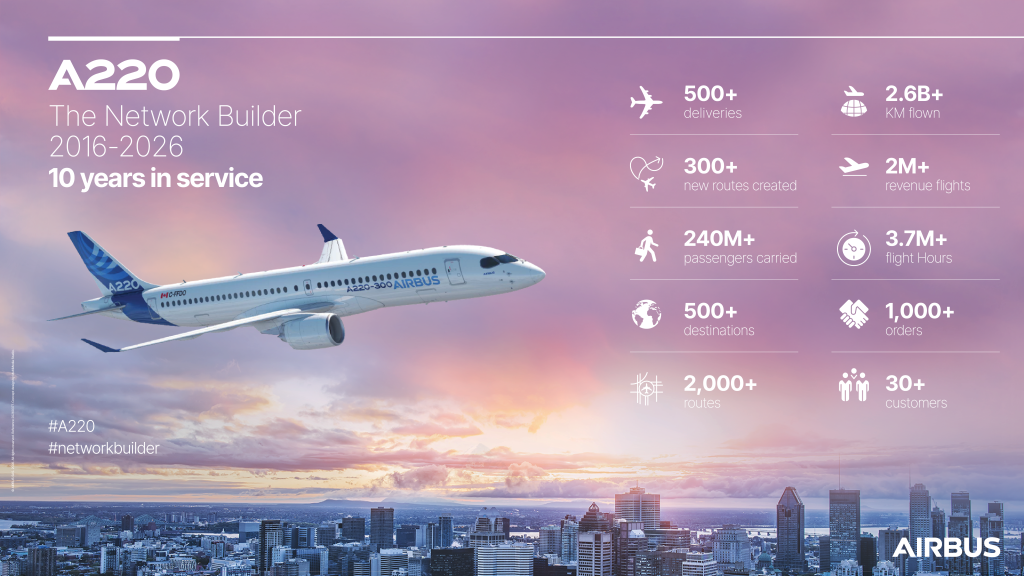

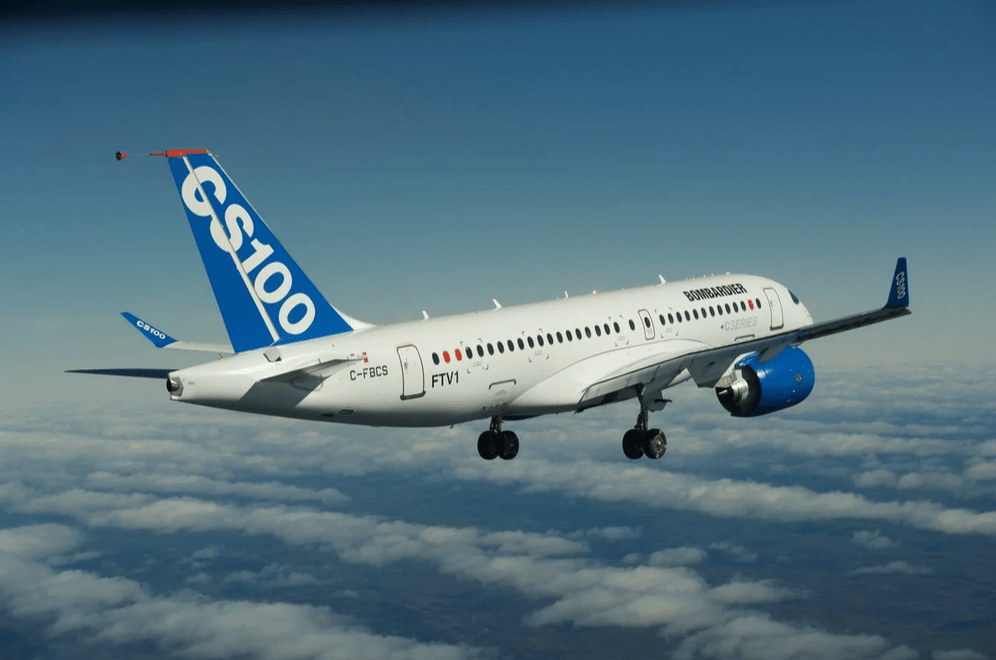
The A220 programme—originally developed as the Bombardier C Series in Mirabel, Canada—marks its 10-year milestone, reflecting a decade-long transformation from a high-risk clean-sheet aircraft project into a widely used single-aisle jet operating across five continents.
The programme began with multiple flight-test prototypes, including “Phoenix,” which symbolised the aircraft’s rebirth from earlier abandoned concepts such as BRJX. Alongside it, test aircraft like “Black Sheep” and “Lucky Sevens” supported an extensive development and certification campaign aimed at creating a new-generation, highly efficient narrowbody.
The aircraft entered commercial service on 15 July 2016 with SWISS, operating the first passenger flight from Zurich to Paris. In 2018, the programme was integrated into Airbus and rebranded as the A220, later expanding production to Mobile, Alabama, alongside the original Mirabel assembly line.
Over the past decade, the A220 has grown into a global programme used by around 25 operators, with more than 1,000 orders and over 240 million passengers carried. It has enabled new long and thin routes across diverse markets—from Europe and Africa to Asia and Australia—earning a reputation for efficiency and cabin comfort, including its “Whisperjet” nickname.
Now fully integrated into the Airbus product family, the A220 continues to evolve with common Airbus systems and cabin standards such as the Airspace interior. Airbus positions the aircraft as a continuously developing platform, designed for incremental upgrades over decades rather than a fixed lifecycle.
Looking ahead, Airbus and programme leaders frame the A220’s first decade as a foundation rather than a conclusion, emphasising ongoing improvements in efficiency, passenger experience and airline economics as the aircraft enters its next phase of development.