Authors Benoit Denet & Martin Gillet.
Paris, France, 18 June 2025 – Australian aerospace start-up Drone Forge and Airbus Helicopters have signed an agreement to purchase six Flexrotor uncrewed aerial systems (UAS) comprising 17 aircraft, making it the single largest order for the Flexrotor to date.
The mission-ready Flexrotor systems will be configured to meet a broad range of operational requirements in the Asia-Pacific region, spanning littoral surveillance and high-altitude inland missions, to infrastructure monitoring and maritime environment assessment.
Each UAS will feature a heavy fuel engine optimised for maritime operations, ensuring greater safety, fuel availability, and interoperability with naval assets. It will also incorporate Starlink connectivity, enabling beyond-line-of-sight operations and real-time situational awareness. Additionally, the Flexrotor will be equipped with PT-6 imaging technology, providing stabilised, high-resolution intelligence, surveillance and reconnaissance capabilities for efficient wide-area maritime monitoring.
“We are fully convinced that the Flexrotor, built on a strong engineering heritage, will allow us to tap into new markets with a proven solution where real-time intelligence, mission flexibility and reliability matter,” said Thomas Symes, Chief Executive Officer of Drone Forge. “We look forward to integrating and commercialising the Flexrotor systems in the region.”
“The landmark order opens a new chapter in our partnership with Drone Forge, reinforcing our shared commitment to delivering cutting-edge crewed-uncrewed teaming capabilities to Asia-Pacific operators,” said Olivier Michalon, Executive Vice President of Global Business at Airbus Helicopters. “With strong confidence in the Flexrotor’s efficiency and reliability, this force multiplier will drive operational excellence in defence and security applications.”
The agreement followed closely from a Letter of Intent (LOI) signed recently between Airbus and Drone Forge, where the two companies collaborate on the deployment and operational integration of the Flexrotor UAS.
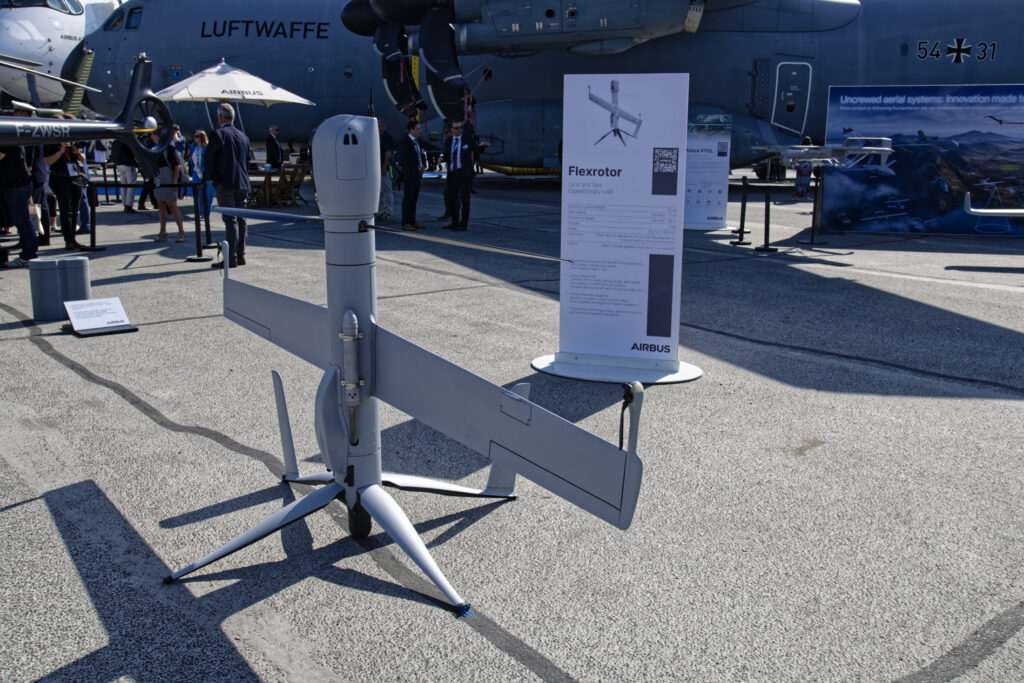
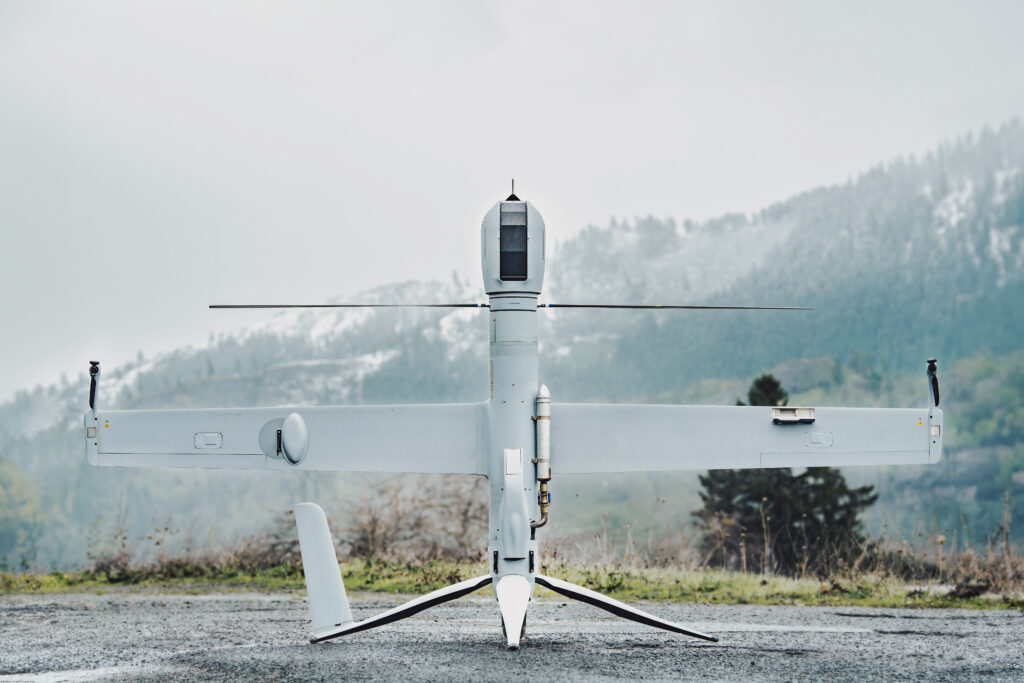
The Flexrotor is Airbus’ newest addition to its UAS portfolio. A modern Vertical Takeoff and Landing (VTOL) uncrewed aircraft with a maximum launch weight of 25 kg (55 lbs), it has been designed for ISTAR missions for more than 12-14 hours in a typical operational configuration. It can integrate different types of payloads, including an electro-optical system and advanced sensors to suit customers’ unique mission needs. With the ability to autonomously launch and recover from either land or sea, requiring only a 3.7 by 3.7 m (12 by 12 ft.) area, the Flexrotor is ideal for expeditionary missions requiring minimal footprint.
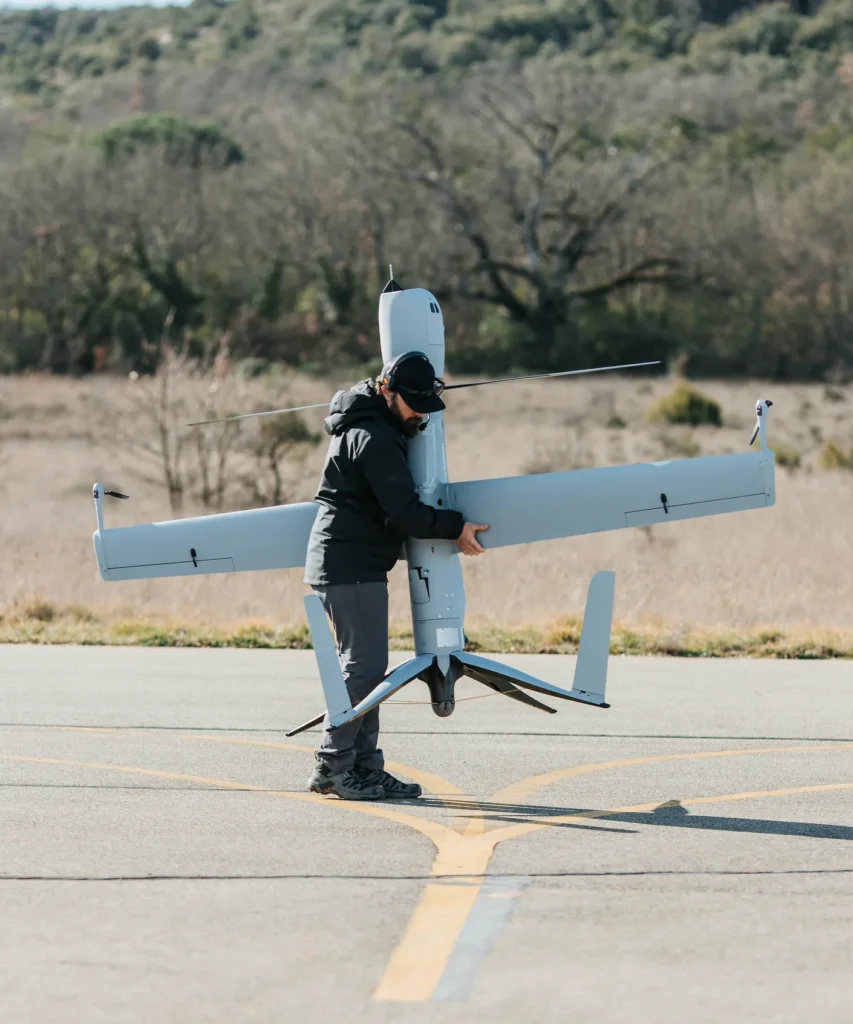
Missions include:
– ISTAR
– Maritime warfare (signal Intelligence, electronic warfare, communications relay)
– Search and rescue
– Parapublic (firefighting, humanitarian missions, border security)
– Civil applications (precision agriculture, geo mapping, wildlife observation & marine science)
Maritime operations
Flexrotor delivers real-time intelligence for naval reconnaissance, maritime surveillance, and coastal monitoring. Its extended endurance ensures continuous coverage and enhances mission effectiveness across large water areas.
Land operations
Flexrotor’s advanced ISTAR capabilities give a tactical edge for military and border operations, providing precise intelligence that enhances decision-making and boosts mission success.
Electronic and signal intelligence
ELINT-SIGINT
Flexrotor excels in electronic and signal intelligence, offering accurate, discreet data collection. It detects and tracks electronic emissions and communications, providing vital insights for intelligence, electronic warfare, and situational awareness.
Firefighting operations
Flexrotor provides firefighters with the most up-to-date information – an invaluable asset during critical operations. Firefighters can view the live footage that’s being streamed and check the progress of their work. This allows them to better identify where the fire is or will be – even showing that a fire previously thought to be extinguished is still active – so they can optimise their movements in the most urgent situations.