

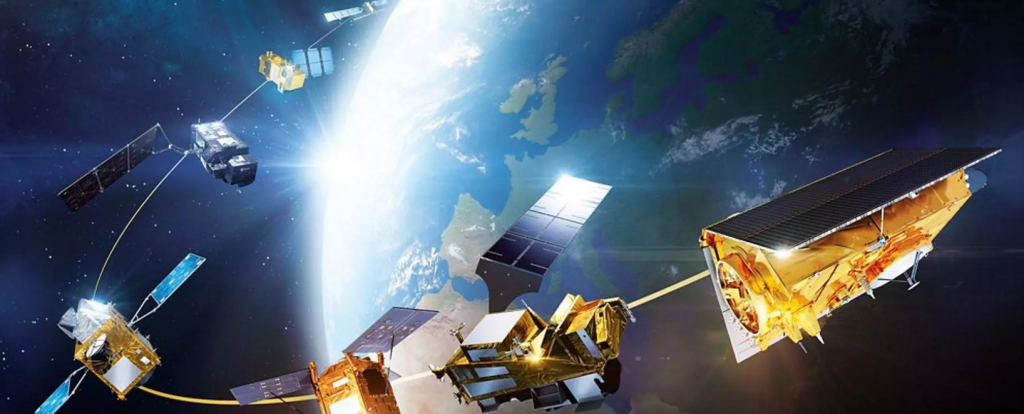
Airbus, Leonardo and Thales have signed a Memorandum of Understanding to merge their space activities into a new joint company that will act as a unified European space leader, reinforcing Europe’s strategic autonomy, innovation capacity and global competitiveness in the fast-growing space sector.
The new entity, expected to become operational in 2027 pending regulatory approval, will combine the companies’ respective satellite, space systems and space services businesses (excluding launchers), bringing together around 25,000 employees across Europe. Its pro forma annual turnover is estimated at €6.5 billion, with an order backlog equivalent to over three years of sales.
Under the agreement:
- Airbus will contribute its Space Systems and Space Digital divisions.
- Leonardo will bring its Space Division and stakes in Telespazio and Thales Alenia Space.
- Thales will contribute its shares in Thales Alenia Space, Telespazio and Thales SESO.
Ownership will be shared among the three partners: Airbus (35%), Leonardo (32.5%), and Thales (32.5%), under joint control with balanced governance.
The alliance aims to create a comprehensive, end-to-end European space player covering infrastructure and services for telecommunications, earth observation, navigation, science, exploration and security. The companies expect mid triple-digit million euro annual synergies within five years, driven by greater operational efficiency, shared R&D and combined investments in future space technologies.
Executives Guillaume Faury (Airbus), Roberto Cingolani (Leonardo) and Patrice Caine (Thales) described the initiative as a “pivotal milestone for Europe’s space industry”, designed to strengthen Europe’s independence, competitiveness and innovation capacity in the global space market.
Following consultations with employee representatives, the transaction is expected to close in time for the new company to begin operations in 2027, marking a major consolidation step in Europe’s space ecosystem.