

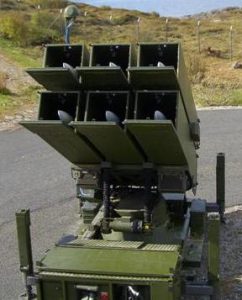
Belgium will deploy a NASAMS short-range air defence battery and a dedicated counter-drone capability at the Port of Antwerp, with initial components arriving in 2027 and full operational capability targeted for 2028.
Prime Minister Bart De Wever confirmed the move on 26 February 2026, citing repeated drone incursions that previously forced the temporary closure of a military airbase and disrupted airport operations. Port CEO Jacques Vandermeiren warned that unidentified drones have overflown sensitive industrial sites, including BASF’s chemical facilities and the Doel nuclear power station, reinforcing concerns about critical infrastructure vulnerability.
Strategic Shield for a Critical Logistics Hub
The NASAMS (Norwegian Advanced Surface-to-Air Missile System), developed by Kongsberg Defence & Aerospace in partnership with Raytheon, is designed to intercept drones, cruise missiles and fixed-wing aircraft at ranges of up to 40 kilometres. Its deployment at a commercial port is unusual and underscores Antwerp’s strategic importance to European automotive, energy and chemical supply chains.
As Europe’s second-largest container hub, Antwerp plays a pivotal role in intra-EU trade flows and transatlantic logistics. The decision to assign a dedicated air-defence battery signals an elevation of port security to national defence priority status.
Operational Implications
While enhanced protection may reduce the risk of drone-related shutdowns, authorities have indicated that installation and testing phases could involve temporary airspace restrictions. These measures may affect helicopter transfers and VIP flights operating from the port’s heliport.
Freight operators should also anticipate tighter perimeter controls, enhanced identity verification and the possible introduction of escorted movements for high-value or sensitive cargo during the system’s integration phase.
Funding and Timeline
The project will be financed through a combination of federal defence allocations and port authority revenues. Procurement documentation is expected in the second quarter of 2026. Officials have not disclosed the precise emplacement of the battery, citing security considerations.
The move reflects a broader European trend toward hardening civilian critical infrastructure against asymmetric aerial threats, particularly in high-density logistics corridors.