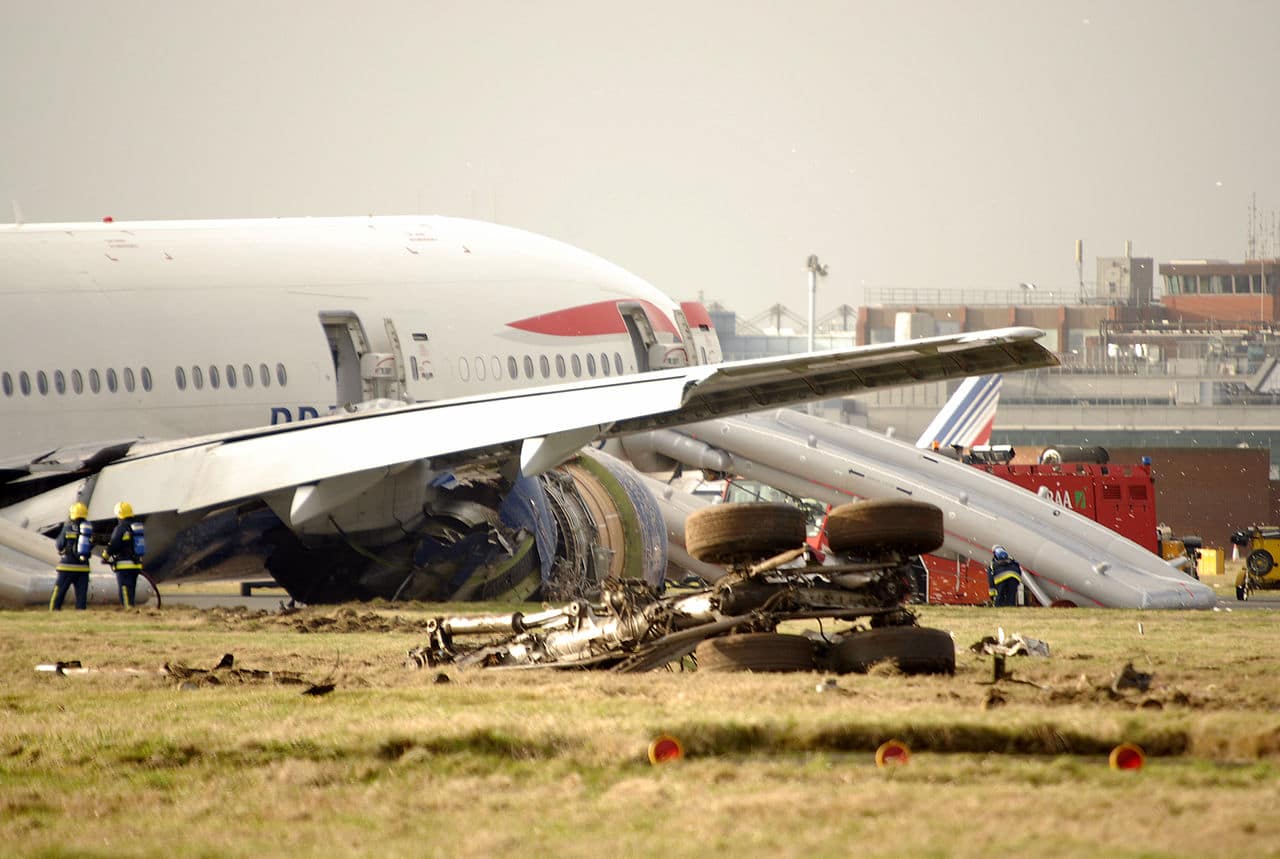
Ice crystals in the fuel were blamed as the cause of the accident, clogging the fuel-oil heat exchanger (FOHE) of each engine. This restricted fuel flow to the engines when thrust was demanded during the final approach to Heathrow.[7] Boeing identified the problem as specific to the Rolls-Royce engine fuel-oil heat exchangers, and Rolls-Royce subsequently developed a modification to its FOHE; the European Aviation Safety Agency (EASA) mandated that all affected aircraft were to be fitted with the modification before 1 January 2011.
Wikipedia: British Airways Flight 38
Featured image By Marc-Antony Payne – Via email, CC BY 3.0, https://commons.wikimedia.org/w/index.php?curid=3410822
[su_youtube url=”https://youtu.be/lJNVVlBPi8M”]
This post was published on 17 January 2018 22:36
Lufthansa plans to introduce its first Airbus A350-1000 on the Munich–Tokyo Haneda route on 3…
EUROCONTROL’s Maastricht Upper Area Control Centre (MUAC) handled 842,259 flights between May and September 2026,…
Polska Grupa Lotnicza (PGL), the aviation group behind LOT Polish Airlines, plans to establish a…
An airBaltic A220-300 aircraft registered YL-ABS arriving from Berlin as flight SN2590 on behalf of…
Norwegian Air Shuttle is increasing winter capacity between the UK and Oslo as part of…
Brussels Airport will offer 136 direct destinations during its winter season starting on 25 October,…