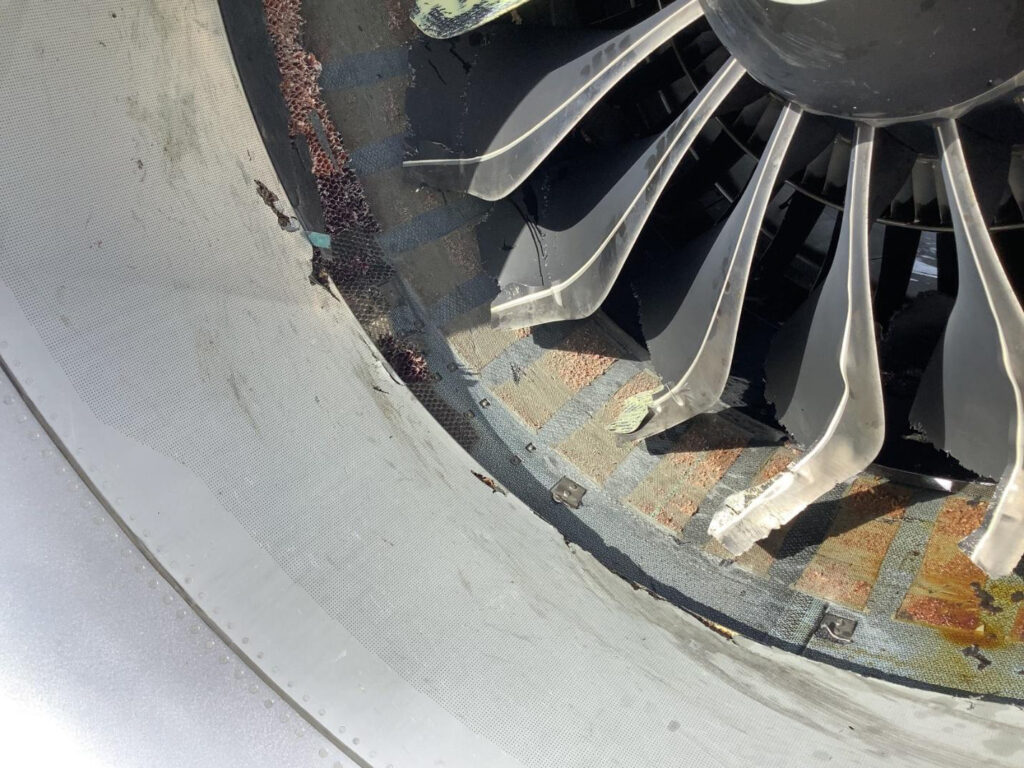
The U.S. National Transportation Safety Board (NTSB) has issued an urgent safety recommendation to address a risk that smoke from damaged LEAP-1B jet engines can enter aircraft cockpits and cabins. The engines, produced by CFM International, are used on Boeing 737 Max aircraft and variants of the Airbus A320neo.
The concern centres on the Load Reduction Device (LRD), a system designed to reduce engine vibrations after damage. Investigators found that in some cases — particularly after bird strikes — the LRD can damage the engine’s oil system, allowing hot oil vapour to enter the plane’s ventilation system.
The issue came to light during an NTSB investigation into a December 2023 incident where a Southwest Airlines 737-8 filled with thick white smoke after ingesting a bird on takeoff in New Orleans. Another similar event occurred in March 2023 on a Southwest flight from Havana. In both cases, the aircraft landed safely.
Key NTSB actions and findings:
- Flight crews may not be fully aware of the smoke hazard linked to LRD activations.
- The FAA is urged to ensure operators brief crews on the risk and mitigation steps.
- Boeing has updated its flight manuals with new procedures for affected aircraft.
- The NTSB is calling on the FAA, EASA, and China’s CAAC to investigate if LEAP-1A and LEAP-1C engines face similar risks.
- It also recommends mandatory software updates from CFM and Boeing for all operators using affected engines.
No injuries occurred in either incident, but the NTSB stresses that swift action is needed to prevent future hazards.