

Move to streamline operations and prioritise Zurich base; Geneva network to be reduced in 2026
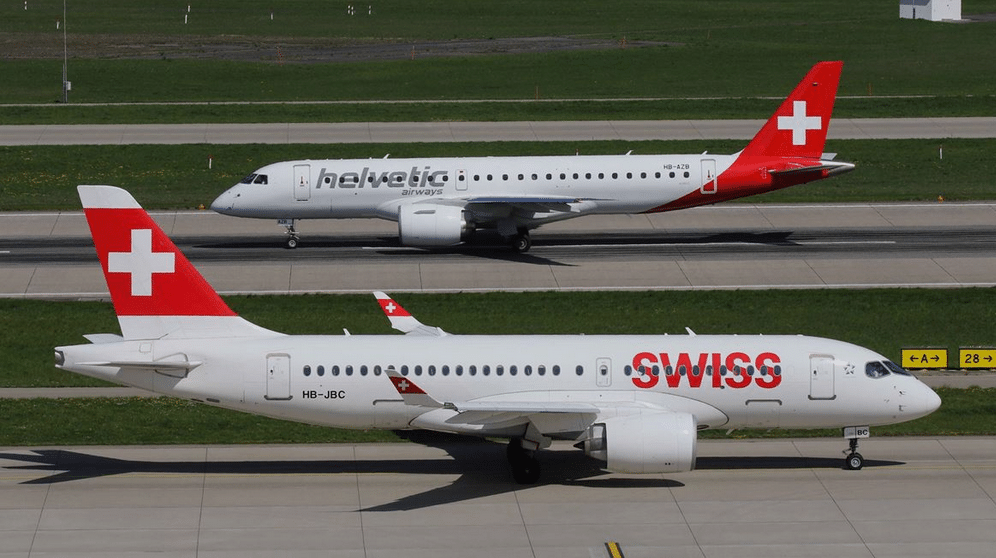
Swiss International Air Lines (SWISS) will ground all nine of its Airbus A220-100 aircraft for up to 18 months, citing ongoing engine maintenance problems and a lack of spare parts. The decision, confirmed by Chief Financial Officer Dennis Weber during a quarterly results conference call, aims to boost operational reliability and simplify the fleet.
The engines removed from the grounded A220-100s will be used to support SWISS’s larger A220-300 fleet, which consists of 21 aircraft. “This measure allows us to increase the availability of the A220-300s while reducing operational complexity by operating just one A220 type,” Weber explained. The larger variant is also more cost-efficient and better suited to current network needs.
London City operations transferred to Helvetic Airways
The A220-100s had primarily served London City Airport, whose steep approach required specific certification. However, Helvetic Airways, a SWISS partner carrier, has now obtained the necessary approval to operate there. “With Helvetic taking over London City flights, there is no longer any operational reason to keep the A220-100 in service,” Weber noted.
The phased decommissioning will begin in November 2025 and continue until summer 2026. SWISS expects no overall reduction in operational capacity, as the released engines will enable grounded A220-300s to return to service.
Impact on Geneva operations
SWISS currently has more than ten aircraft grounded due to ongoing engine and spare-parts shortages, a situation that has hit Geneva Airport particularly hard. The airline plans to cut around 25% of its short-haul destinations from Geneva in the summer 2026 schedule, citing weak profitability and strong competition from EasyJet.
“Geneva is currently a loss-making business,” Weber said. “We’re focusing our limited resources on Zurich, our most profitable hub. However, we have no plans to withdraw from Geneva – our goal is to reach at least break-even in 2026.”
The Lufthansa Group, SWISS’s parent company, is exploring whether Eurowings or other group airlines could serve some of the affected routes.
Workforce and training challenges
SWISS is also grappling with a pilot shortage linked to the high training costs of its new aircraft types. About one-third of pilots will be in training next year, reducing active flight capacity. At the same time, a higher-than-expected number of long-term absences and part-time contracts have strained scheduling.
The imbalance has left the airline with an excess of around 400 cabin crew members, Weber confirmed. Flight attendant recruitment and training are currently paused and are not expected to resume until the second half of 2026.
Despite these pressures, SWISS maintains its focus on Zurich as its core hub and continues its long-term fleet modernisation strategy, including the introduction of the Airbus A350 and the rollout of its new “SWISS Senses” cabin concept.
Source: SwissInfo