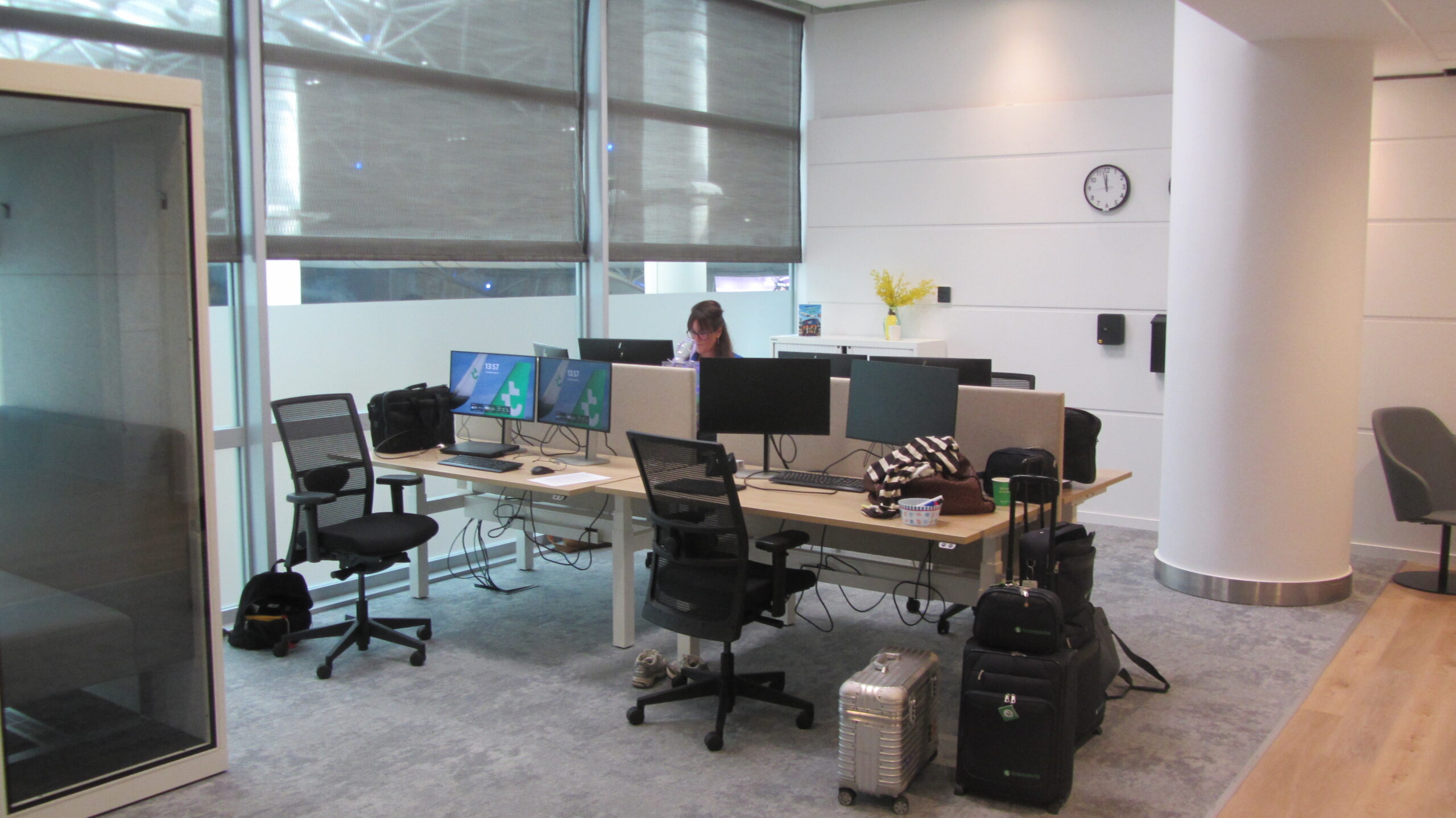
Transavia is strengthening its position at Brussels Airport, turning what started as a limited operation in 2022 into a fully fledged local base with four aircraft and 150 locally based crew members.

The Dutch leisure carrier has now opened a fully operational local crew base at Brussels Airport, marking another step in its expansion on the Belgian market. Transavia initially operated from Brussels with two aircraft flown by Dutch crews before adding a third and, more recently, a fourth aircraft, and started hiring Belgian pilots and cabin crew in 2025, according to Transavia operational director Marloes van Laake.
The airline will further expand its network with a new three-times-weekly service to Porto from December 14, 2026. For summer 2027, Transavia plans to add Heraklion, Ponta Delgada and Thessaloniki to its Brussels network for a total of 15 destinations, with tickets for the new summer routes going on sale from September 16.

“Belgium is an important market for Transavia,” said Transavia CEO Paul Terstegge during a press event, introducing the new crew base at Brussels Airport. “We have built our presence in Belgium step by step. With the opening of the fully local crew base, Brussels has become a fully fledged home base.”
The move gives Transavia a more permanent footprint in Belgium, but it also places the airline directly in an increasingly crowded market. But apparently, Amsterdam Schiphol is even more crowded, and Brussels offers more opportunities according to Terstegge.
The Transavia CEO mentioned that Transavia, founded 61 years ago as a charter operation, has become the low-cost airline of the Air France-KLM Group with a fleet of 52 aircraft: 34 Boeing 737-800s and 14 Airbus A321neos. This year, the airline flew 10 million passengers to 89 destinations from its bases in Amsterdam, Rotterdam, Eindhoven and now also Brussels.
Intensifying competition at Brussels Airport
Transavia is not entering an underserved market. Brussels Airport has become a major battleground for European leisure traffic, with Brussels Airlines, TUI fly Belgium, Ryanair, Vueling and easyJet all competing for passengers.
There is considerable overlap between the airlines’ networks. Malaga, Alicante, Faro, Ibiza, Palma de Mallorca and several Greek destinations are served by multiple carriers, giving Belgian travellers a wide choice of airlines and fares.
The expansion therefore raises a key question: how much further can Transavia grow at Brussels Airport?
The addition of a fourth aircraft and the establishment of a local crew base suggest that Transavia sees significant long-term potential in Brussels. A local crew operation also allows the airline to operate its Brussels flights without relying on crews based in the Netherlands.
For Brussels Airport, the expansion is welcome news as the airport continues to see passenger growth.
“The opening of this new crew base and the further expansion of Transavia at Brussels Airport are an important signal of confidence in our airport and the Belgian market,” said Brussels Airport CEO Arnaud Feist.
Tax advantage over the Netherlands?
The expansion also comes against a notable difference in aviation taxation between Belgium and the Netherlands. Belgium currently charges €5 per passenger for flights of more than 500 kilometres and €10 for shorter flights. In the Netherlands, the 2026 air passenger tax is €30.25 per departing passenger, regardless of the destination.
For an airline such as Transavia, which has a major operation in the Netherlands, the difference is significant. A passenger departing Brussels therefore pays considerably less in passenger tax than one departing from a Dutch airport.
It remains unclear whether this difference plays any role in Transavia’s decision to expand its Brussels operation. The airline has not linked its Belgian expansion to taxation, but the considerably lower Belgian passenger tax raises the question of whether Brussels could become an increasingly attractive base for Transavia as aviation taxation in the Netherlands rises further.
A new competitor for Belgian leisure traffic
The expansion also puts Transavia in increasingly direct competition with TUI fly Belgium, which has a particularly strong position in the Belgian holiday market, as well as Brussels Airlines’ growing leisure network.
At the same time, Ryanair, Vueling and easyJet continue to compete aggressively on price and destinations.
Transavia’s strategy appears to be to carve out its own position between the traditional network carrier and ultra-low-cost model, offering leisure destinations at competitive fares while benefiting from its position within the Air France-KLM group.
The choice of new destinations is also notable. Porto will be followed by Heraklion, Ponta Delgada and Thessaloniki, expanding Transavia’s footprint beyond the airline’s existing leisure markets.
The inclusion of Ponta Delgada is particularly interesting, giving Belgian travellers another direct option to the Azores.
For now, Transavia has confirmed four aircraft at Brussels Airport. The bigger question is whether this represents the end of the airline’s Belgian expansion or simply the next stage.
If passenger demand continues to grow, the newly established local crew base could provide the foundation for further aircraft and destinations from Brussels in the years ahead.